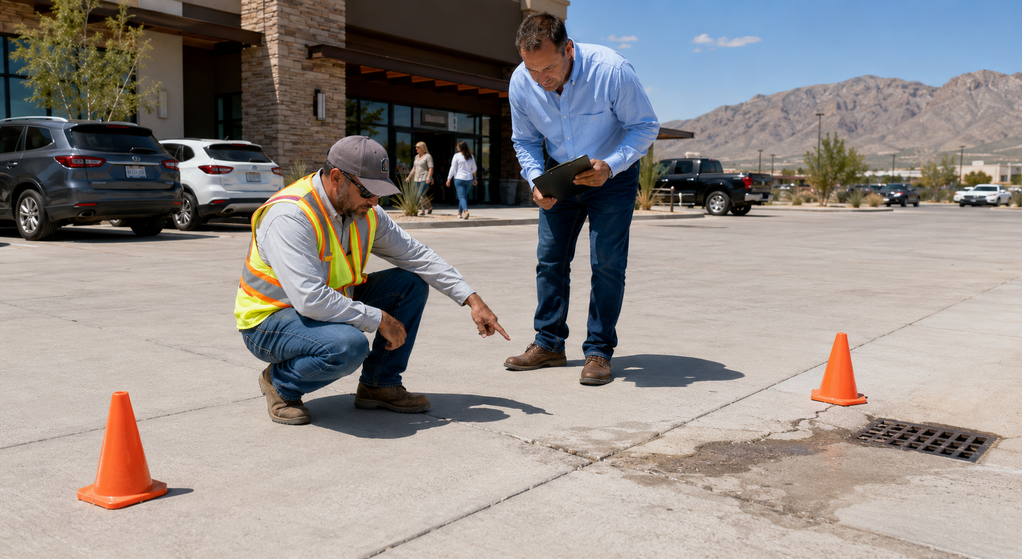
Choosing the Right Concrete Mix for El Paso Parking Lot Projects
What To Know
Concrete mix design for an El Paso parking lot is not one-size-fits-all. Extreme heat, UV exposure, caliche subgrade, and low-humidity curing conditions all affect performance. A mix that works in a milder climate may crack, scale, or lose surface integrity early when exposed to El Paso’s environment year after year.
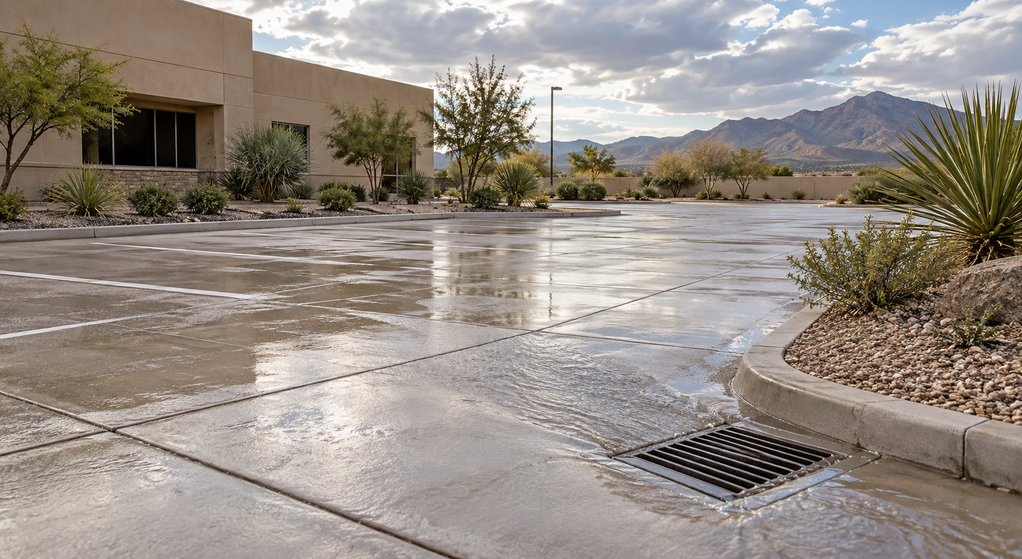
When most people think about a concrete parking lot, they think about the surface — how it looks, whether it has cracks, and how well it drains. What they rarely think about is the mix design that determines how the concrete performs once it is placed. The mix is invisible in the finished product, but it is one of the most consequential decisions in any concrete parking lot project, because it determines how well the concrete resists the specific stresses of the environment it will spend the next several decades in.
In El Paso, TX, those stresses are specific and demanding. Intense heat, prolonged UV exposure, caliche-heavy soil, and the fast-drying conditions of the desert climate all affect what a concrete mix needs to do to perform well. A standard mix that works fine in Houston or Phoenix may not deliver the same results in El Paso’s particular combination of conditions. Here is what matters in the mix design conversation for parking lot projects in this market.
Why El Paso’s Climate Makes Mix Design More Critical
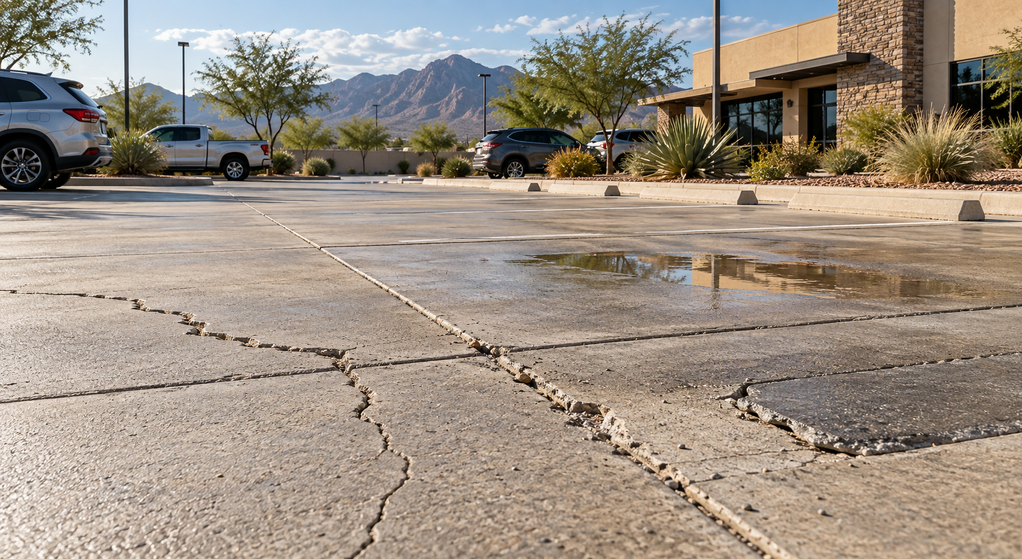
The case for paying close attention to mix design in El Paso starts with the thermal cycling the concrete will experience. Summer surface temperatures on a sun-exposed parking lot in El Paso can reach well above ambient air temperature during the day and drop significantly overnight. That daily expansion and contraction cycle, sustained across the desert summers and the cooler winters, creates cumulative stress in the concrete that a mix not designed for thermal stability will show in its surface condition over time — in cracking, scaling, and surface oxidation that reduces the slab’s integrity and appearance faster than it should. For business owners and property managers planning parking lot work, asking specifically about mix design is a reasonable and important question when evaluating contractors offering
concrete parking lot services in El Paso, because the mix decision is made before the truck arrives and cannot be revised once the concrete is placed.
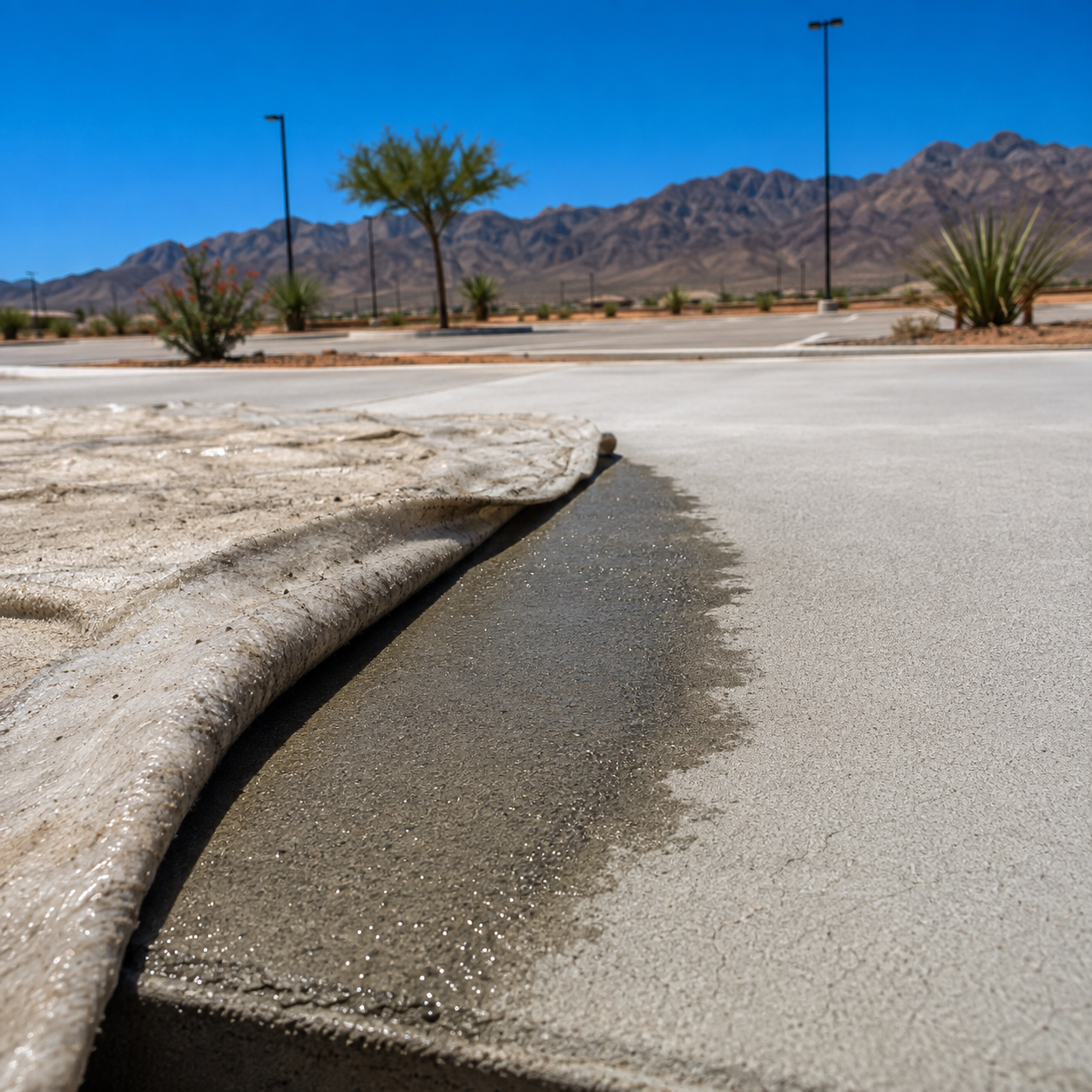
El Paso’s low humidity creates a specific challenge around the curing process. Concrete gains its strength through hydration — a chemical reaction between the cement and water that requires moisture to proceed. In El Paso’s dry environment, surface moisture evaporates faster than in more humid markets, which means the hydration reaction can be interrupted before it is complete if curing is not actively managed. A mix design that does not account for this — or a project where curing is treated as optional rather than essential — produces a surface that never achieves the density and strength the mix was designed for, with a correspondingly shorter service life.
Water-to-Cement Ratio: The Core of Mix Performance
One of the most important variables in concrete mix design for an El Paso parking lot is the water-to-cement ratio. This ratio influences the concrete’s strength, density, permeability, and long-term durability after the slab has hardened.
When properly designed and placed, a lower water-to-cement ratio generally produces denser concrete with fewer connected pores. That makes it more difficult for water and other contaminants to penetrate the slab and helps improve resistance to moisture-related deterioration, chemical ingress, surface scaling, and repeated commercial use.
The challenge in El Paso is maintaining that intended ratio during hot-weather placement. Concrete can become harder to work as temperatures rise and moisture evaporates, creating a temptation to add extra water at the job site. While that may temporarily improve workability, excessive field-added water can make the hardened concrete weaker and more permeable than the original mix design intended.
Instead, contractors can use properly designed admixtures such as water reducers or plasticizers to maintain workable concrete without unnecessarily increasing the water content. The objective is not simply to use as little water as possible, but to balance strength, permeability, placement requirements, aggregate characteristics, and expected parking lot loads.
For commercial parking lots, controlling the water-to-cement ratio is therefore one of the most important steps in producing concrete that can withstand El Paso’s heat, moisture cycles, traffic loads, and long-term exposure without becoming unnecessarily porous or prone to premature deterioration.
Compressive Strength and What It Actually Means for Parking Lots
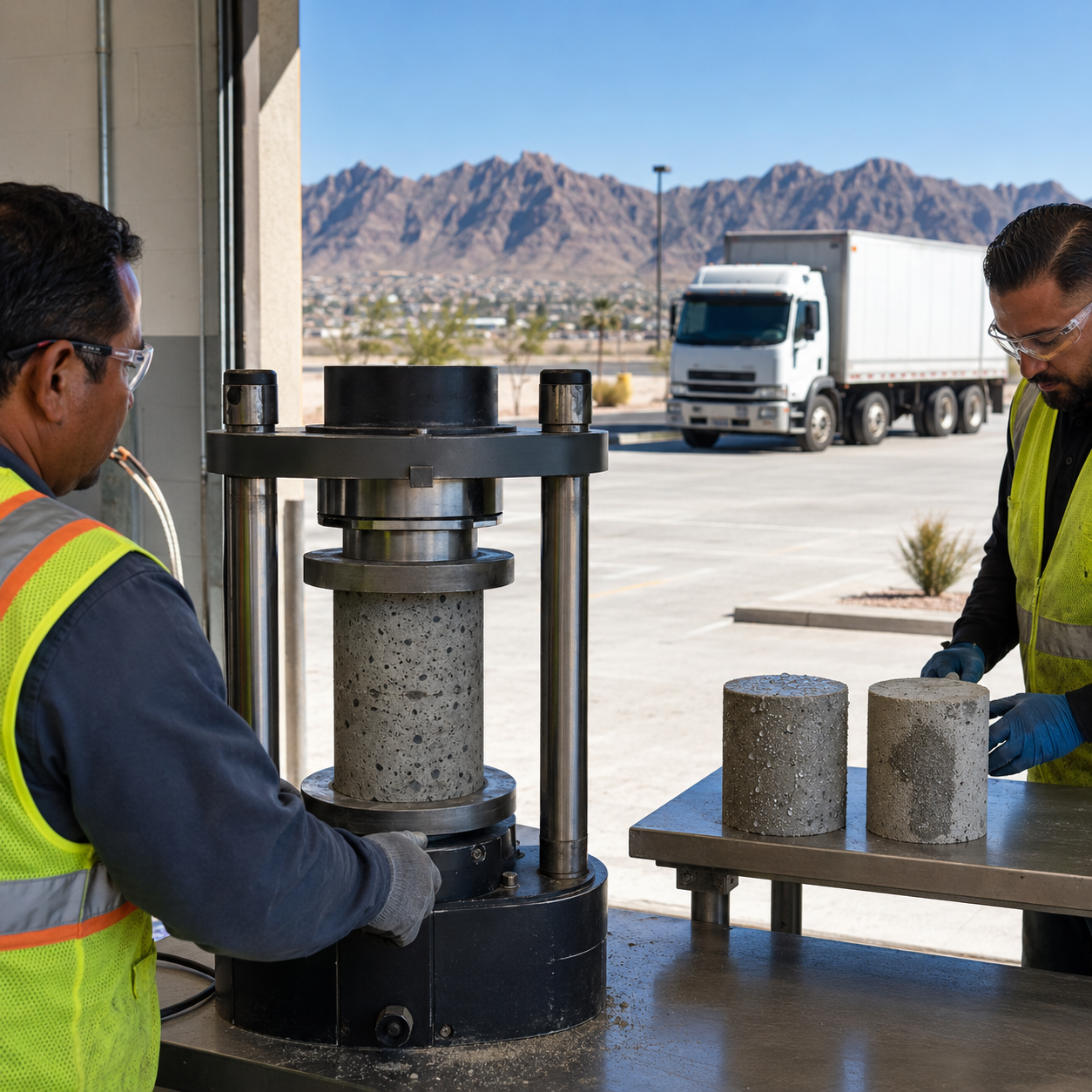
Compressive strength is the most commonly cited concrete specification, typically expressed in pounds per square inch (psi). For commercial parking lots, a minimum compressive strength of 4,000 psi is a reasonable baseline, with heavier-use lots serving delivery vehicles, equipment, or frequent large trucks warranting 4,500 psi or higher. These strength levels reflect the load-bearing demands of vehicle traffic, but compressive strength alone does not fully capture all the performance characteristics that matter for El Paso’s specific conditions.
A concrete with adequate compressive strength can still be relatively porous, and in El Paso’s environment porosity drives UV degradation and moisture cycling damage that compressive strength does not address. The combination of adequate strength and low permeability — achieved through mix design rather than strength specification alone — is what produces parking lot concrete that handles El Paso’s conditions well across both the structural and environmental dimensions of performance.
At El Paso Concrete Contractors, we discuss both strength and permeability targets when working through mix specifications with parking lot clients, because the number on the strength spec is only part of the story. A mix that meets the strength requirement but has a water-to-cement ratio that produces excessive porosity will not hold up in El Paso’s climate the way the strength number might suggest it should. Getting both parameters right is what produces a lot that performs as expected over its full service life.
Admixtures That Matter in El Paso’s Conditions
Admixtures are chemical additions to the concrete mix that modify specific properties without changing the fundamental cement-aggregate-water composition. Several categories of admixtures are particularly relevant for parking lot concrete in El Paso’s environment.
Set retarders extend the working time of concrete before it begins to set, which is directly relevant in El Paso’s summer heat where concrete sets faster than in cooler environments. A properly specified set retarder gives placement crews the time they need to properly consolidate and finish the concrete without rushing, which produces a better surface than a mix that is setting faster than the crew can manage effectively. Set retarders are not a workaround for poor planning — they are a legitimate tool for managing the specific challenge of placing concrete in extreme heat.
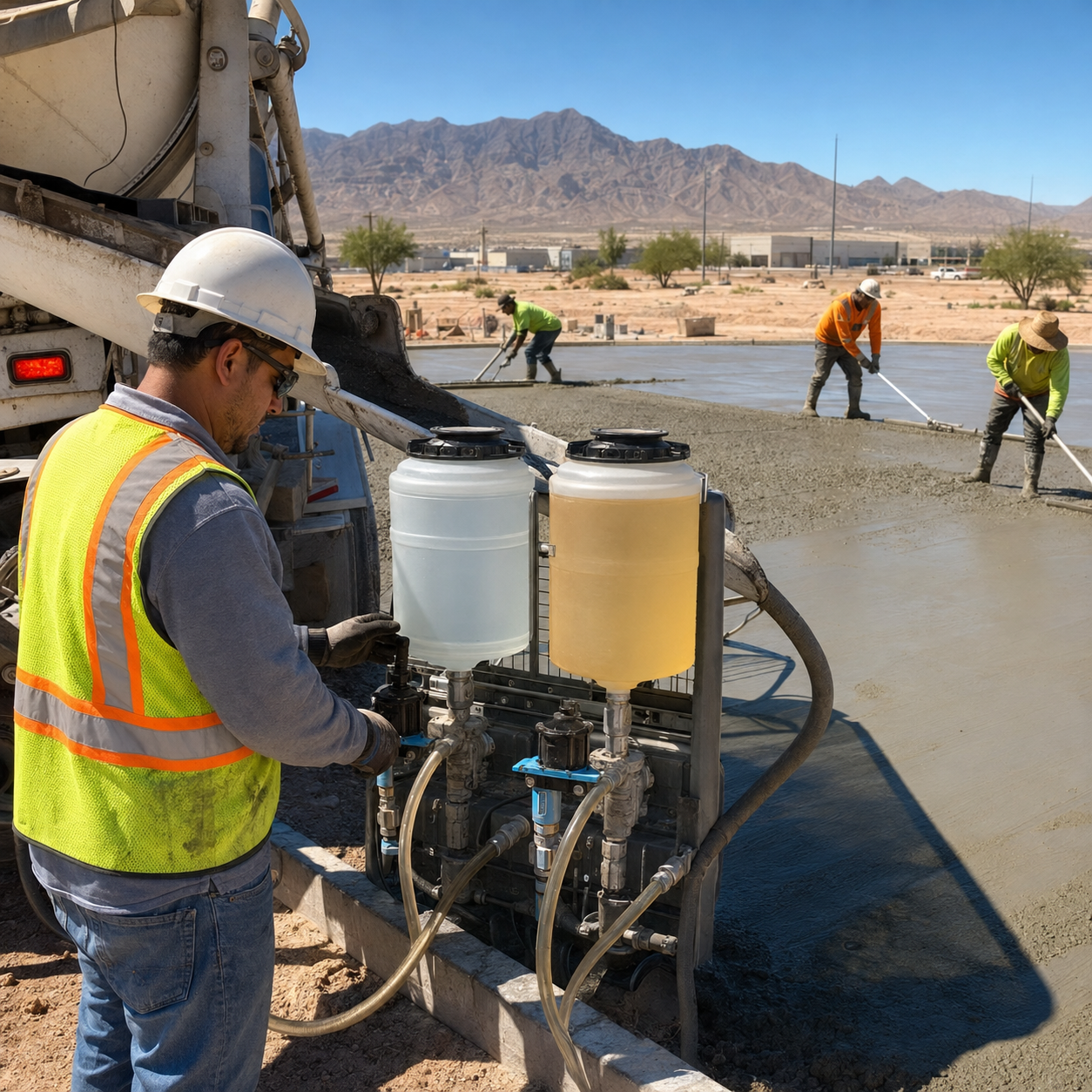
Water reducers and plasticizers, as noted earlier, allow workable concrete to be placed at a lower water-to-cement ratio than would otherwise be manageable in the field. For El Paso parking lots, these admixtures are among the most straightforward ways to improve long-term concrete performance without changing the fundamental mix proportions. They are a tool that experienced contractors in this market use routinely, and their absence from a mix specification for a summer El Paso parking lot project is worth questioning.
Aggregate Selection and Local Material Properties
The aggregate used in an El Paso parking lot mix—the sand and stone that make up much of the concrete by volume—affects workability, density, dimensional stability, and long-term performance. Aggregate absorption influences how water behaves in the mix, gradation affects how efficiently the particles pack together, and the physical properties of the material influence how the finished slab responds to repeated loading and temperature changes.
This is one reason concrete mix specifications should not be treated as interchangeable from one market to another. Contractors familiar with El Paso understand the characteristics of locally available materials and can account for them when determining water-cement ratio, strength targets, aggregate proportions, placement requirements, and other elements of the mix design.
For property owners who want a broader understanding of how these decisions translate into actual pavement performance, the science behind durable concrete in El Paso, TX: 3000 PSI mixes and precision slope calibration provides useful context on how strength specifications, concrete design, and proper slope work together to support a durable finished surface.
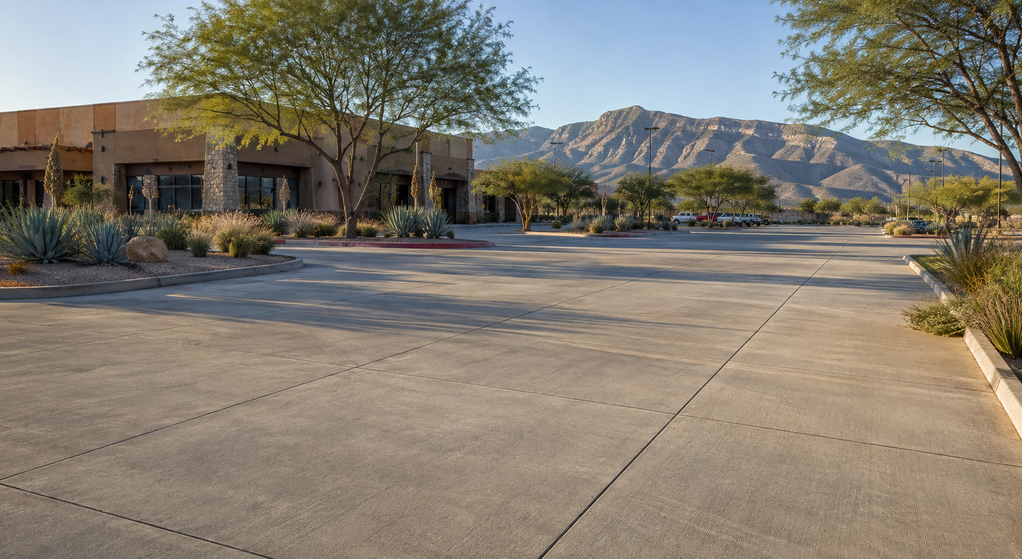
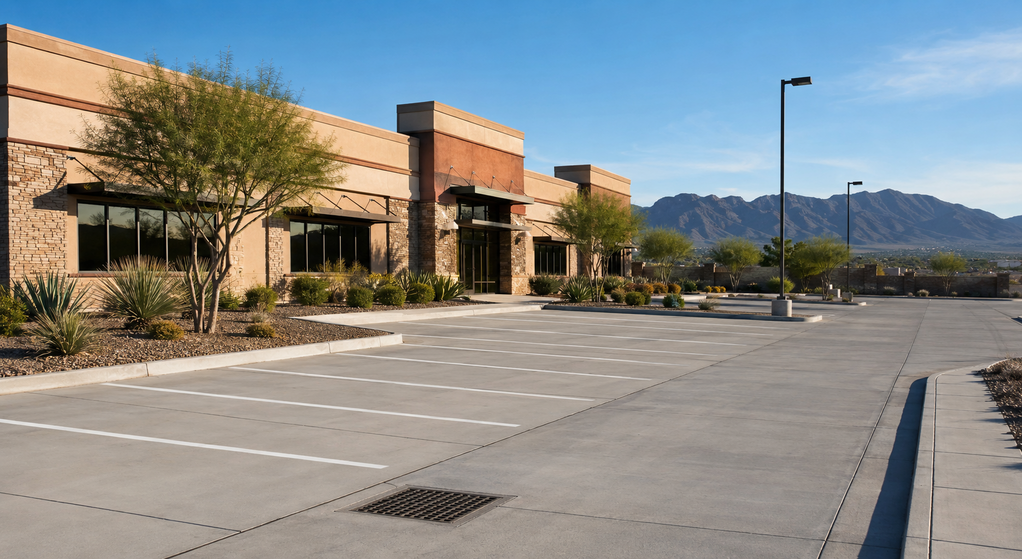
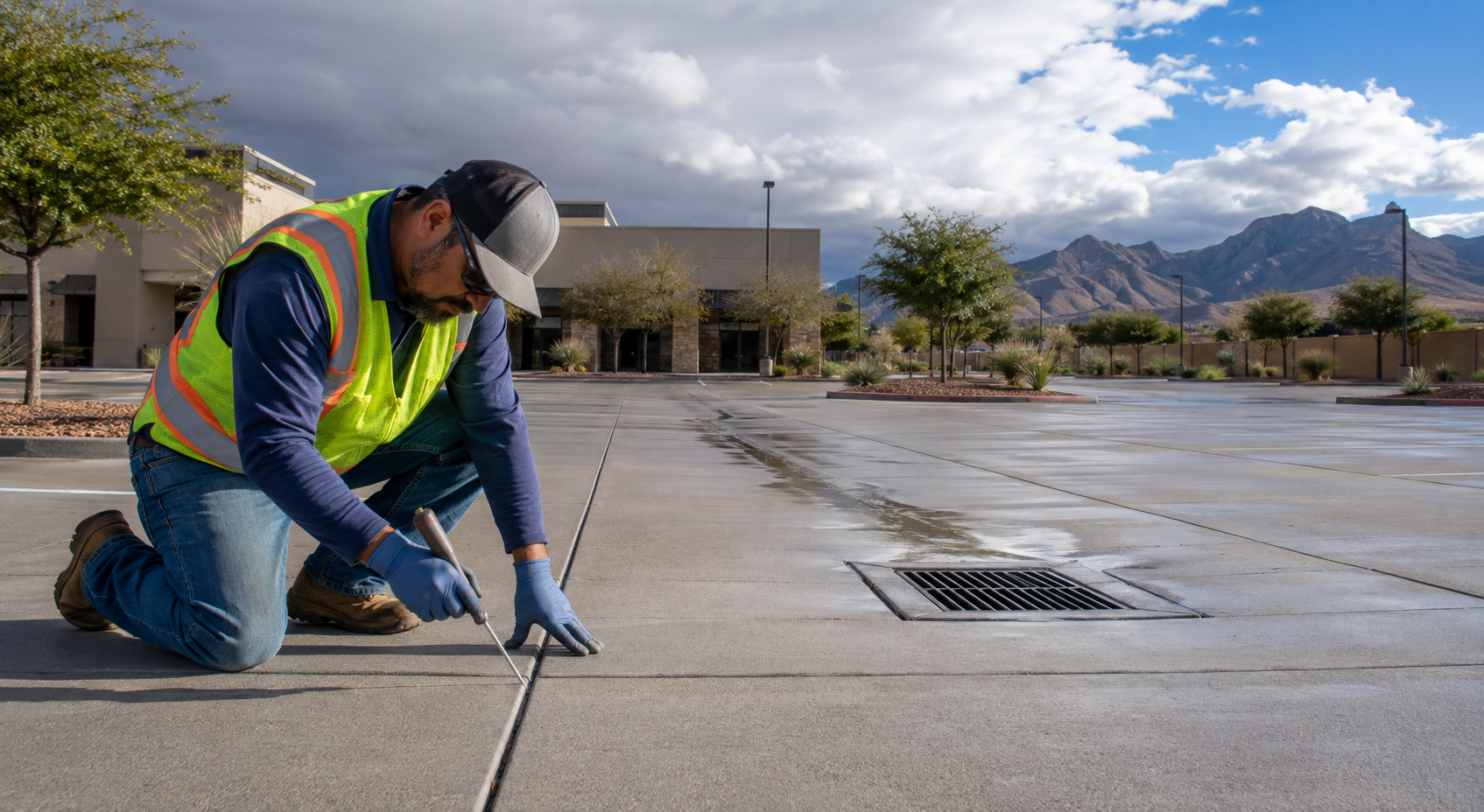
Aggregate selection is only one part of that system. The strongest parking lot results come from coordinating the mix with the expected vehicle loads, slab thickness, reinforcement strategy, drainage requirements, finishing method, and curing conditions rather than relying on a generic specification.
Curing: Making Sure the Mix Performs as Designed
Even a properly designed concrete mix can underperform if curing is not handled correctly. Concrete develops strength through hydration, and that process requires sufficient moisture to remain available after placement. El Paso’s high temperatures, low humidity, wind, and intense sunlight can accelerate surface evaporation during the period when the concrete is still developing its intended properties.
If moisture is lost too quickly, the surface can become weaker and more porous than intended. Rapid drying can also increase the risk of plastic shrinkage cracking and leave the concrete more susceptible to moisture ingress, scaling, abrasion, and premature surface deterioration over time.
Hot-weather concrete work therefore requires a coordinated placement and curing plan. Contractors may adjust pour times, monitor evaporation conditions, use appropriate admixtures, limit delays during placement and finishing, and begin curing as soon as the surface conditions allow. Depending on the project, curing compounds, wet coverings, water curing, or other moisture-retention methods may be used to control premature moisture loss.
Property owners planning commercial concrete work can review
best practices for commercial concrete installation in hot climates to better understand how placement timing, evaporation control, finishing practices, and curing methods affect the performance of concrete installed under demanding heat conditions.
For an El Paso parking lot, curing should be treated as part of the mix-design strategy itself. The concrete may arrive with the correct strength specification and water-to-cement ratio, but proper placement and curing are what allow those specifications to translate into a dense, durable finished slab.

Written By:
Kurt Manalastas
Home & Property Research Journalist
Kurt is a Home & Property Research Journalist who creates educational content on home services, property improvement, and residential decision-making. He translates contractor experience, industry standards, and verified research into clear, practical guidance that helps homeowners understand their options and make informed decisions.