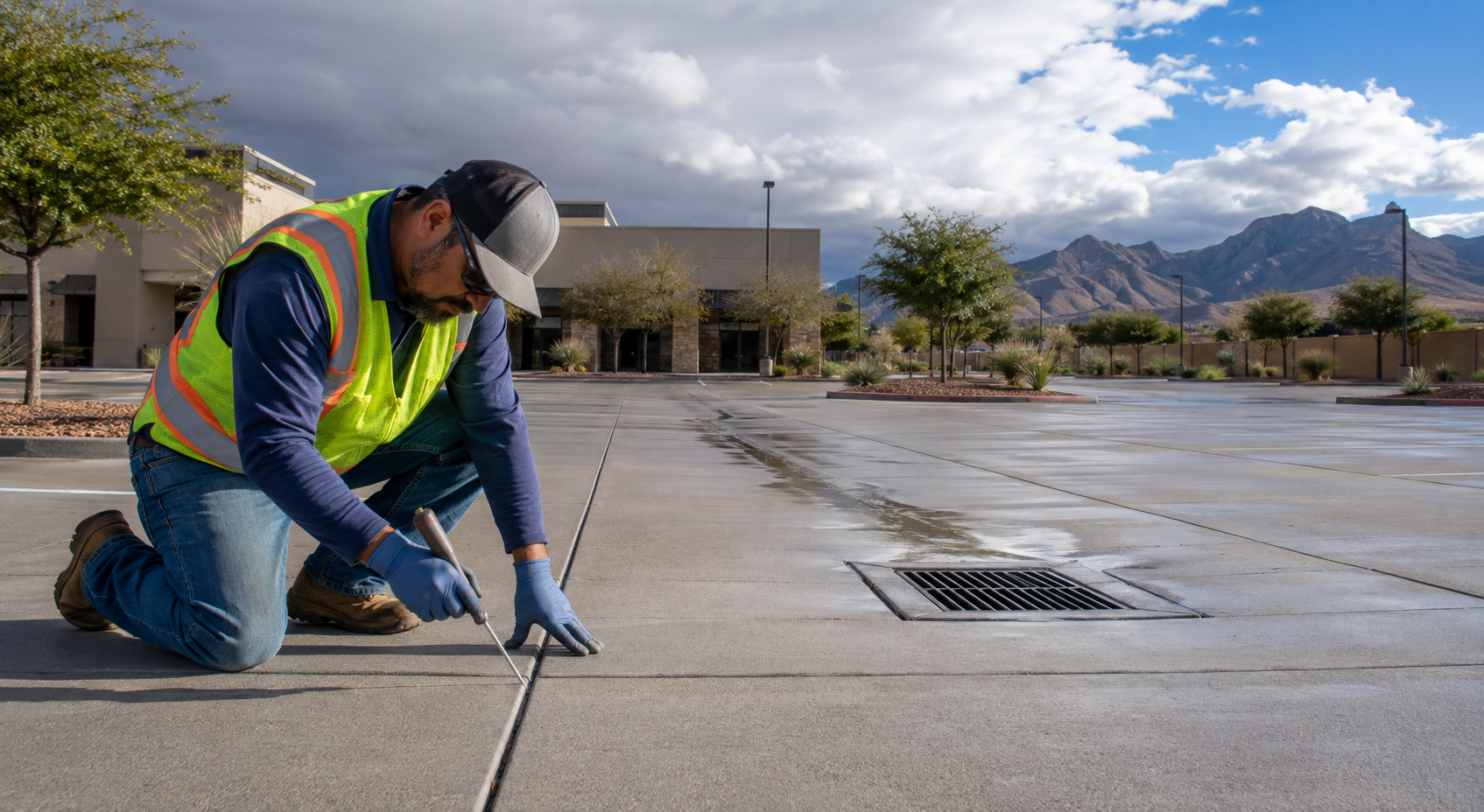
Why Business Owners in El Paso Should Fix Parking Lot Damage Early
Key Takeaway
Parking lot damage in El Paso escalates faster than most business owners expect, and the gap between what early repair costs and what deferred repair costs is consistently significant. El Paso’s heat, UV exposure, and monsoon drainage patterns accelerate concrete deterioration in ways that make timely intervention not just a maintenance preference but a financial one.
There is a version of this conversation that happens in almost every commercial property management situation: a crack or damaged section in the parking lot gets noticed, a repair gets discussed, and then something else takes priority. The crack gets bigger. A second damaged area develops. Water starts pooling near the curb. Eventually the repair scope is three times what it would have been six months earlier, and the business has been dealing with customer complaints about the lot the whole time.
In El Paso, TX, that pattern moves faster than it does in most other markets. The combination of intense sun, thermal cycling, and the concentrated rainfall of monsoon season gives concrete damage more to work with than a milder climate would. What looks like a minor issue in spring can be a significant structural problem by fall. Here is why early intervention is worth prioritizing, and what the cost of waiting typically looks like in practice.
Concrete Damage Compounds in El Paso’s Climate
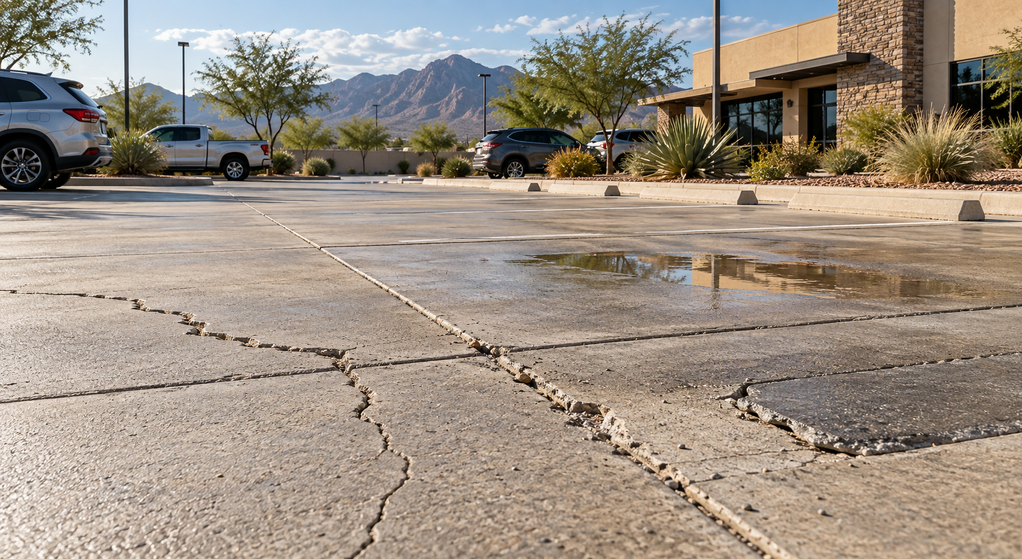
Parking lot damage in El Paso can worsen quickly when small defects allow water to reach the supporting base. A hairline crack may initially require only a minor repair, but repeated water intrusion can weaken the subbase, reduce support beneath the slab, and allow vehicle loads to widen the damage. Businesses that work proactively with a contractor offering experienced concrete parking lot services in El Paso can address these problems before localized repairs develop into larger section replacements.
El Paso’s heat and intense sunlight create additional stresses, but UV exposure should not be treated as directly breaking down or oxidizing the concrete matrix. High surface temperatures contribute to thermal movement, while prolonged UV exposure can deteriorate certain sealers, coatings, pigments, and other surface treatments. Combined with moisture infiltration, drainage problems, traffic, and existing cracks, these conditions can accelerate visible deterioration.
Early repair therefore matters because concrete problems rarely remain isolated. Correcting cracks, drainage issues, damaged joints, and failing surface treatments before they affect surrounding areas can significantly reduce the scope and cost of future repairs.
Safety and Liability: The Risks of Delayed Action
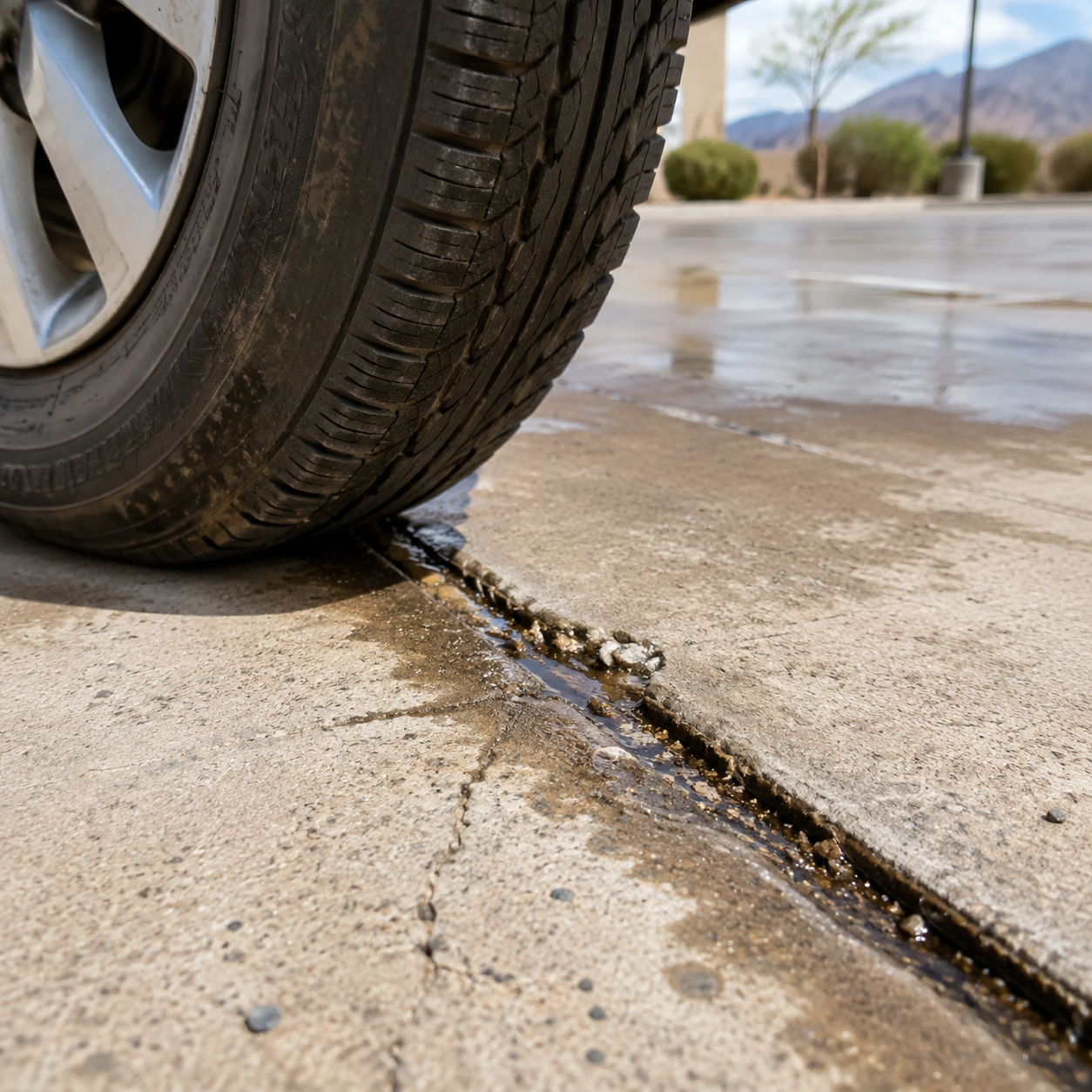
Damaged parking lots can create practical safety risks for customers, employees, and visitors. Cracked, uneven, or spalled concrete can create trip hazards, while severe surface damage may also affect vehicles and accessible routes. For commercial property owners, identifying and addressing visible hazards is an important part of reducing avoidable risk.
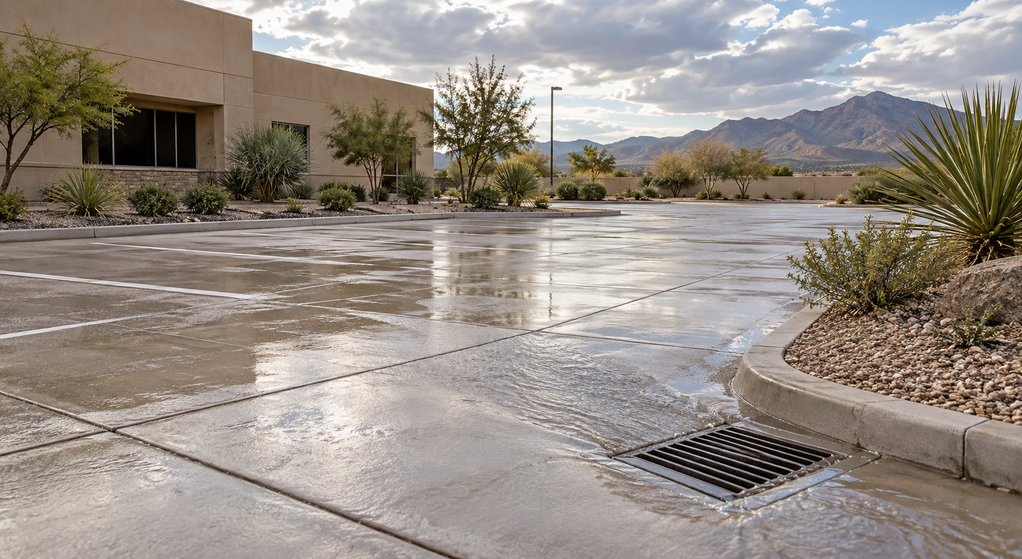
El Paso’s monsoon season can make existing problems more noticeable. Settlement or poor drainage may cause water to collect in damaged areas, increasing the potential for slippery surfaces and making pedestrian movement more difficult during heavy rain.
Rather than treating parking lot maintenance as a specific legal conclusion, business owners should view known trip, drainage, and surface hazards as important risk-management concerns. Prompt inspection and repair can improve safety while preventing minor defects from becoming more disruptive and expensive problems.
First Impressions and Customer Perception
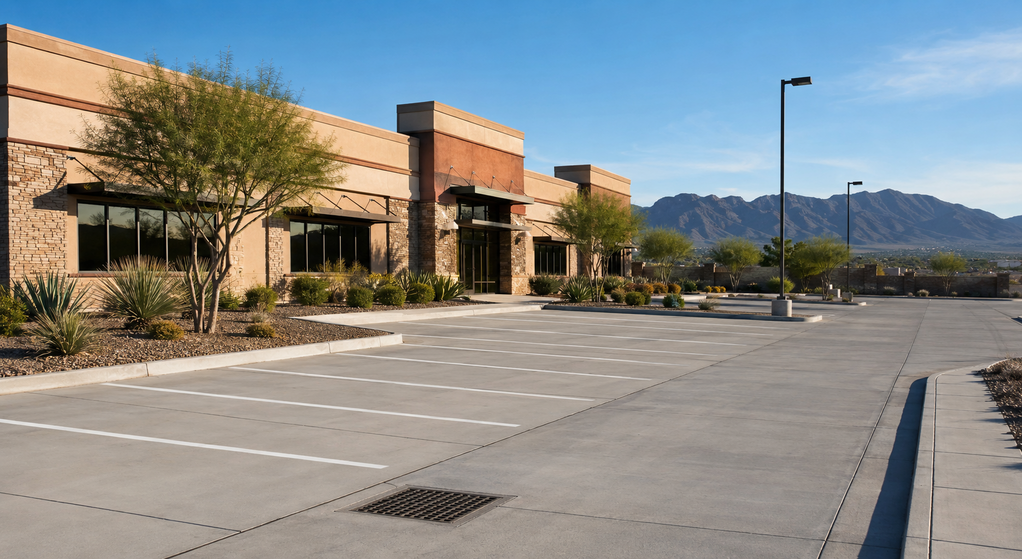
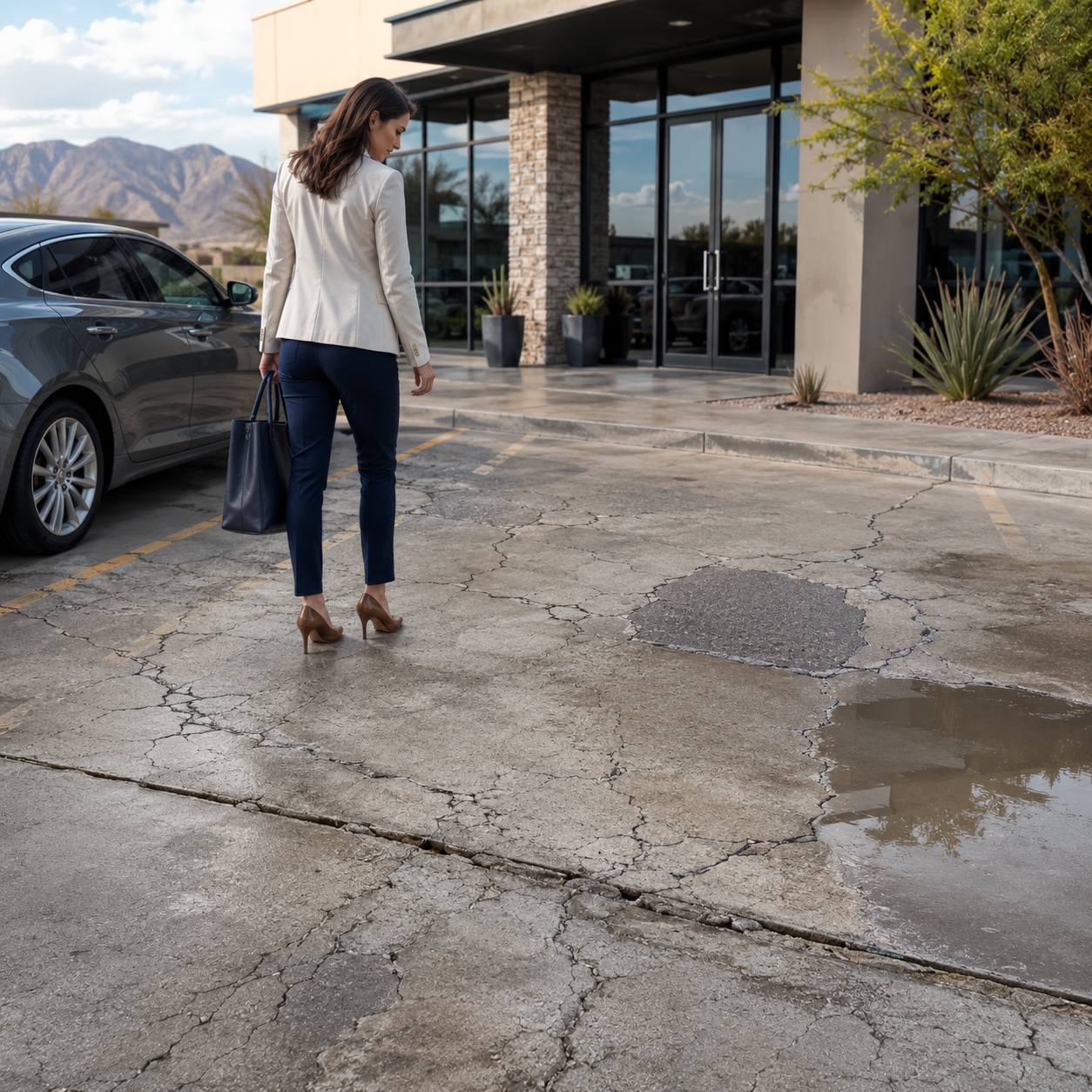
A parking lot is often the first physical experience a customer has with a business, and the condition of that surface communicates something about the business before the customer has even walked in the door. A lot with visible cracks, patched sections, pooling water, or uneven surfaces creates an impression of deferred maintenance that transfers, consciously or not, to the business itself. A well-maintained surface communicates attention to the property and, by implication, attention to the customer experience.
This is harder to quantify than repair cost savings, but it is not less real. Businesses in El Paso compete for customers in a market where the quality of the physical environment — including the exterior of the property — contributes to the overall impression that either builds or undermines customer confidence. A parking lot that looks neglected does not contribute to the confidence a business is trying to build.
At El Paso Concrete Contractors, we regularly work with business owners who have put off parking lot repairs and are dealing with both the escalated repair cost and the customer perception issue simultaneously. In almost every case, they acknowledge that addressing the problem earlier would have been less expensive and less disruptive. The parking lot rarely becomes a priority until it has to be — and by then, it is already costing more than it would have.
The Cost Gap Between Early and Late Repair
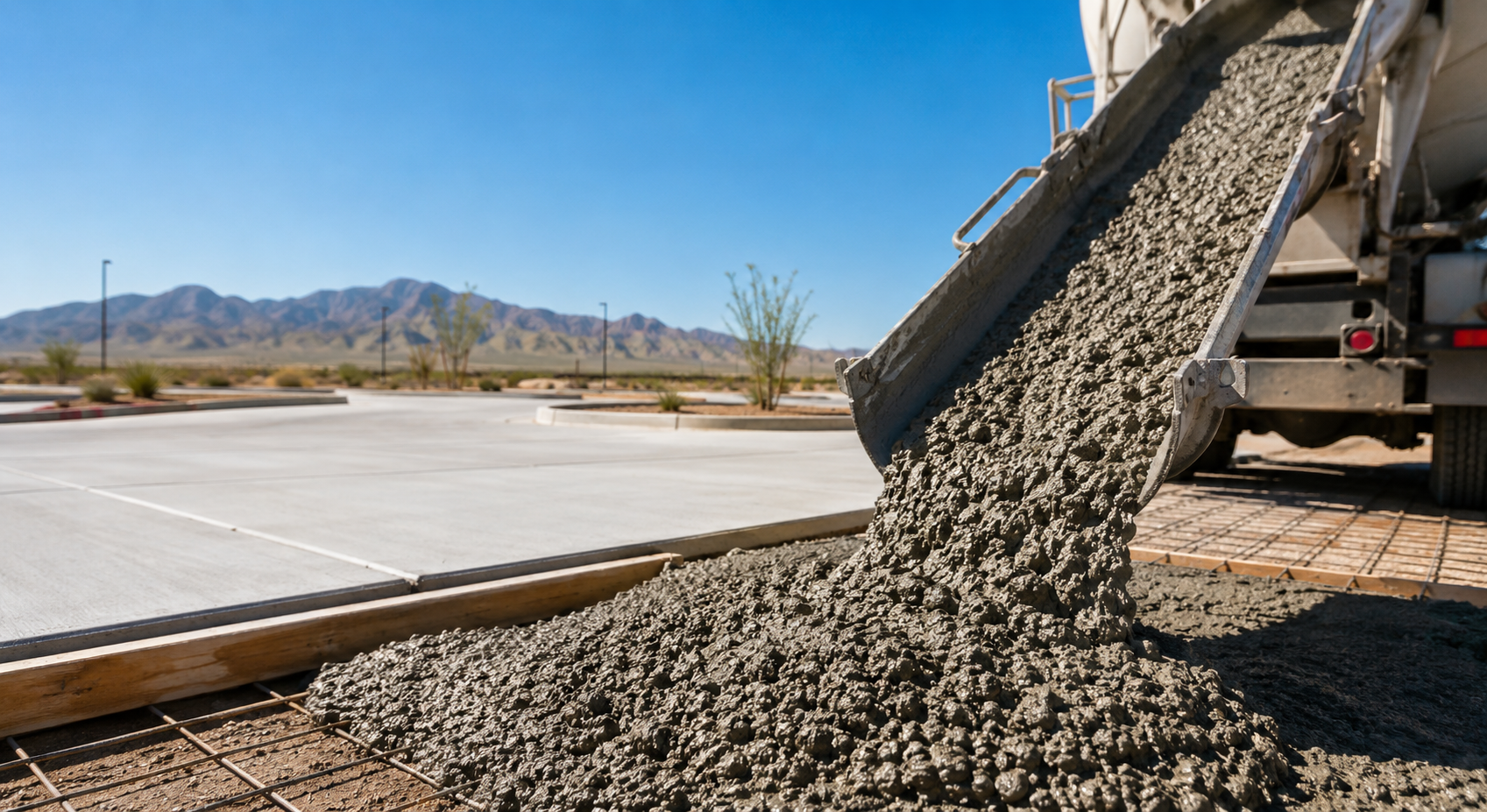
The financial case for early intervention is straightforward once the compounding nature of concrete deterioration in El Paso is understood. Crack filling for a hairline crack that has not yet compromised the subbase is a fraction of the cost of replacing a section of slab where the subbase failure has progressed to the point that new concrete cannot simply be patched over the existing surface. Joint resealing before water infiltration has begun to affect the subbase is a fraction of the cost of the subbase repair and resurfacing that follows extended exposure through an open joint.
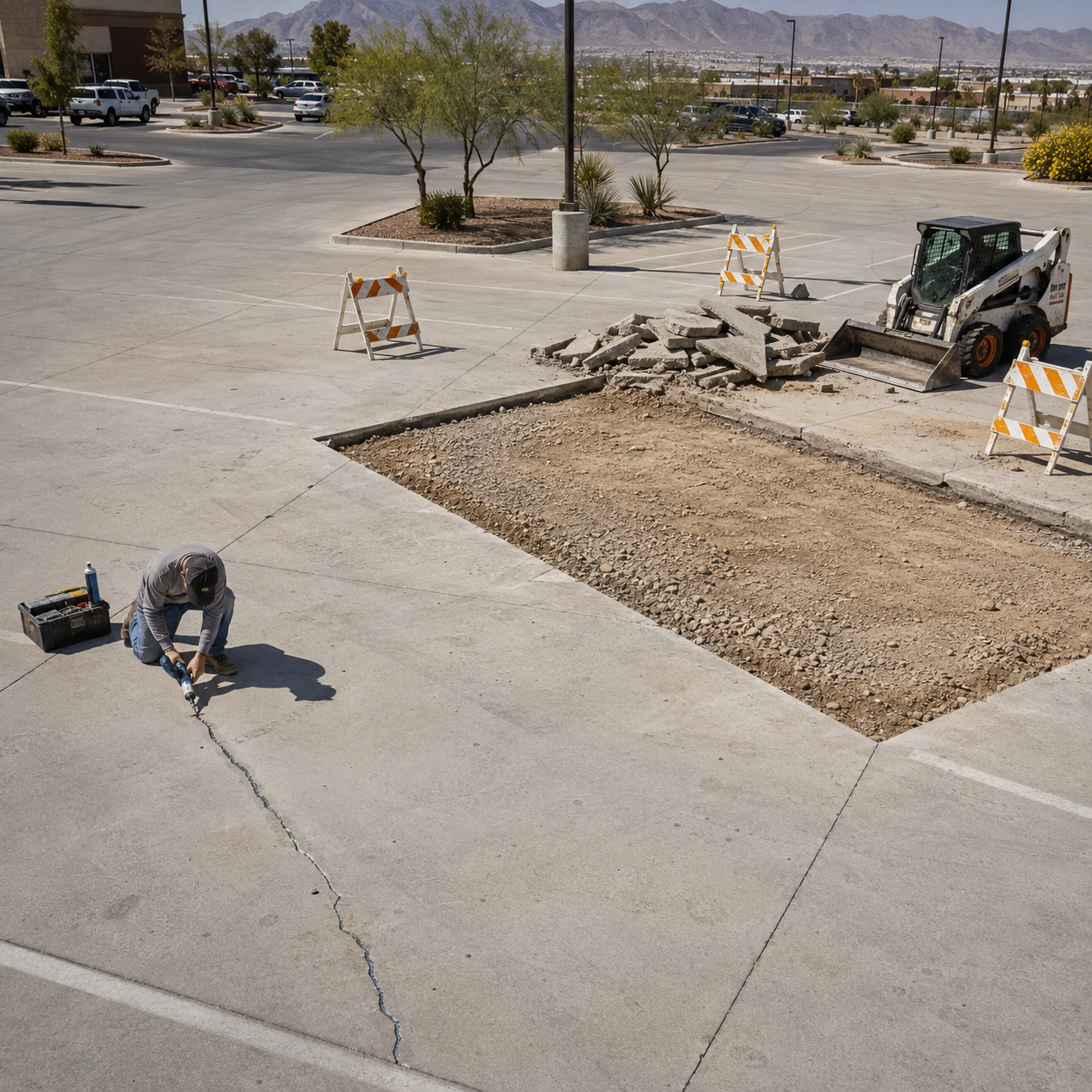
The ratio between early and late repair costs varies by the specific type and extent of the damage, but the direction is consistent: earlier is less expensive. The reason is that early repair addresses only the damaged concrete, while late repair typically must address both the damaged concrete and the subgrade, drainage, or structural conditions that progressed while the surface damage was left unaddressed. Each of those additional elements adds scope, time, and cost to a project that started as something much simpler.
Scheduling Around Business Operations
One of the practical reasons business owners postpone parking lot repairs is the disruption that construction can create. Closing parking spaces, redirecting traffic, bringing equipment onto the property, and temporarily reducing customer access are legitimate operational concerns.
The advantage of addressing damage early is that smaller repairs usually provide more flexibility. Work can often be scheduled during slower business periods, divided into phases, or concentrated in isolated sections while the majority of the parking lot remains usable. Once deterioration becomes widespread or develops into a safety concern, the property owner has fewer scheduling options because the repair is being driven by the condition of the lot rather than by the preferred business timetable.
Understanding the type of deterioration present also helps determine how urgently work should be scheduled. Cracking, settlement, failed joints, drainage problems, surface deterioration, and other conditions do not all carry the same implications. Business owners can use common concrete parking lot problems for El Paso properties to better understand the failure patterns that may require early intervention before the work becomes larger and more disruptive.
A planned repair creates inconvenience on a schedule the business can manage. An emergency repair creates inconvenience on the schedule dictated by the failure. Addressing problems while they are still localized gives owners more control over both the cost of the work and its effect on customers, employees, and daily operations.
Proactive Maintenance as a Business Practice
The business owners who have the fewest parking lot emergencies and the lowest total parking lot costs over time are the ones who treat maintenance as a scheduled business practice rather than a reactive response to visible problems. That means having the lot inspected periodically by a contractor who can identify developing issues before they become visible to customers, keeping joints sealed on a schedule that reflects El Paso’s thermal movement demands, and addressing any cracks or damage that appear promptly rather than noting them and moving on.
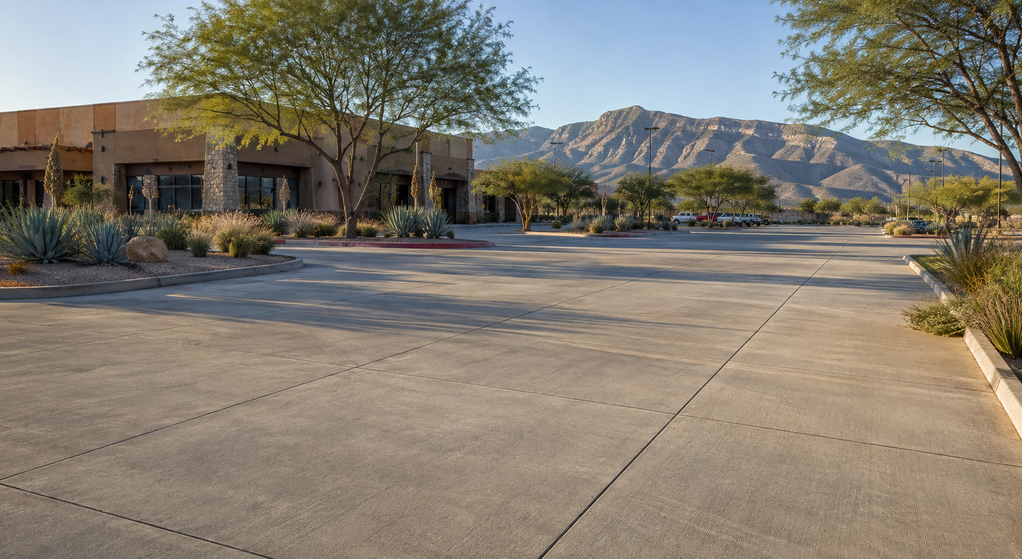
This approach does not eliminate the need for repairs over the life of a parking lot — no maintenance program does that. But it changes the nature of those repairs from urgent, large-scope projects driven by compounded damage to routine, appropriately scaled interventions that keep the lot in good condition without the escalating cost and disruption that deferred maintenance produces. The total cost of ownership for a well-maintained parking lot is lower than for a neglected one, and the operational experience for both the business and its customers is consistently better.
For guidance on the specific maintenance practices that make the most meaningful difference for concrete in El Paso’s climate — including what to do, how often, and why the local conditions make some steps more important here than general guides suggest — our article on maintaining concrete in El Paso’s dry, hot conditions covers the practical program that extends a parking lot’s service life and reduces the frequency of significant repair interventions over time.
Parking lot damage in El Paso does not wait patiently. The climate here gives every unaddressed problem more to work with than a forgiving environment would. The business owners who recognize that early intervention is the financially sound choice — not just the cautious one — consistently spend less over time and deal with fewer surprises.

Written By:
Kurt Manalastas
Home & Property Research Journalist
Kurt is a Home & Property Research Journalist who creates educational content on home services, property improvement, and residential decision-making. He translates contractor experience, industry standards, and verified research into clear, practical guidance that helps homeowners understand their options and make informed decisions.