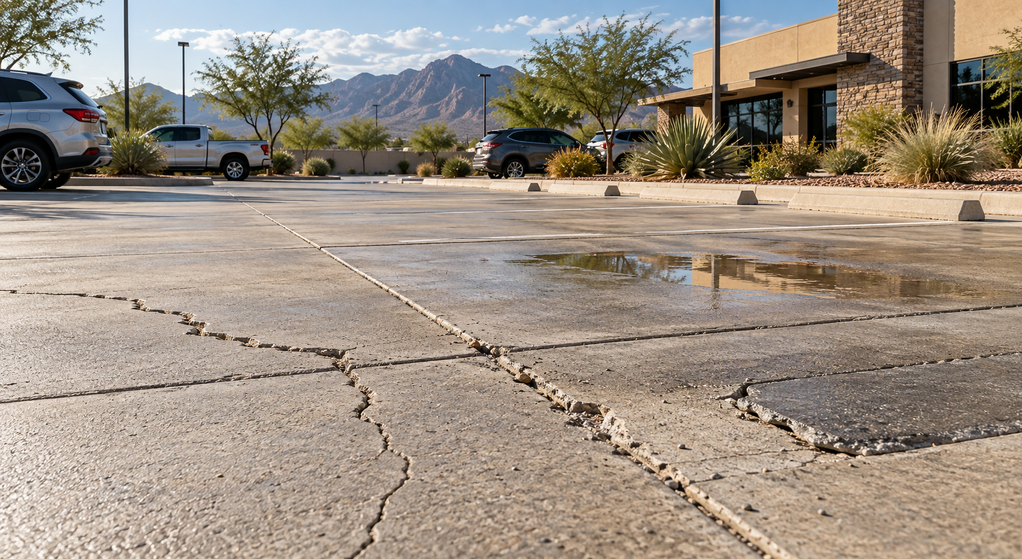
How to Prevent Standing Water in Concrete Parking Lots in El Paso
Summary
Standing water usually points to a grading, drainage, settlement, or maintenance problem rather than the concrete itself. El Paso property owners can reduce ponding by planning runoff routes before construction, protecting the supporting soil, maintaining drains, and correcting small depressions before water contributes to broader pavement damage.
Standing water can block parking spaces, conceal surface defects, create slick areas, and carry dirt or oil toward entrances. If it repeatedly collects in the same place, it may also indicate that the pavement or supporting soil has moved.
Effective concrete parking lot construction and repair in El Paso should treat drainage as part of the initial layout, not as an accessory added after the concrete is poured. Water needs an uninterrupted route from every paved area to a suitable inlet, gutter, channel, or discharge point.
Founded in 2009, El Paso Concrete Contractors combines more than 22 years of construction experience with ACI certification and civil engineering expertise. The company uses optical and laser levels for slope calibration, a particularly relevant step when small elevation differences determine whether runoff moves or ponds.
Identify Why Water Is Collecting
Before choosing a repair, determine where the water comes from and why it cannot leave. Common causes include:
- A low spot created during placement or finishing
- Insufficient slope between the pavement and a drain
- A clogged inlet, trench drain, or catch basin
- Settlement caused by poorly compacted or eroded supporting material
- Raised pavement at a patch, curb, sidewalk, or utility repair
- Roof drains or landscaped areas directing additional runoff onto the lot
- An undersized drainage system or an outlet that backs up during heavier rainfall
El Paso’s generally dry conditions can make drainage defects easy to overlook between storms. A brief period of concentrated rainfall may send runoff from roofs, sidewalks, neighboring pavement, and sloped ground into the same low area. Reviewing how poor drainage can damage concrete parking lots in El Paso can help owners recognize how ponding connects to erosion, settlement, cracking, and joint deterioration.
Design the Drainage Route Before Construction
Preventing standing water begins with a site-level drainage plan. The design should account for existing elevations, surrounding buildings, accessible routes, entrances, curbs, landscaping, and the location of an acceptable discharge point.
The parking surface needs a consistent slope, but making the lot steeper is not automatically better. Excessive or poorly directed slope can create accessibility problems, send water across pedestrian routes, or concentrate runoff against another part of the property. The U.S. Access Board’s ADA guidance for accessible parking states that parking spaces

and access aisles must be nearly level, with slopes no steeper than 1:48. Drainage planning should therefore be coordinated with applicable accessibility requirements instead of increasing slope indiscriminately.
The Federal Highway Administration’s guidance on pavement conditions and drainage explains that inadequate cross slope, pavement depressions, and blocked or missing drains can increase ponding. Although the guidance addresses transportation infrastructure, the same drainage principle applies to parking lots: surface shape and functioning drainage features must work together.
During planning, confirm:
- Where water enters the property
- Which direction each section of pavement will drain
- Whether curbs interrupt the intended flow
- Whether drains are located at true low points
- Where collected water will ultimately discharge
- How the layout will function during a larger storm, not only light rain
Protect the Subgrade and Pavement Elevations
Correct surface elevations may not last if the supporting material is unstable. Poorly compacted fill can settle under vehicle loads, creating shallow bowls where water collects. Water entering through open joints or cracks may also carry fine material away from beneath the slab and contribute to additional movement.
Site preparation should therefore address unsuitable soil, fill placement, compaction, and drainage below or beside the pavement where needed. Heavy-use areas such as delivery lanes, dumpster approaches, and truck routes deserve particular attention because they experience greater loading.
Transitions also require careful checking. Drainage problems often appear where new pavement meets an older slab, driveway apron, gutter, sidewalk, or utility patch. Even a modest ridge at one of these connections can block an otherwise functional runoff path.

Keep Drains and Flow Lines Clear
A properly graded lot can still hold water when sediment and debris obstruct its drainage system. Windblown dust, leaves, litter, gravel, and landscape material may collect around inlets or along curbs.
Maintenance should include:
- Clearing drain grates and curb openings
- Removing sediment from channels and low points
- Checking downspouts that discharge near the pavement
- Keeping landscape soil and rock below curb openings
- Inspecting joints and cracks near recurring puddles
- Looking for displaced grates, broken drain edges, or collapsed piping
Inspect the lot during rainfall or shortly afterward when practical and safe. Mark the boundaries of puddles and note how long they remain. Photos taken from the same locations after different storms can help distinguish an isolated blockage from a persistent elevation problem.
Match the Repair to the Cause
Cleaning a clogged inlet may solve a maintenance-related problem. Persistent depressions usually require a different response.
Possible corrective work may include localized slab replacement, drain adjustment, installation of a trench drain, reconstruction of a failed transition, or broader regrading. Surface patching alone is unlikely to provide a durable result if settlement is continuing beneath the concrete.
Multiple sunken panels, widening cracks, recurring soil loss, or water that returns after previous repairs can indicate a larger structural or site-drainage issue.

In those situations, knowing when concrete parking lot repair in El Paso is not enough helps owners compare targeted work with partial or full replacement.
Take Practical Next Steps
Start by documenting where water enters, travels, and stops. Clear obvious obstructions, then observe the next rainfall. If ponding remains, have the pavement elevations, drains, and discharge route evaluated together.
Ask for a written scope that identifies the cause, proposed elevation changes, drainage destination, affected parking spaces, and protection of accessible routes. This makes it easier to compare solutions based on function rather than price alone.
Standing water is easiest to control when runoff has a complete path across the lot and away from vulnerable areas. Accurate grading, stable support, correctly positioned drainage features, and regular maintenance can reduce ponding while protecting the parking lot from avoidable deterioration.

Written By:
Kurt Manalastas
Home & Property Research Journalist
Kurt is a Home & Property Research Journalist who creates educational content on home services, property improvement, and residential decision-making. He translates contractor experience, industry standards, and verified research into clear, practical guidance that helps homeowners understand their options and make informed decisions.