Common Masonry Problems in El Paso Homes
Homeowner Summary
Cracked mortar, stair-step cracking, loose units, white deposits, bulging walls, and separation around openings can point to very different masonry problems. El Paso property owners should identify whether the cause is normal movement, moisture, poor support, or structural displacement before choosing cleaning, repointing, repair, or replacement.
Masonry can remain serviceable for decades, but the visible symptom may be far from the real cause. A crack can begin with foundation movement, roof runoff, a corroding lintel, or soil pressure behind a retaining wall.
An assessment from a provider of masonry services in El Paso should examine the masonry, its support, nearby drainage, and the crack pattern as one system.
El Paso Concrete Contractors provides local masonry services involving brick, block, stone, and related masonry work. This article focuses specifically on brick, concrete block, stone, mortar joints, and masonry veneer. A hairline crack limited to a stucco finish may require a different diagnosis.
Stair-Step Cracks and Cracks Around Openings
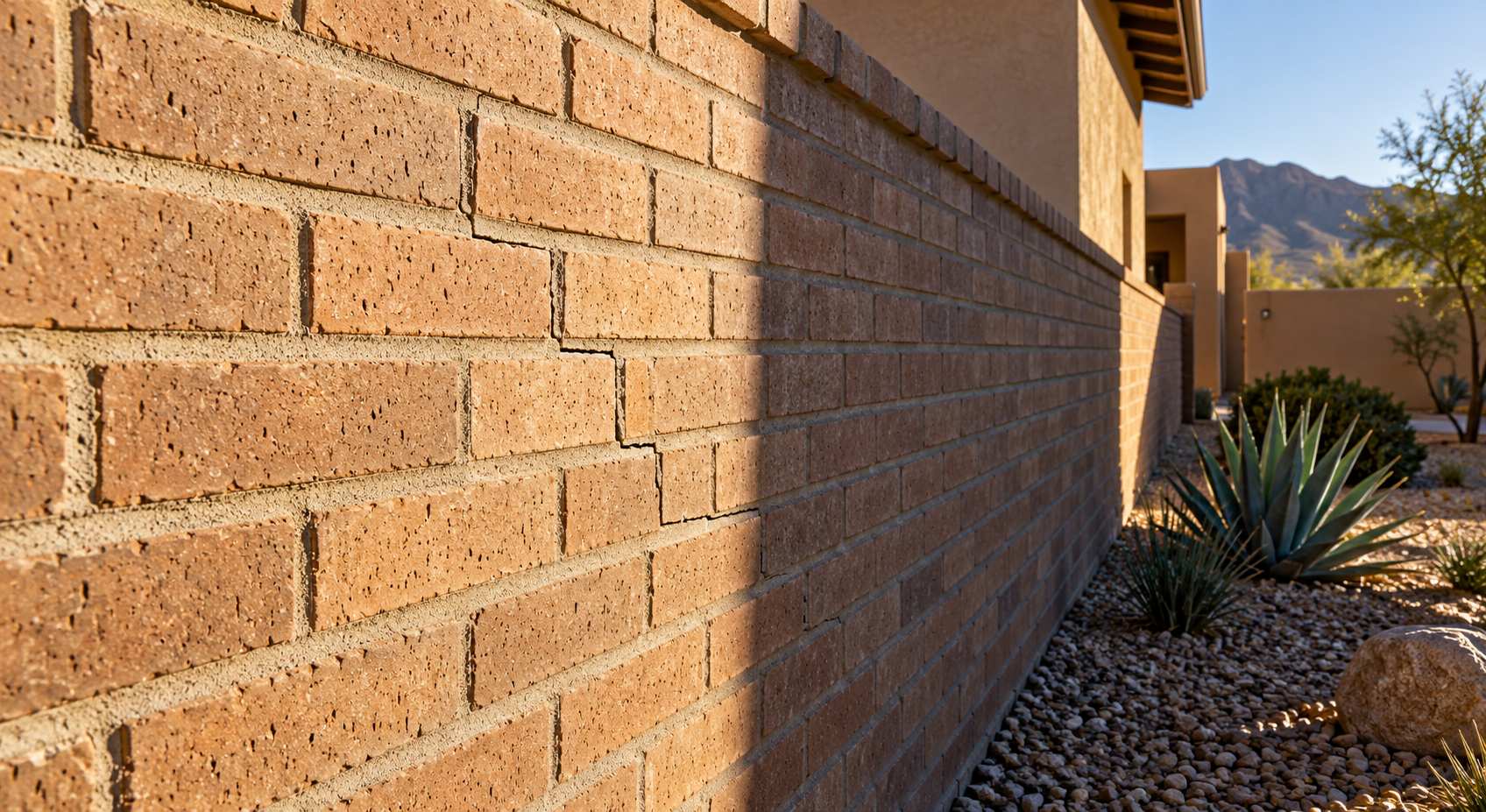
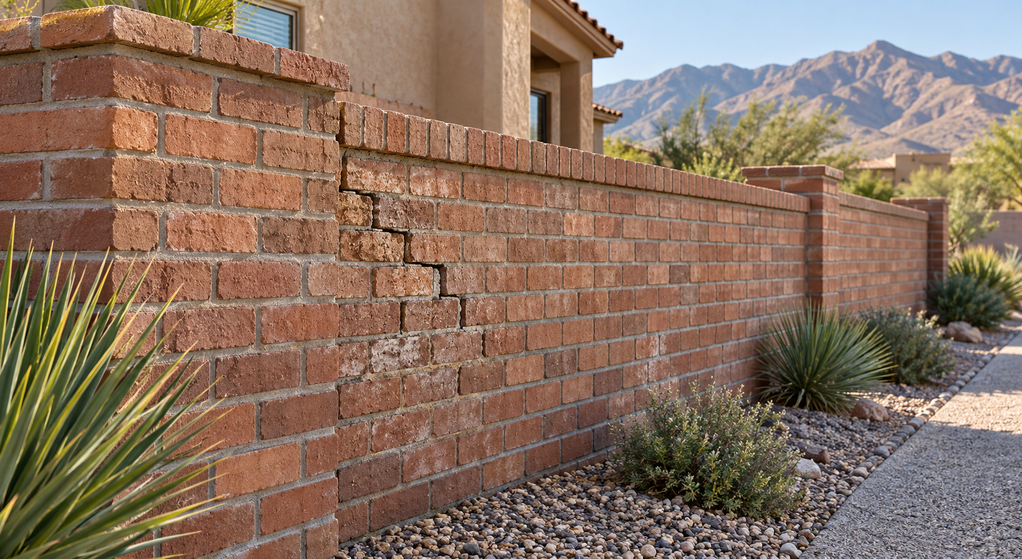
Stair-step cracks follow mortar joints and often show that one part of the wall moved differently from another. Possible causes include settlement, inadequate support, or stress near a window, door, corner, or material transition.
Crack shape alone does not prove the cause. A useful inspection records where the crack starts, whether it crosses the foundation or interior finish, and whether doors or windows nearby have begun sticking. Compare dated photos instead of relying on memory. A crack that widens, lengthens, reopens after repair, or includes displaced units deserves prompt professional evaluation.

Brick Industry Association’s guidance on accommodating brickwork movement explains that temperature, moisture, settlement, and other movements can cause cracking when the wall cannot move as intended. Filling a recurring crack may hide evidence without correcting the source.
Deteriorating Mortar and Loose Masonry Units
Mortar joints may become recessed, powdery, cracked, or partly missing. Once the joint loses depth, water can enter more easily and individual bricks or stones may loosen. Deterioration can result from age, persistent wetting, an unsuitable original mix, or a past repair mortar that is too hard for the surrounding units.
Repointing is appropriate when the masonry remains aligned and damage is mainly within the joints. Deteriorated mortar must be removed to a sound depth, and the replacement should be compatible with the wall.
Smearing a thin layer over weak mortar creates a short-lived cosmetic patch rather than addressing deteriorated material beneath the surface.

White Deposits, Staining, and Moisture Paths
A white, powdery deposit is often efflorescence, which forms when moisture carries soluble salts through masonry and leaves them on the surface as the water evaporates. Efflorescence is not automatically a structural failure, but it is evidence of moisture movement.
Check for irrigation spray, leaking downspouts, failed coping, poorly sealed openings, and soil that holds water against the wall.
Aggressive pressure washing or an untested acid cleaner can damage mortar faces and alter color. If deposits return, correct the water source before cleaning again.
Bulging, Leaning, or Separation From the House
A wall that bows, leans, or pulls away from an adjoining surface has moved beyond ordinary wear. Causes may include failed veneer ties, footing settlement, or soil and water pressure behind a retaining wall.
Fresh mortar should not be used to disguise active displacement. Restrict access if loose units could fall, then determine whether the wall can be stabilized and repaired or whether affected sections need rebuilding.
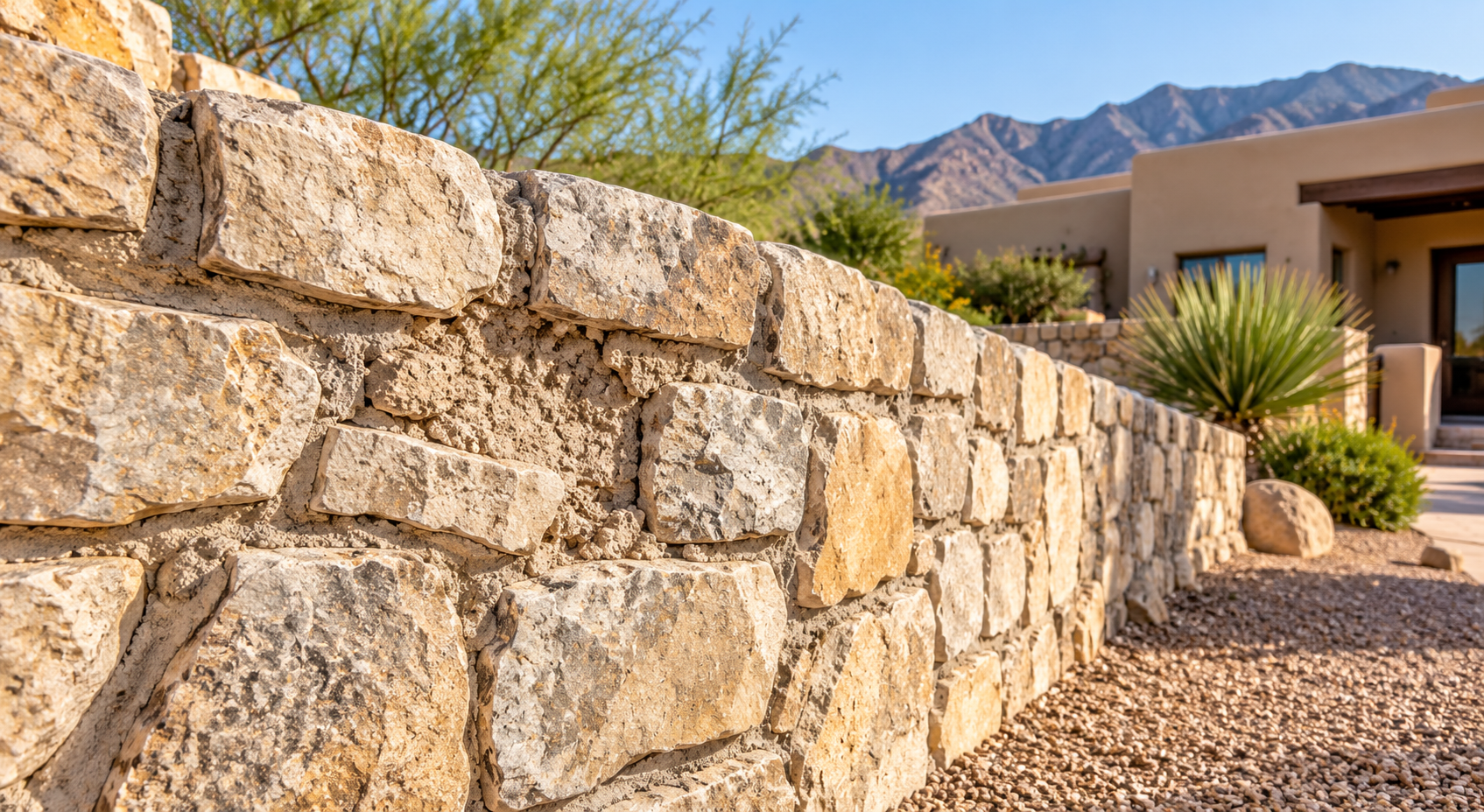
Property owners dealing with an exterior stone structure can use this guide on how to decide when an El Paso rock wall should be repaired or replaced to understand the main decision factors.
Cracking or Displacement Above Doors and Windows
Masonry above an opening depends on a lintel or another designed support. Diagonal cracks, sagging joints, displaced units, or rust staining may indicate movement there.
Corrosion on a steel lintel can push nearby masonry, while inadequate bearing can create a different pattern.
Replacing only the cracked mortar may provide little value if the support continues moving. The inspection should include the lintel, sealant joints, flashing, and the condition of the masonry directly above and beside the opening.
Retaining and Boundary Wall Movement
El Paso’s desert setting can make drainage seem secondary, but concentrated runoff still matters, especially on sloped or mountain-adjacent properties.
Water entering poorly drained backfill can increase pressure, wash soil from beneath a footing, or expose weakly compacted fill. Leaning, a widening gap at the top, bulging near the base, and soil loss through joints are warning signs.
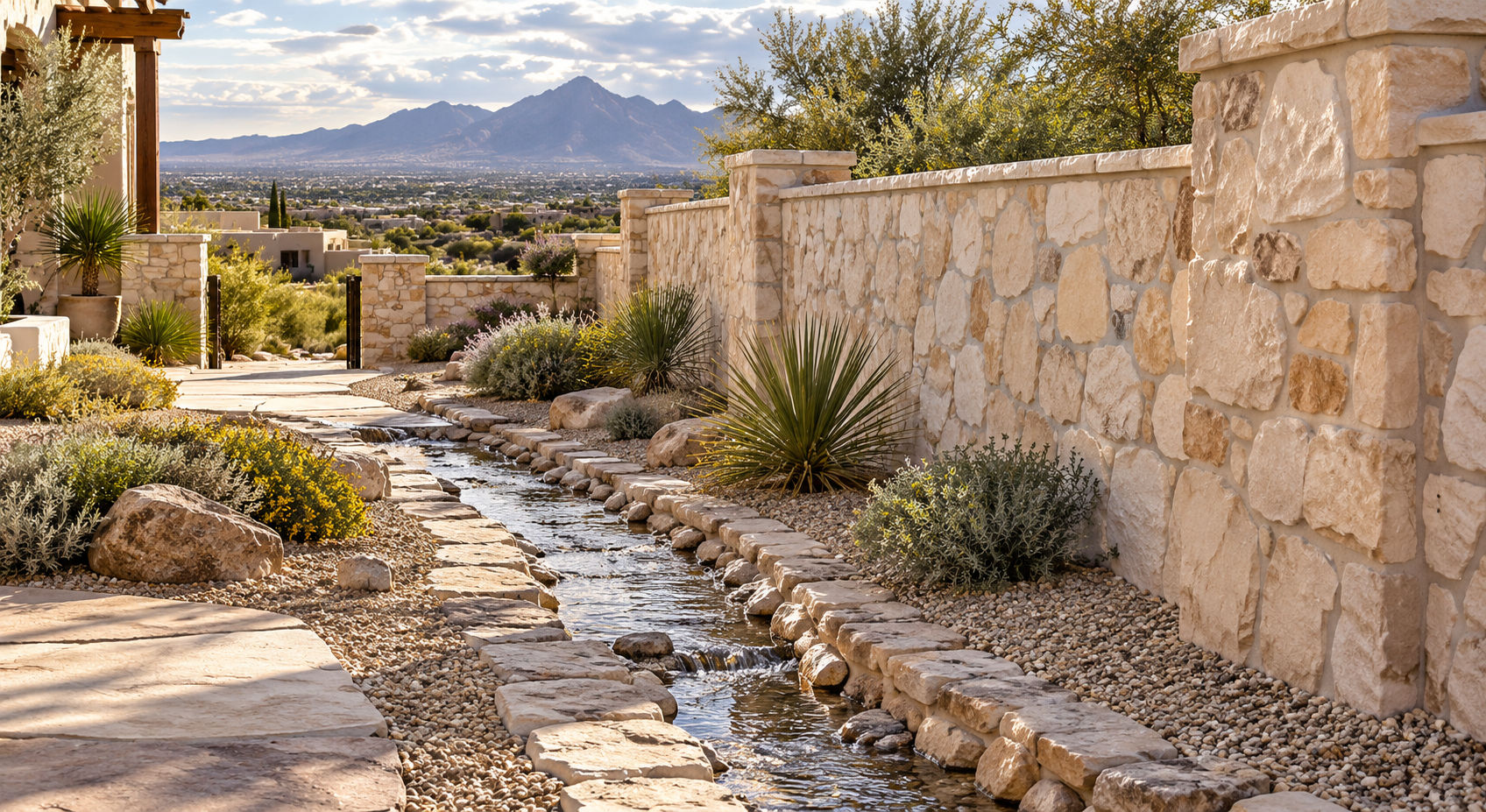
The visible stone is only one part of the system. Footing support, grading, drainage aggregate, outlet paths, and the retained soil all affect stability.

The role of backfill and compaction in retaining rock walls for El Paso yards explains why repairs made only to the wall face often fail to address conditions developing behind or beneath the structure.
What to Do Before Requesting a Repair
Photograph the full wall and each damaged area. Note whether the problem changed after rain or irrigation and whether old patches reopened.
Look for displaced units, rust staining, loose caps, blocked drainage outlets, and water directed toward the wall.
Ask for a written assessment that distinguishes cosmetic deterioration from active movement and explains the repair sequence. The assessment should consider the visible masonry together with support conditions, drainage, surrounding terrain, previous repairs, and evidence of continued movement rather than relying on the appearance of one crack alone.
Written quotes and detailed contracts also allow the proposed scope to be reviewed before work begins.
Address the Cause Before the Finish
The right masonry repair depends on why the damage formed.
Sound walls with localized mortar loss may only need careful repointing. Repeated cracks, movement around openings, persistent moisture, or a leaning wall require a broader investigation.
Correcting support, drainage, or movement first gives the finished repair a better chance of lasting.

Written By:
Kurt Manalastas
Home & Property Research Journalist
Kurt is a Home & Property Research Journalist who creates educational content on home services, property improvement, and residential decision-making. He translates contractor experience, industry standards, and verified research into clear, practical guidance that helps homeowners understand their options and make informed decisions.