Masonry Repair or Replacement in El Paso: How to Decide
Summary
Masonry repair is appropriate when damage is localized and the surrounding wall remains dependable. Partial rebuilding or full replacement becomes more reasonable as support fails, movement continues, or deterioration spreads. El Paso property owners should compare wall function, retained material, concealed conditions, water sources, and the complete repair scope before choosing the lowest price.
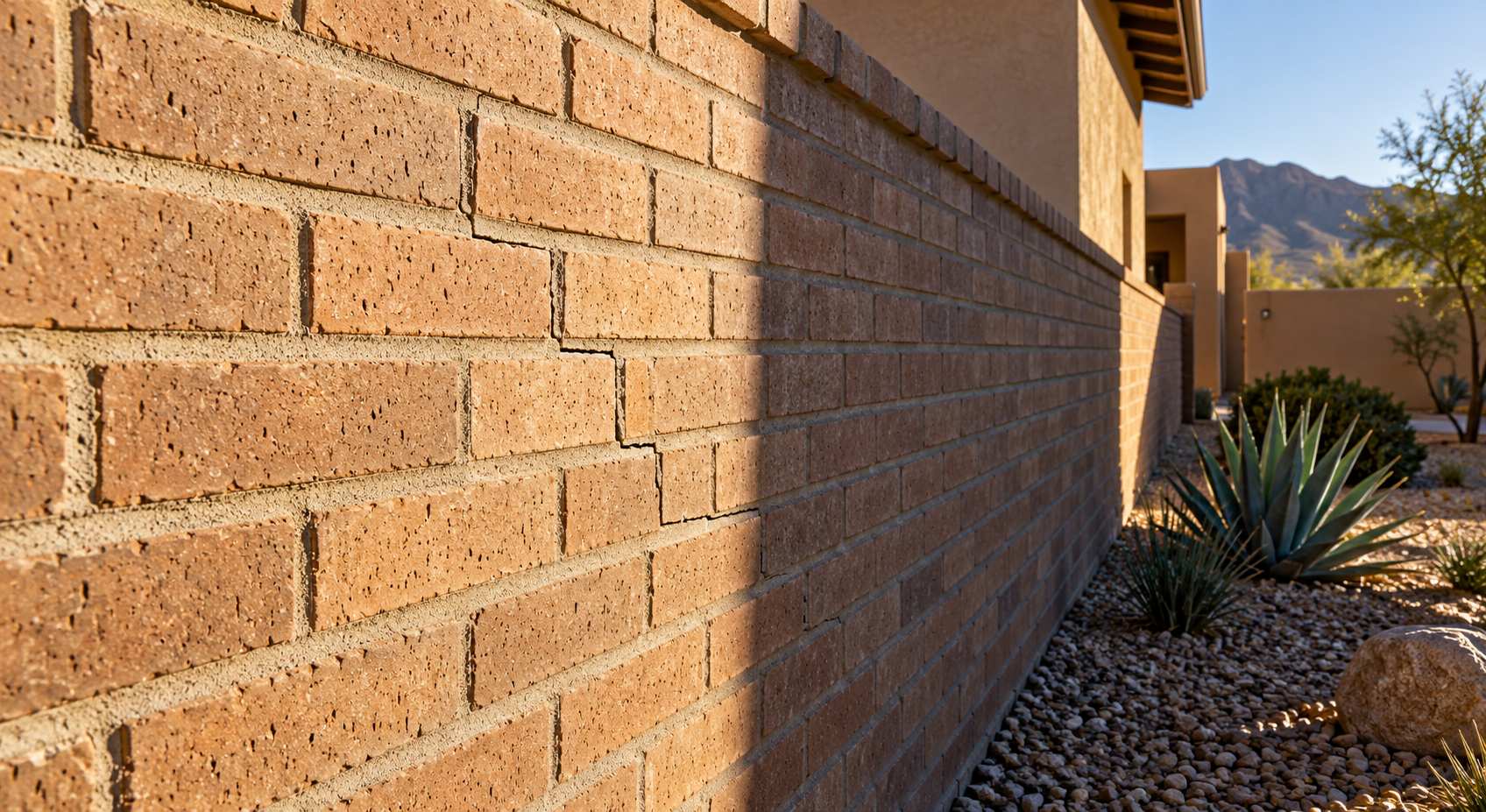
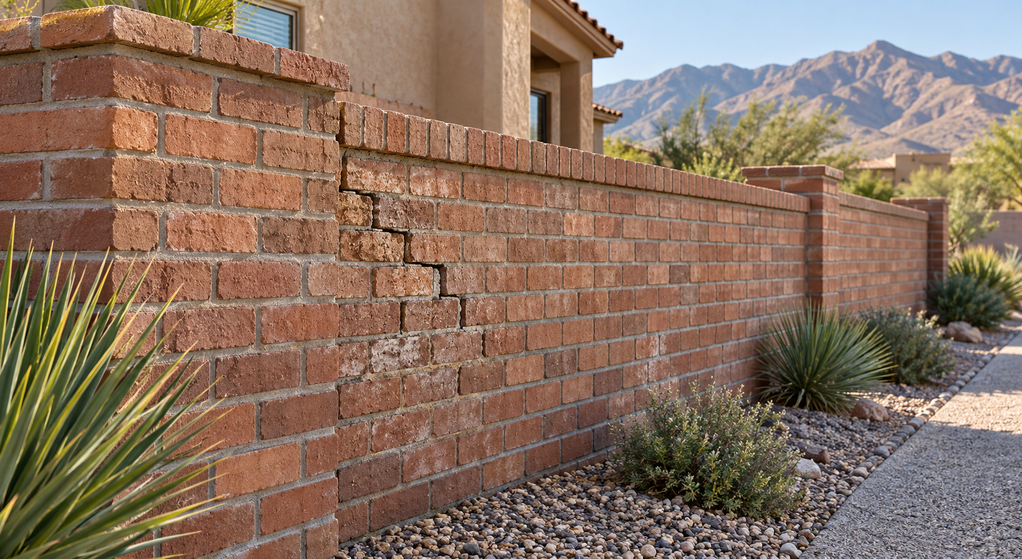
Cracked mortar or damaged brick can make an entire wall look worn out even when most of it remains serviceable. The opposite is also possible: a small visible crack can be the surface evidence of a support problem that a patch cannot resolve.
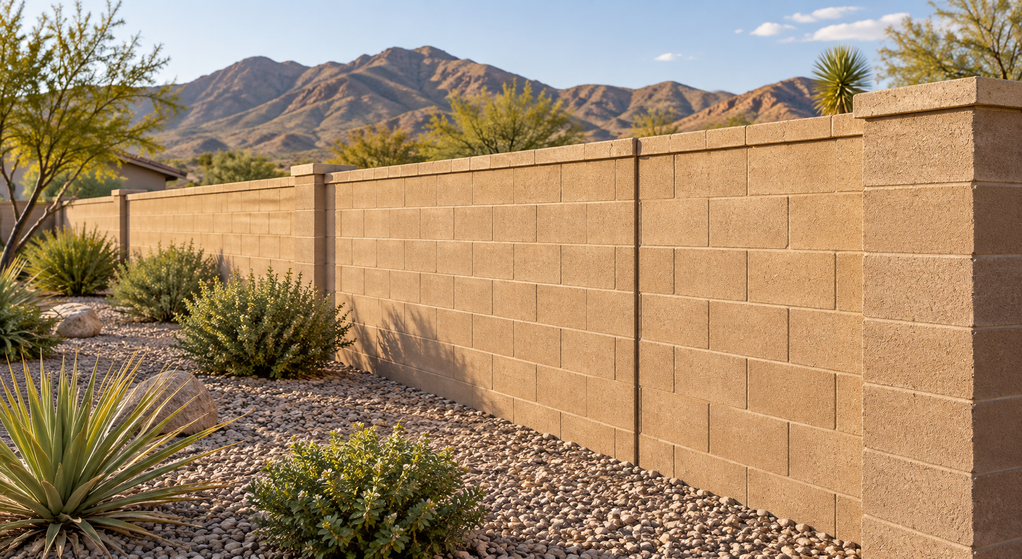
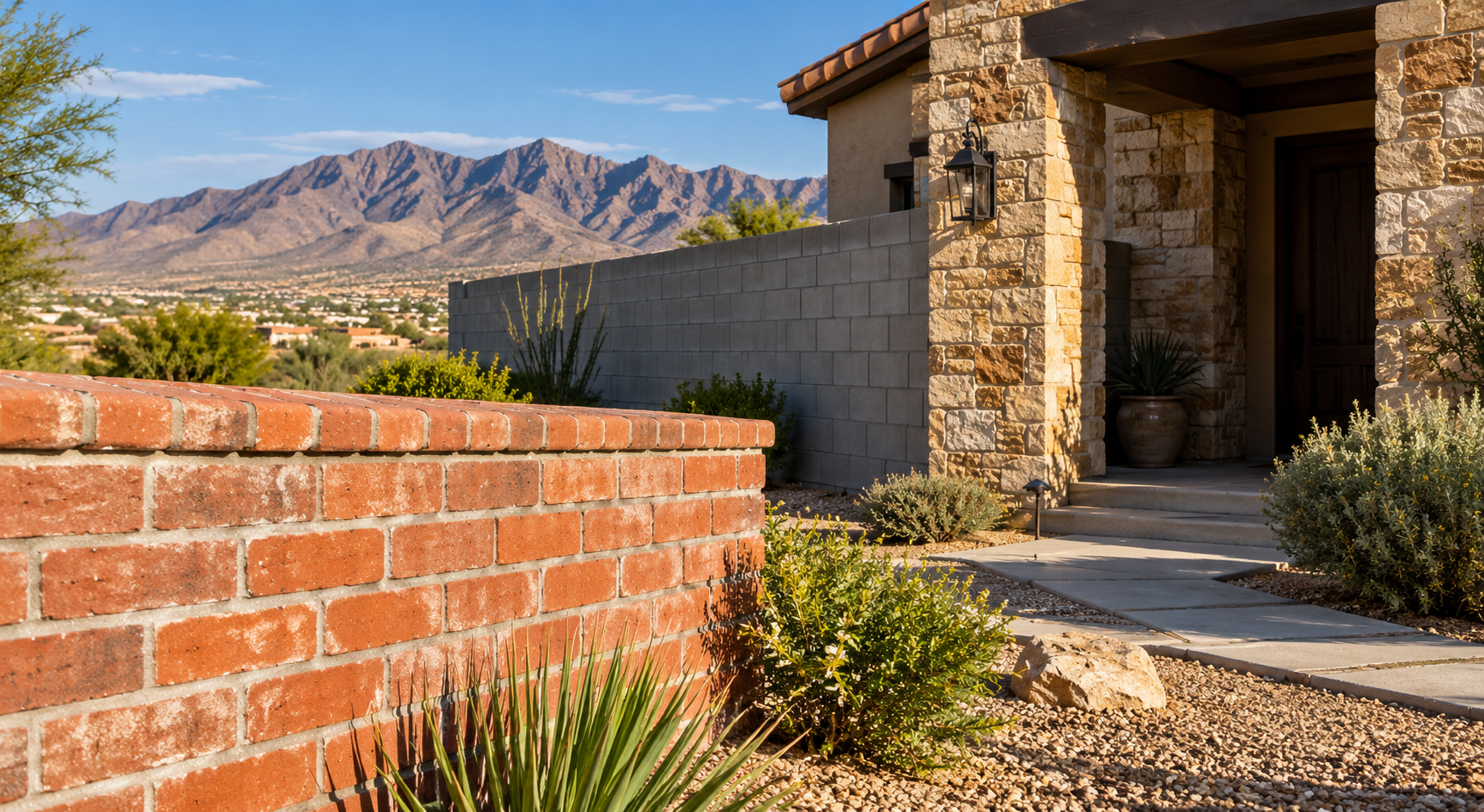
Masonry installation and repair services in El Paso cover brick, block, and stone construction with different repair options. El Paso Concrete Contractors provides local masonry work, but the scope decision should follow the condition and function of the wall rather than the lowest initial quote.
Decision Gate 1: What Does the Damaged Masonry Do?
Start by identifying whether the area is veneer, a freestanding boundary wall, a retaining wall, or masonry supporting part of a building. Similar-looking cracks can require different investigations because those assemblies carry different loads and manage water differently.
Ask the evaluator what is affected, what remains sound, and what cannot be confirmed without opening a section. A proposal based only on the visible crack leaves concealed support, ties, flashing, lintels, or backing outside the discussion.
Decision Gate 2: Is the Damage Localized and the Surrounding Wall Dependable?
Localized repair is reasonable when deterioration is confined to particular mortar joints or individual units and the surrounding wall remains aligned and adequately supported.
The National Park Service guidance on repointing mortar joints explains why new mortar should be compatible with the existing masonry. Repointing can restore deteriorated joints, but it cannot stabilize a moving wall or replace badly damaged units.
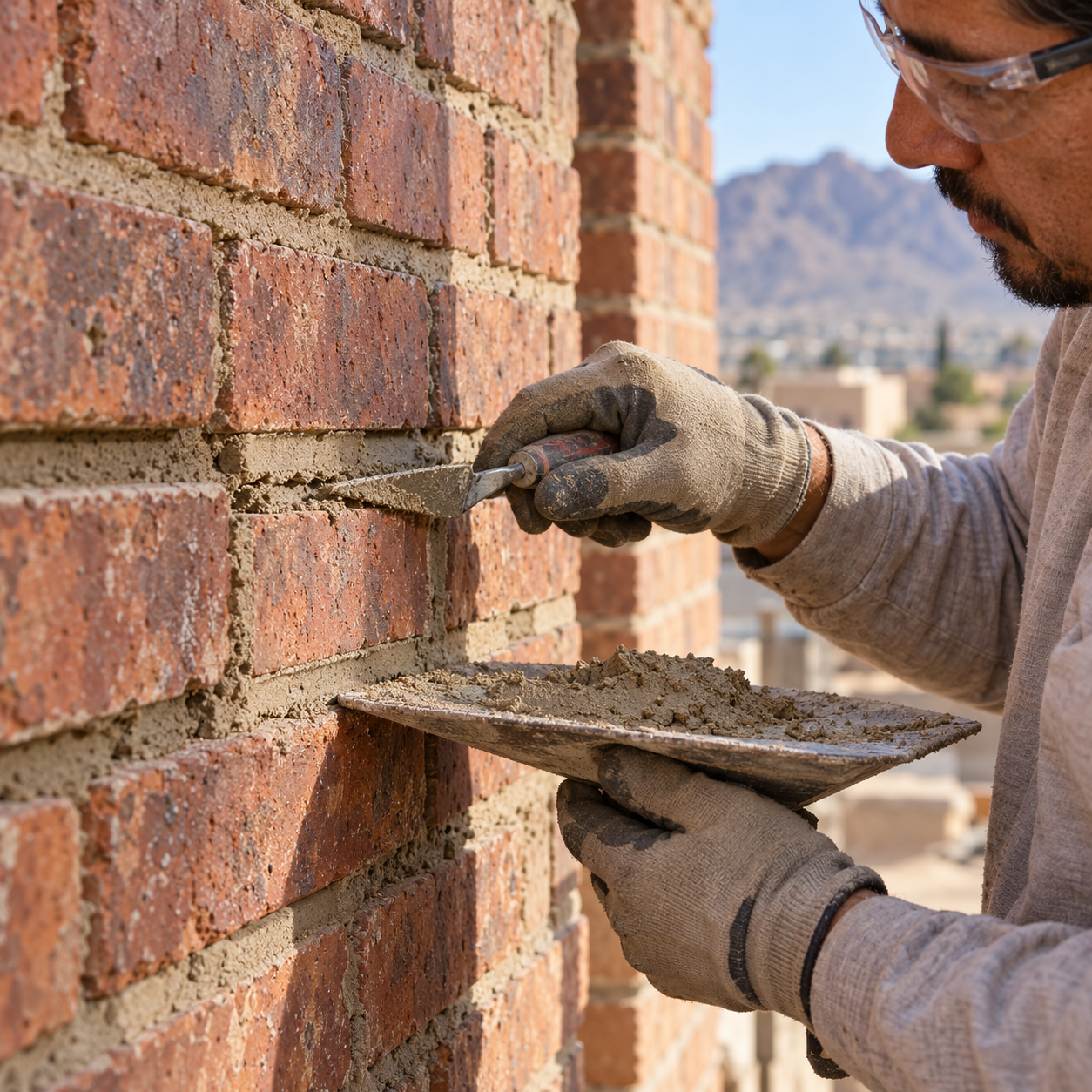
Common Masonry Problems in El Paso Homes can help distinguish joint deterioration, broken units, moisture symptoms, and movement before repair limits are selected.
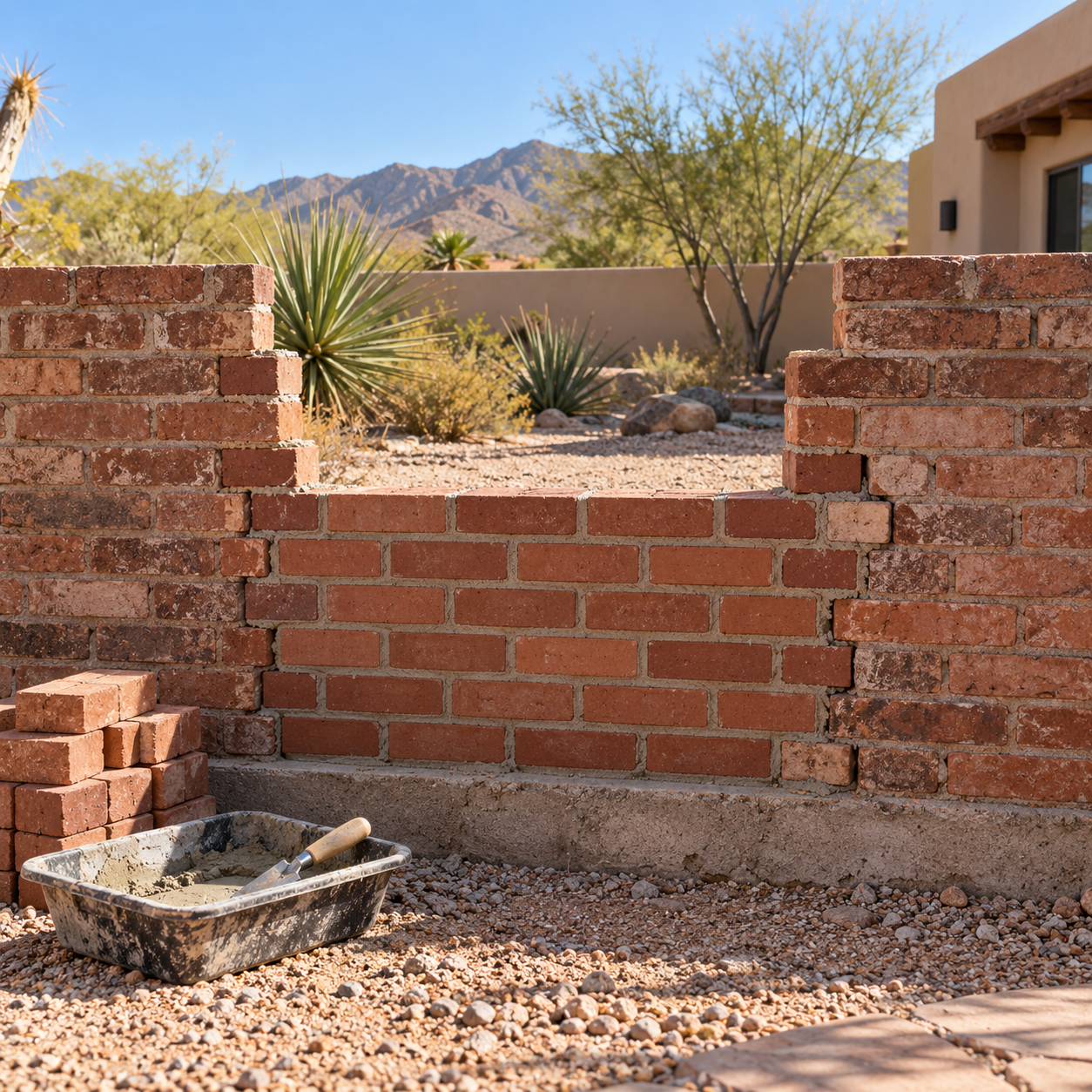
Decision Gate 3: Would Partial Rebuilding Correct the Problem Without Replacing Sound Masonry?
Repair and full replacement are not the only options. Removing and rebuilding one section can preserve serviceable masonry while providing access to a concealed support, lintel, flashing, or drainage problem.
Partial rebuilding makes sense when the damage has identifiable boundaries and the retained construction can connect safely with the rebuilt work. Ask how those boundaries were chosen and what finding during demolition would expand the scope.
Appearance is a separate tradeoff. Replacement brick, stone, block, and mortar may not match weathered material exactly. Approve samples or a mockup where visual continuity matters.
Decision Gate 4: Is the Wall Too Unstable or Deteriorated for a Dependable Limited Repair?
Broader replacement deserves evaluation when several connected sections have moved, deterioration is widespread, support is failing, or correcting a concealed defect requires extensive dismantling. Pronounced leaning, bulging, displaced masonry, or repeated separation after earlier repairs are stronger signals than crack width alone.
Keep people away from loose or unstable masonry. Seek structural-engineering evaluation when support or stability is uncertain, particularly where the wall retains soil or supports other construction.
For a material-specific comparison, When to Repair vs. Replace a Rock Wall in El Paso TX addresses the same decision specifically for rock walls.
Decision Gate 5: Has the Cause Been Corrected Along With the Masonry?
A repair can be technically neat and still fail if irrigation, runoff, support movement, or another active cause remains. Document when the damaged area becomes wet, whether soil or grades changed, and whether earlier repairs reopened.
The final scope should state how water sources, support, movement joints, or concealed components will be handled. Rebuilding the face without correcting a confirmed cause can expose new work to the same problem.

Compare Complete Outcomes, Not Just Prices
Ask each contractor to identify the areas being repaired, rebuilt, retained, or removed; the underlying problem being corrected; material and appearance expectations; access and cleanup; and how concealed damage will be documented and priced.
Choose the smallest scope that adequately addresses the confirmed problem. Preserve sound masonry where practical, rebuild bounded sections where necessary, and move toward full replacement when the remaining construction cannot reasonably support a dependable repair.

Written By:
Kurt Manalastas
Home & Property Research Journalist
Kurt is a Home & Property Research Journalist who creates educational content on home services, property improvement, and residential decision-making. He translates contractor experience, industry standards, and verified research into clear, practical guidance that helps homeowners understand their options and make informed decisions.