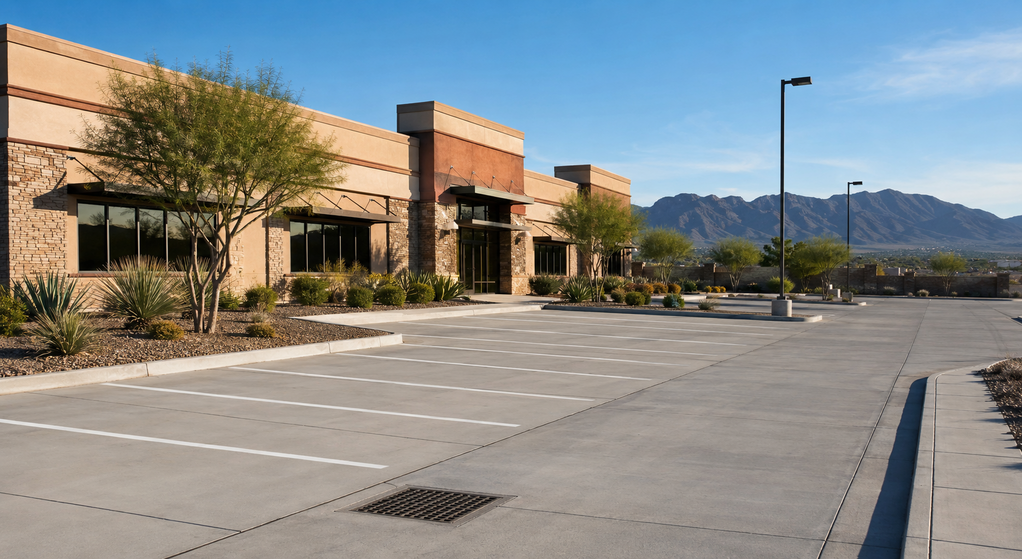
Why Proper Drainage Matters for Masonry Structures in El Paso
Summary
Drainage protects El Paso masonry only when water has a complete route from source to exit. Boundary walls, retaining walls, and masonry veneer manage water differently, so the same fix does not suit every structure. Trace irrigation and runoff, confirm how the wall is intended to drain, then repair moisture damage after the water problem is addressed.
A masonry wall can look solid while water creates problems beside, behind, or within it. Repeated dampness may leave deposits on the face, concentrated runoff can erode support, and trapped water behind retained soil can add pressure. The drainage solution depends on what the wall is built to do.
Masonry installation and repair services in El Paso include structures with different drainage needs. El Paso Concrete Contractors provides local masonry work, so the surrounding yard, paving, irrigation, and wall type should be reviewed together before visible damage is repaired.
Step 1: Identify the Wall Type Before Choosing a Drainage Fix
A freestanding boundary wall, a retaining wall, and masonry veneer do not manage water the same way. A surface opening that helps one assembly can be irrelevant or harmful in another.
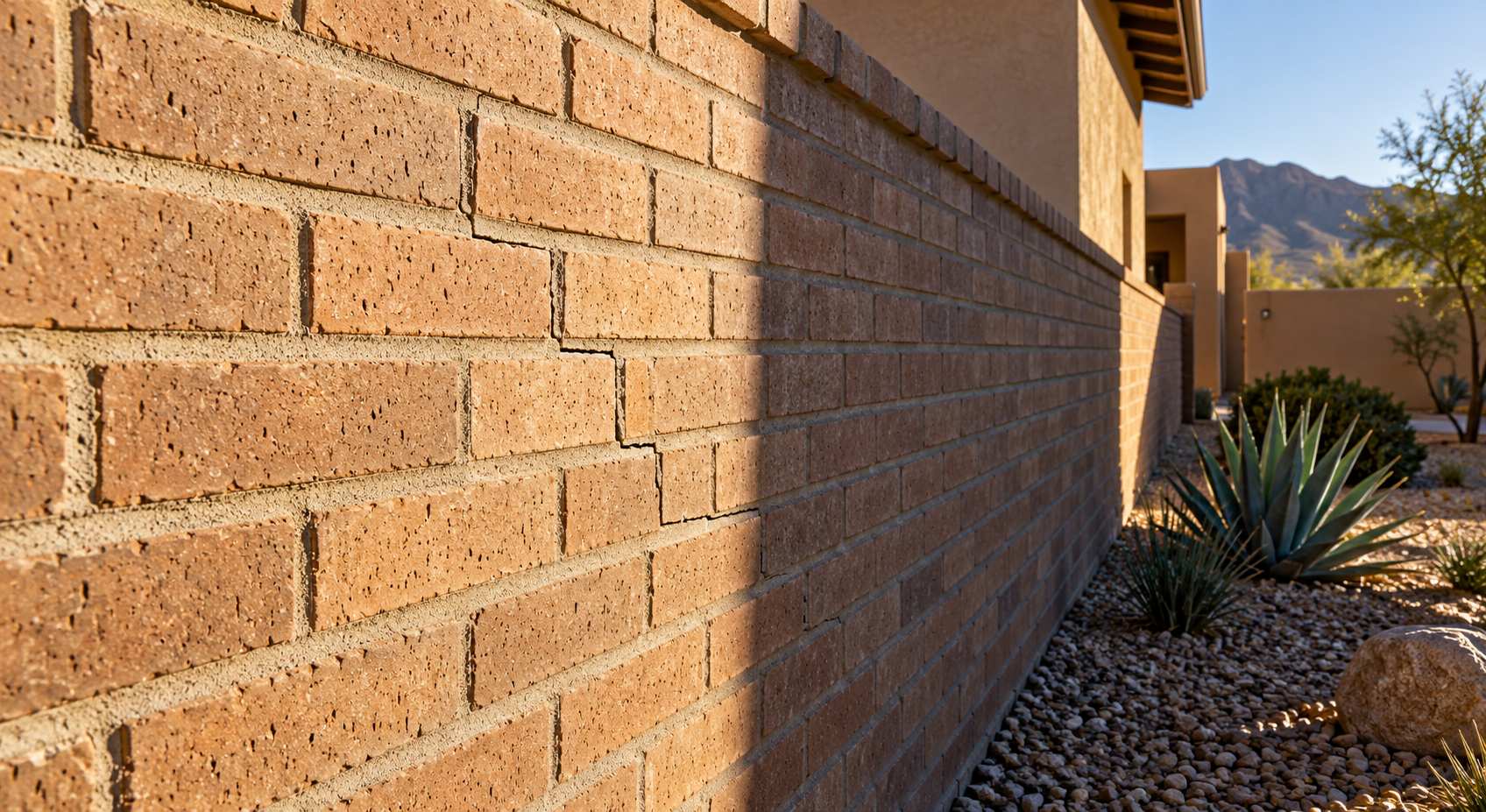
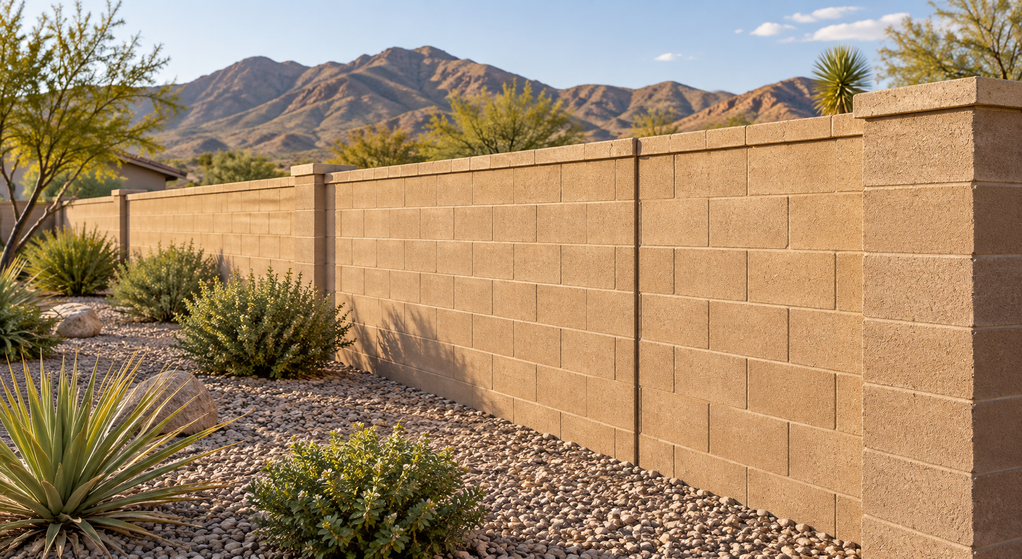
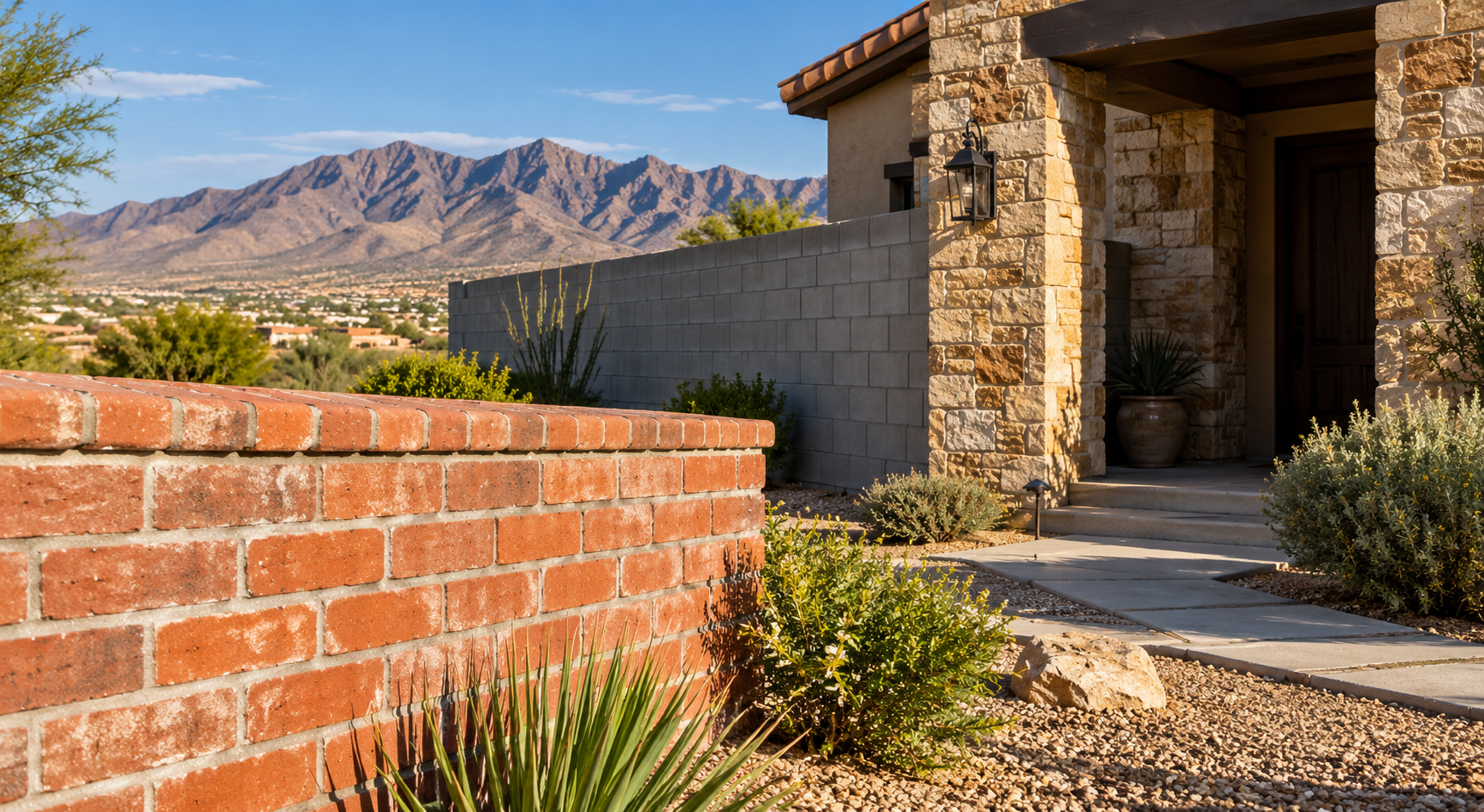
- Boundary wall: focus on runoff at the base, repeated wetting, erosion, and whether landscaping has changed the ground level around the wall.
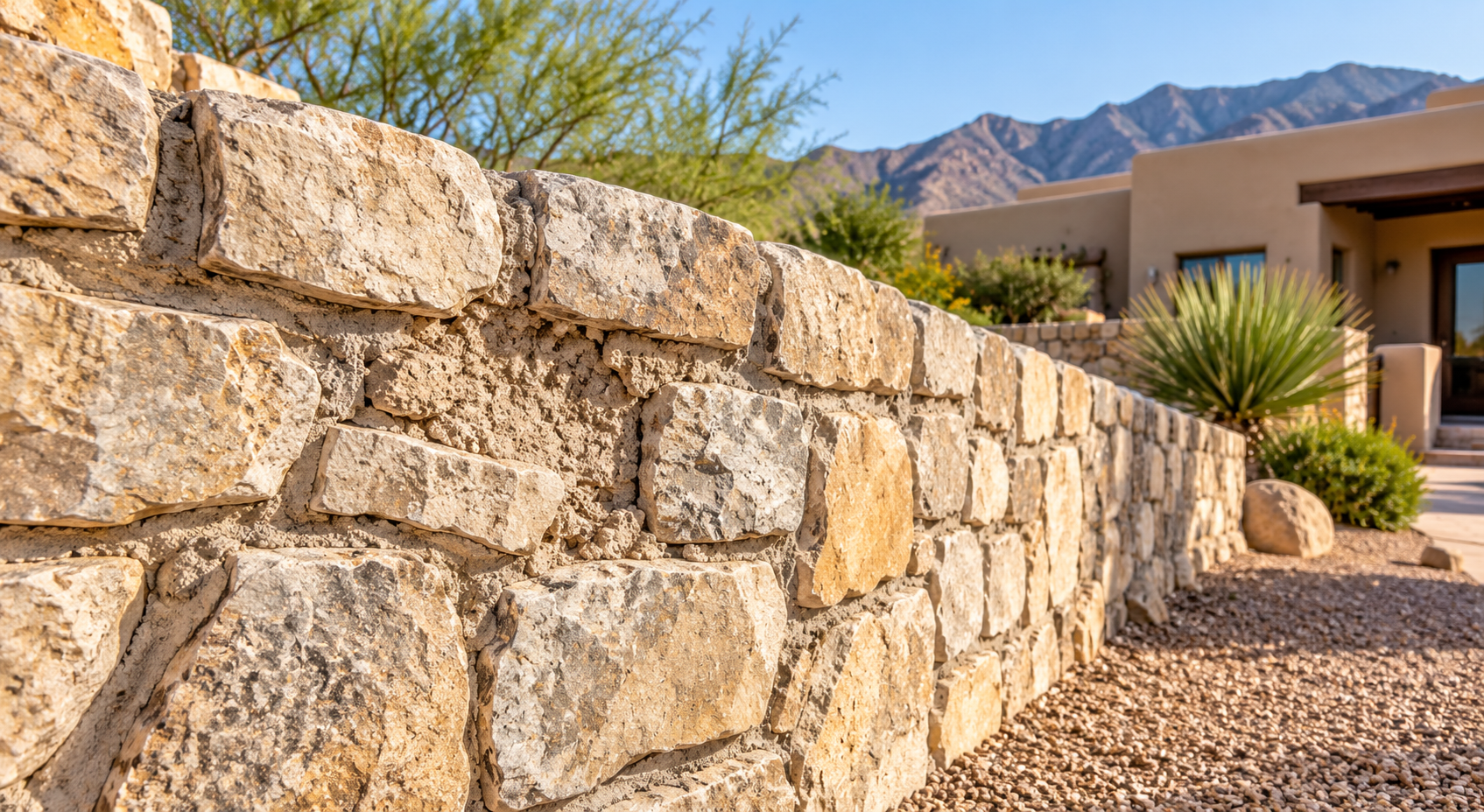
- Retaining wall: water behind the wall must be considered with soil pressure, backfill, filtration, and a working outlet.
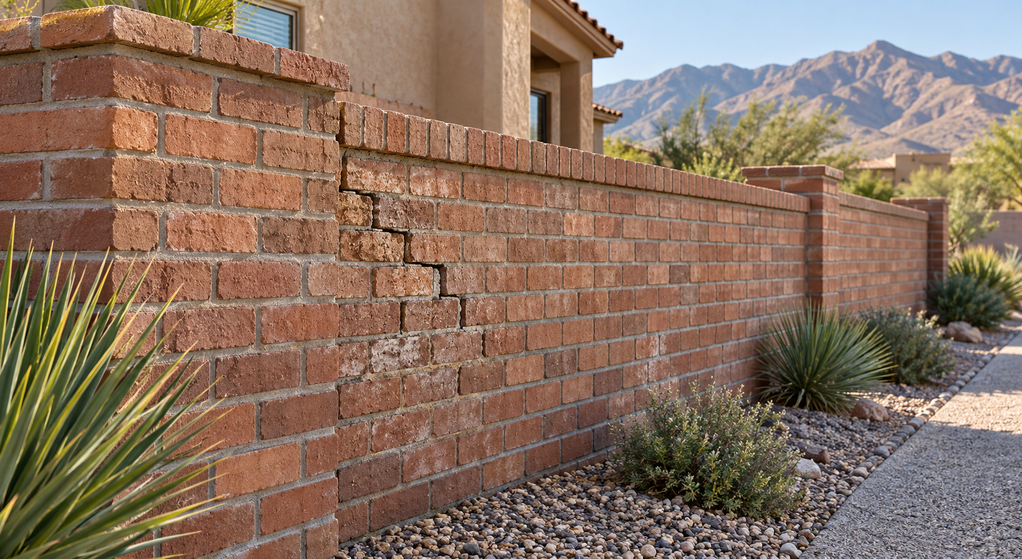
- Masonry veneer: rain that passes through the facing needs a concealed drainage path and flashing that directs water back outside.
For veneer, Building Science Corporation’s guide to drainage planes behind exterior cladding explains the principle of directing penetrating water downward and outward through a drainage plane integrated with flashing. That guidance should not be treated as the drainage design for a retaining wall.
Step 2: Trace Water From Its Source
El Paso’s desert climate does not eliminate concentrated wetting. A regularly watered planting bed, leaking emitter, sprinkler overspray, downspout, or paved surface can repeatedly send water to one wall section.
Observe conditions after rainfall and after a normal irrigation cycle. Note where water arrives, where it collects, which surfaces stay damp, and whether the same pattern appears without rain.
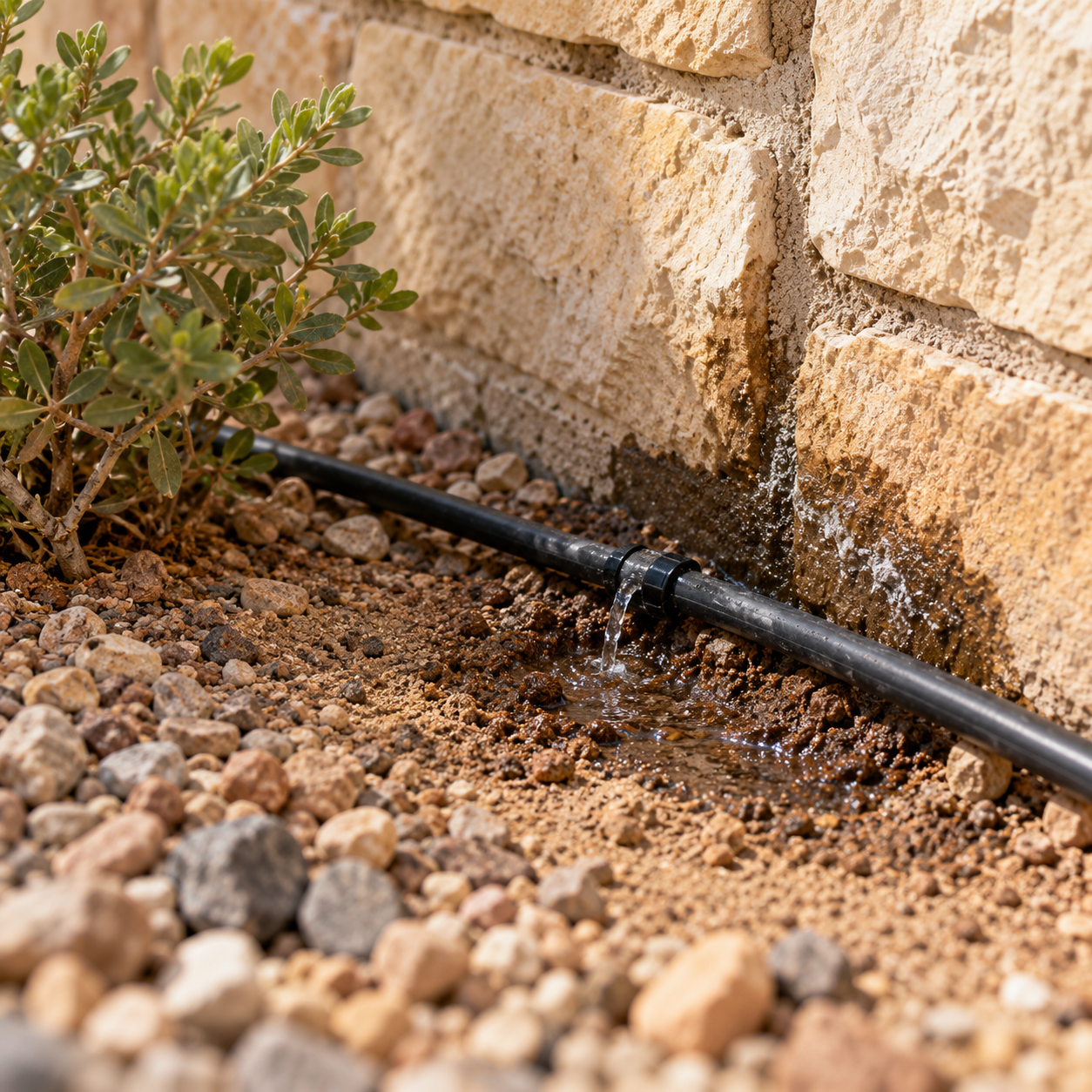
How Proper Irrigation Planning Protects Your Concrete and Landscaping in El Paso is useful when the pattern follows sprinklers, planting beds, or irrigation zones.
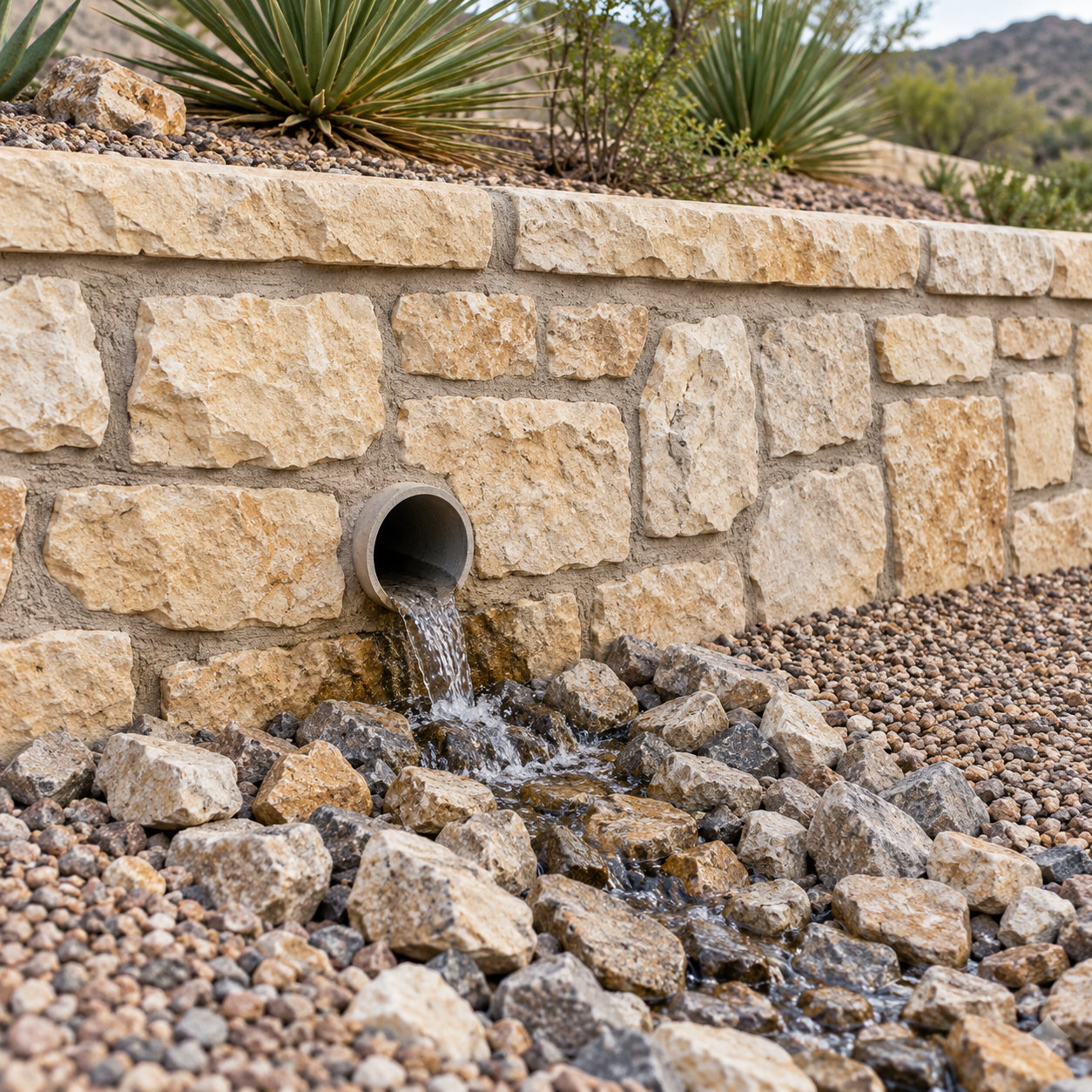
Step 3: Follow the Route All the Way to an Exit
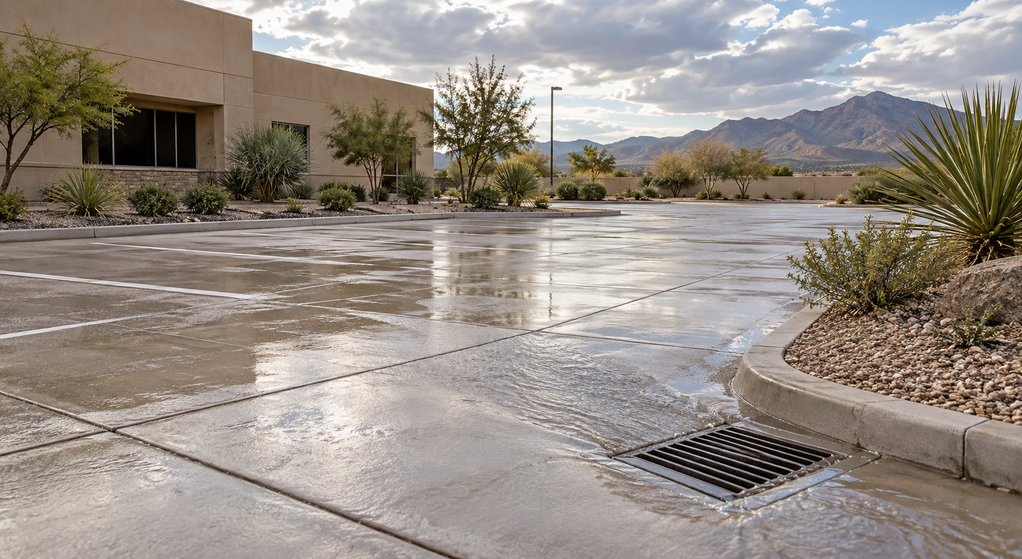
A drain works only if water can reach it and leave through a functioning outlet. Gravel beside a wall can hide ponding if the ground beneath has nowhere to drain. Likewise, a clear opening at the wall face does not prove that a concealed pipe or drainage layer is functioning.
For retaining structures, ask where collected water discharges and whether the outlet is lower, open, and protected from blockage. For boundary walls, preserve surface drainage around the base. For veneer, keep drainage exits and flashing paths unobstructed rather than burying them with soil, mulch, or a raised patio.
Step 4: Use Moisture Signs as Clues, Not Diagnoses
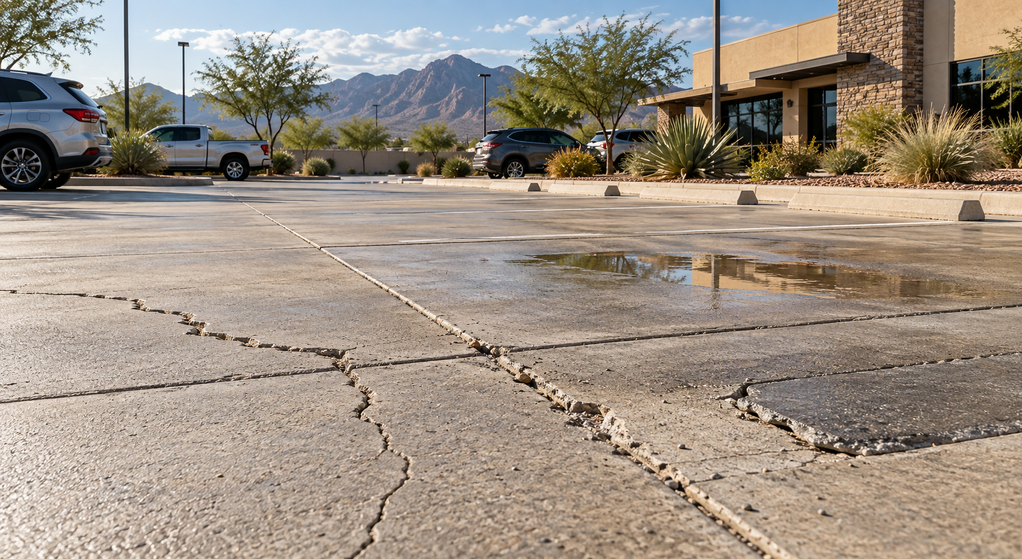
Efflorescence, damp bands, deteriorating mortar, washed-out soil, reopening cracks, bulging, and leaning can all appear near water problems, but each can have more than one cause. Their value is in the pattern and recurrence.
Common Masonry Problems in El Paso Homes helps place cracking, mortar loss, moisture, and wall movement into a broader diagnostic context.
Keep people away from visibly unstable masonry. A leaning retaining wall should be evaluated for stability before excavation or drainage alterations begin.
Step 5: Correct the Water Route Before Finishing the Masonry Repair
Some conditions may be resolved by adjusting irrigation or clearing an accessible obstruction. Others require grading changes, concealed drainage repair, support correction, or structural work. Avoid treating every moisture symptom as a need for more mortar or a waterproof coating.
Ask the written scope to identify the suspected source, route, discharge point, masonry repair, and any uncertainty that requires opening the wall. Structural stabilization may need to come first. Cosmetic finish work should follow after the water pathway and damaged masonry have been addressed.
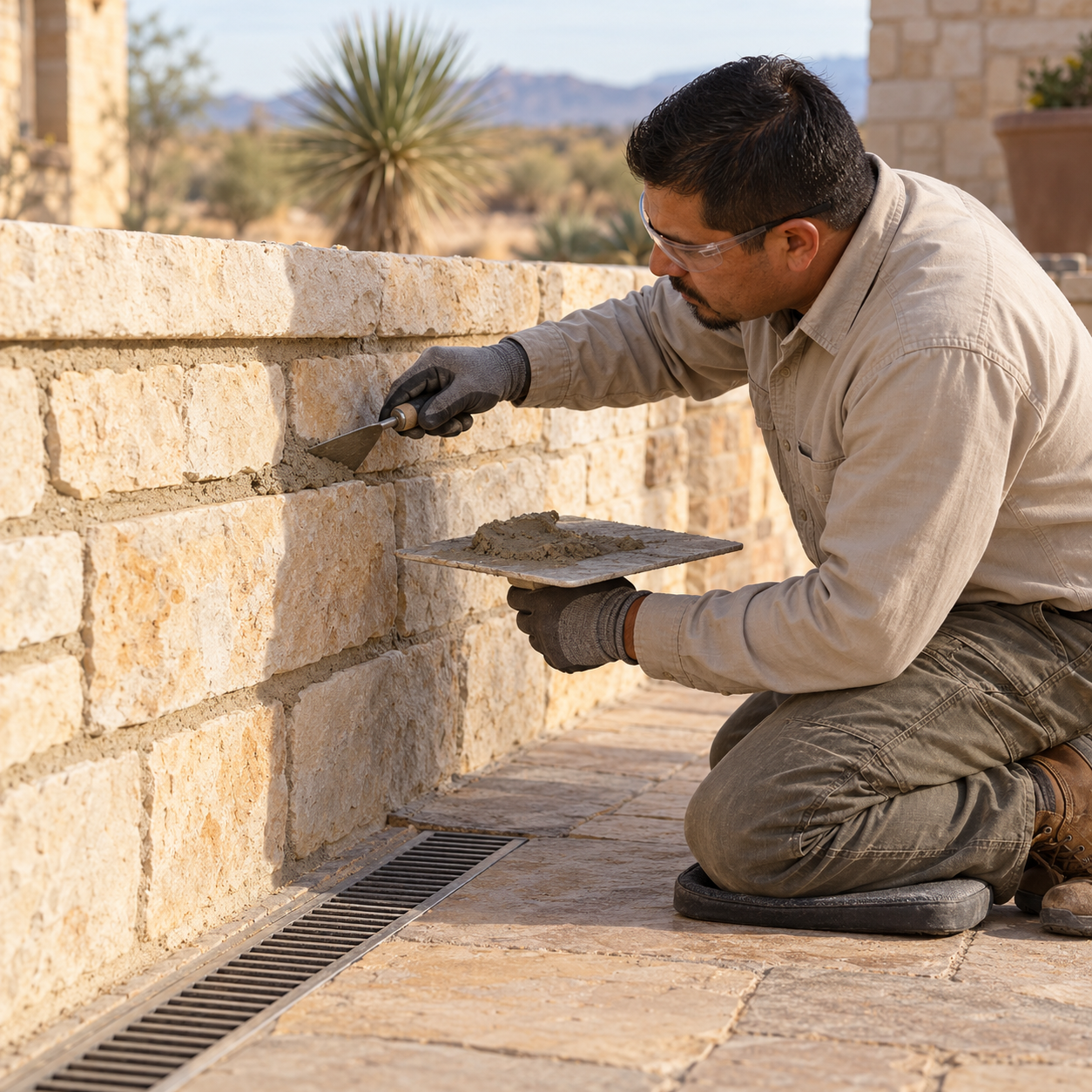
After repairs, photograph the same locations after rain and irrigation. Effective drainage is not just the presence of a drain; it is a continuous, functioning path that takes water away without creating a new problem elsewhere.

Written By:
Kurt Manalastas
Home & Property Research Journalist
Kurt is a Home & Property Research Journalist who creates educational content on home services, property improvement, and residential decision-making. He translates contractor experience, industry standards, and verified research into clear, practical guidance that helps homeowners understand their options and make informed decisions.