Choosing Between Natural Stone vs. Manufactured Rock Walls in El Paso
Decision Snapshot: In El Paso, manufactured rock walls generally outperform natural stone for taller or load-bearing applications due to their engineered consistency and resistance to soil movement and heat. Natural stone works best for low-height, decorative walls, but long-term performance depends on proper drainage, foundation support, and skilled installation.
Which rock wall will actually hold up in El Paso five, ten, or twenty years from now?
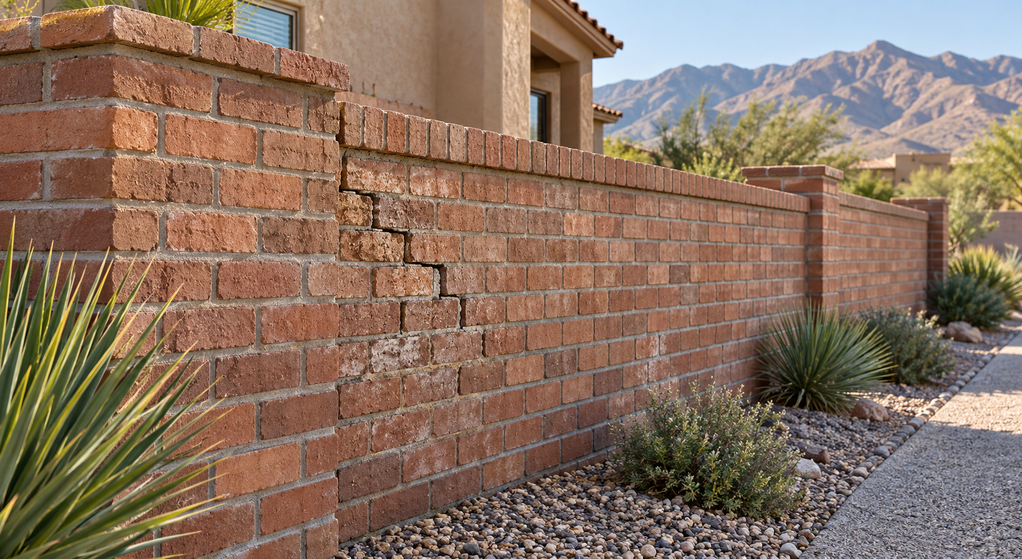
Picture a retaining wall that once looked solid now showing thin cracks after a summer of triple-digit heat, stones no longer sitting flush after a heavy rain, and a slight outward lean that was not there the year before. According to
rock wall installation services in El Paso, this is how wall failures usually begin in El Paso. Slowly, quietly, and almost invisibly. In a region shaped by expansive clay soils, steep desert lots, and sudden monsoon runoff, the choice between natural stone and manufactured rock determines whether a wall remains stable or gradually gives in to pressure beneath the surface.
Natural Stone Walls: Strength With Conditions
Natural stone walls have undeniable appeal. Limestone, sandstone, and fieldstone blend naturally into desert landscapes and often increase perceived property value. When properly built, they can last decades.
Based on the experience of our rock wall experts, natural stone performs best when used in gravity walls or low-height applications with proper drainage.

The mass of the stone helps resist soil pressure, and natural textures handle sun exposure well.
However, natural stone has tradeoffs that are often overlooked.
First, stone is inconsistent. Each piece varies in size, density, and shape. That requires a skilled mason to interlock stones correctly. Poor craftsmanship is the most common failure point we see with stone walls.
Second, natural stone relies heavily on the foundation beneath it. In El Paso’s expansive soils, stone walls without reinforced concrete footings are more vulnerable to settling and shifting.
Third, sourcing quality stone locally can be unpredictable. Some stone types weather better than others, and softer stone can erode faster in desert wind and heat.
Natural stone works best when:
- The wall is under four feet tall
- Proper drainage is installed behind the wall
- A reinforced concrete footing is used
- The installer has real masonry experience
Manufactured Rock Walls: Consistency and Engineering
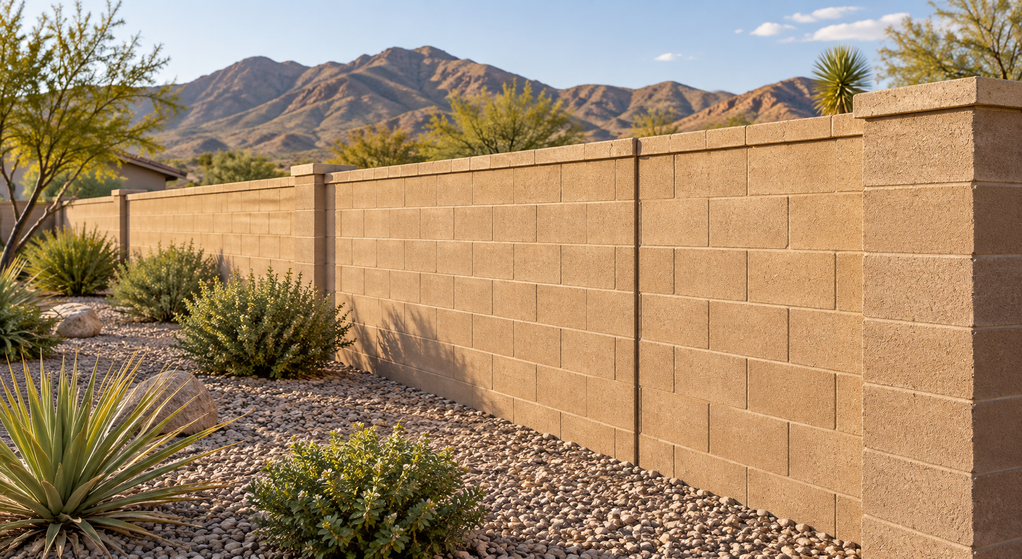
Manufactured rock walls, often concrete-based segmental retaining wall systems, are engineered for predictability. Each block is uniform in size, weight, and strength. That consistency matters in El Paso.
In our work, manufactured systems outperform stone in taller walls and load-bearing situations. They are designed to work with geogrid reinforcement, which helps stabilize soil over a wider area. This is especially important on sloped lots and properties near the Franklin Mountains.
Another advantage is performance in heat. Quality manufactured blocks are rated for high thermal exposure and resist cracking better than many natural stones.
That said, manufactured rock is not flawless.
Some homeowners dislike the uniform appearance. Lower-quality products can look artificial if poorly chosen. Installation still matters, and shortcuts with base preparation or drainage will cause failures even with engineered systems.
Manufactured rock walls work best when:
- The wall exceeds four feet in height
- Soil movement is a concern
- Long-term structural performance is the priority
- Minimal maintenance is desired
- Common Mistakes Homeowners Make
One of the most common mistakes is choosing material based solely on photos. What looks good in another city may not survive El Paso conditions.
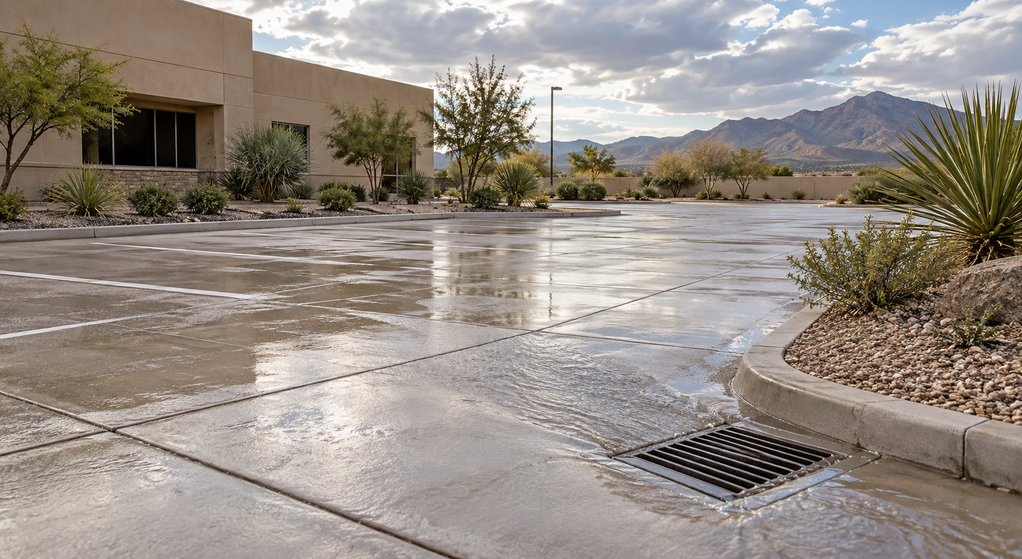
Another mistake is underestimating drainage. Water pressure is the number one cause of retaining wall failure. Both stone and manufactured walls need proper gravel backfill and drainage outlets.
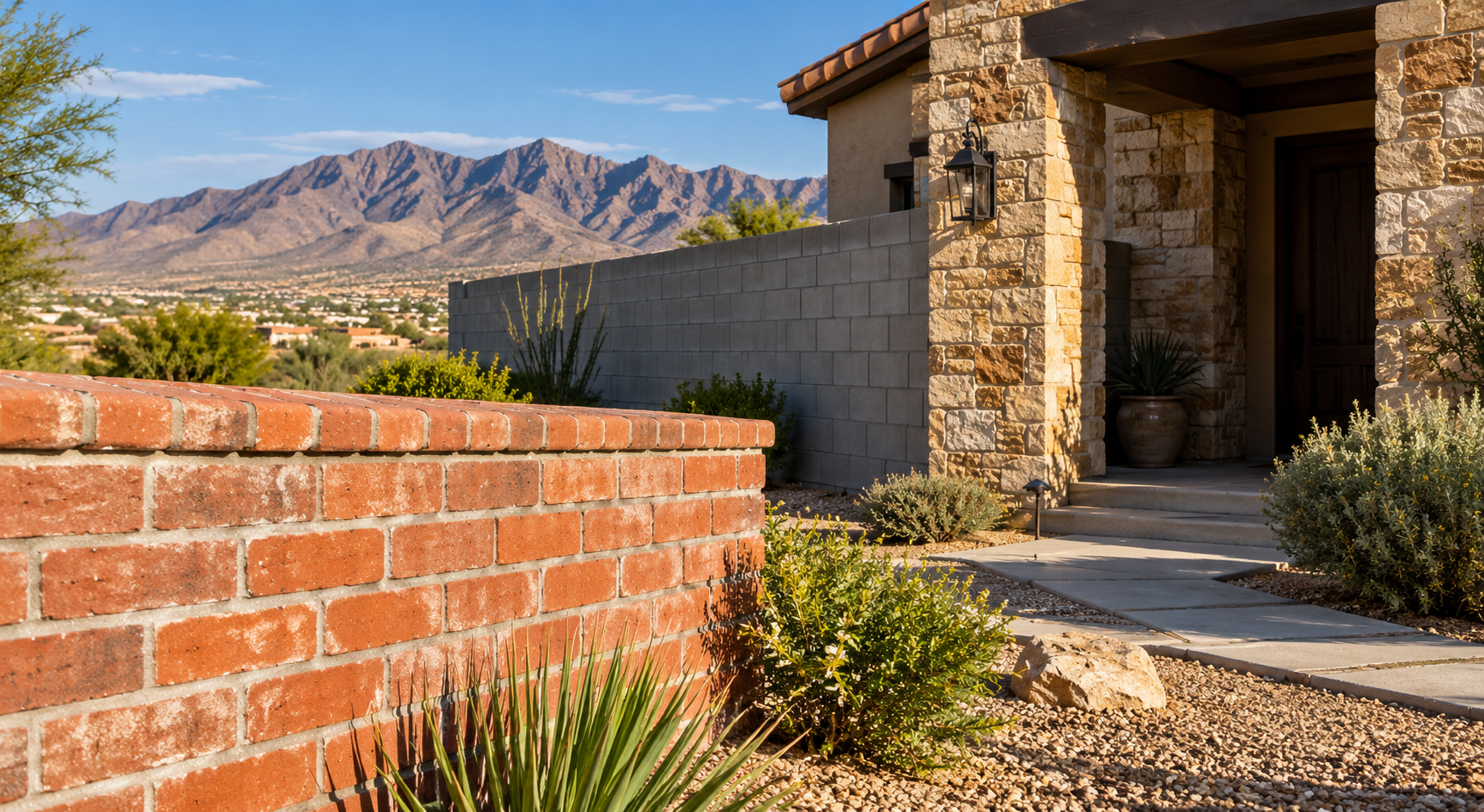
We also see homeowners mixing materials without understanding load paths. Decorative stone veneers placed over structural block walls often crack if expansion joints are not included.
Why This Decision Matters in El Paso
El Paso’s soil contains a high percentage of clay, which expands when wet and contracts when dry. Combine that with extreme temperature swings and seasonal monsoons, and retaining walls are under constant stress. We have seen walls fail not because of poor materials, but because the material choice did not match local conditions.
A retaining wall is not a decorative feature first. It is a structural element that must resist lateral pressure, manage water, and stay stable through years of movement. The wrong choice can lead to cracking, leaning, or complete collapse. Understanding the
structural requirements and soil considerations for rock walls in El Paso can minimize these risks.

Cost Considerations Beyond the Surface
Natural stone often has a higher upfront labor cost due to installation time. Manufactured systems may cost more in materials but less in labor. Over time, maintenance costs matter more.
Stone walls may need re-pointing or resetting stones after soil movement. Manufactured walls typically require less upkeep when installed correctly.
According to a Federal Highway Administration research report, properly designed and constructed segmental concrete retaining wall systems exhibit long-term durability and performance as engineered soil-retention structures.
According to design guidance from the Texas Department of Transportation, effective backfill selection, reinforcement, and drainage provisions to manage surface and subsurface water are key factors that influence the performance and long-term stability of retaining wall systems.
Which Is the Smarter Choice for El Paso?
For most El Paso properties, manufactured rock walls are the safer long-term option, especially for taller or load-bearing applications. They are engineered for soil movement, easier to design correctly, and more forgiving over time.
Natural stone still has a place. It works well for shorter walls, garden terraces, and decorative features where structural demand is lower. When built by experienced masons with proper foundations, stone can last. That is why it is important to hire a concrete contractor to Build Your Foundation instead of a home builder.
The key is matching the material to the function, not the other way around.
Final Takeaway
If your wall needs to hold back soil, manage slope, or protect structures, manufactured rock is usually the smarter decision in El Paso. If your goal is aesthetics with minimal load, natural stone can work when installed correctly.
The next step is evaluating your site conditions honestly. Look at wall height, soil type, drainage needs, and long-term expectations. A retaining wall should solve a problem, not create a new one five years later.
Confidence comes from choosing materials that respect the environment they are built in. In El Paso, performance always matters more than appearances.