How Precision Grading and Laser-Leveling Prevent Expensive Concrete Failures in El Paso
Core Insight: Concrete failures in El Paso are often caused by poor grading and uneven subgrades, not the material itself, making precision preparation essential. By using accurate grading and laser leveling to control drainage and soil stability, homeowners can prevent costly repairs and ensure long-lasting, structurally sound concrete surfaces.
Homeowners often blame concrete itself when things go wrong, but according to commercial concrete contractors in El Paso, the material is rarely the culprit. Concrete is only as good as the ground beneath it, and in El Paso, that ground is anything but forgiving. Anyone who has ever watched a driveway buckle, a patio sink on one edge, or a foundation develop hairline fractures knows that “good enough” grading never actually turns out good enough. Precision is not a luxury here. It is a requirement.
Why El Paso’s Soil Makes Precision Grading Essential
El Paso’s terrain is a unique blend of sandy stretches, caliche pockets, compacted clay, and rocky sections shaped by nearby mountain formations. Each soil type reacts differently to moisture and temperature changes. Clay expands when wet. Sandy soil settles unevenly after heavy rains. Caliche is incredibly hard in some places and unexpectedly soft in others. This inconsistency creates unpredictable movement beneath concrete if the site is not properly evaluated and graded.
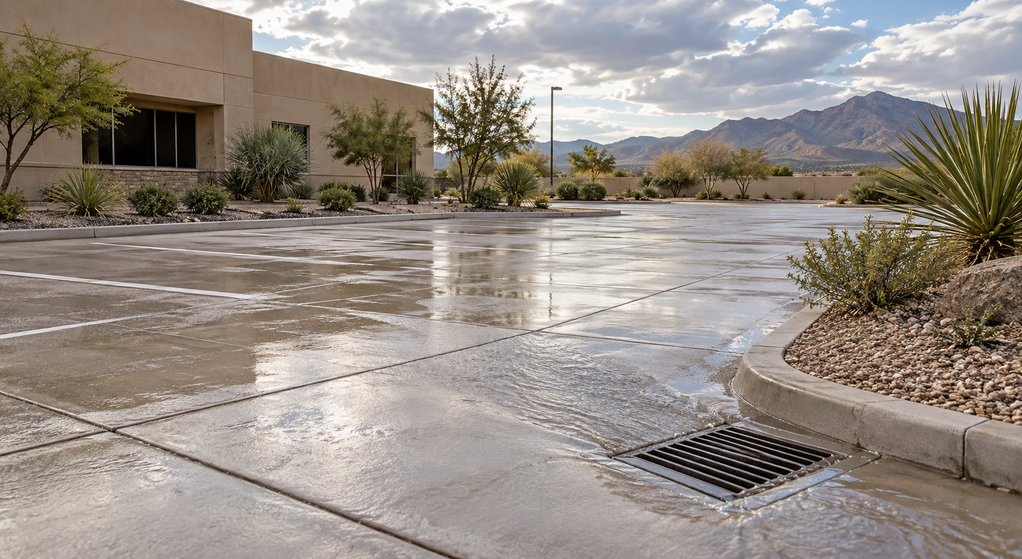
Our commercial concrete experts use precision grading to reduce these risks by shaping the land in a way that manages how water moves and how soil compacts over time. In a city that experiences sudden summer downpours, a poorly graded slab becomes a basin for trapped water. That water infiltrates the base, causes erosion, weakens the subgrade, and sets the stage for settling. Precision grading shapes the site so water flows exactly where it should, not where gravity might randomly decide to take it.
Most concrete failures in the region do not start from the top down. They start from the soil up. Homeowners often underestimate how quickly a patio or driveway can shift when the ground was never correctly leveled, compacted, or sloped in the first place. Precision grading eliminates those early errors that eventually become major bills.
The Role of Laser-Leveling in Preventing Long-Term Damage
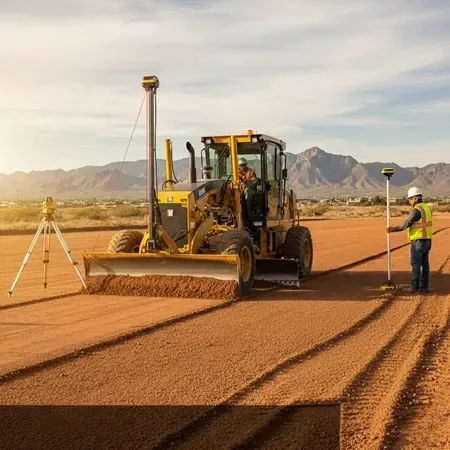
Some homeowners assume grading is a rough visual estimate done with a shovel, skid steer, and a “looks about right” approach. That mindset is responsible for more concrete failures than anything else. Laser leveling removes guesswork entirely by delivering precise slope measurements down to fractions of an inch. In a climate where every bit of water movement matters, accuracy is non-negotiable.
Laser-leveling ensures that patios drain without pooling, driveways push water toward the street instead of the garage, and walkways maintain safe, even slopes. A slab may look flat to the naked eye, but only a laser can confirm that the pitch is correct for long-term performance. Without that precision, water ends up sitting under the slab or flowing where it should not, undermining the subgrade and leading to cracking or heaving.
El Paso’s heat only amplifies the consequences of improper leveling. Concrete constantly expands and contracts during extreme temperature swings. When the base is uneven, this movement accelerates stress points. Laser leveling sets the entire slab on a stable plane so temperature shifts do not create unnecessary tension.
Hot weather creates unique challenges for concrete work. See best practices for commercial concrete installation in hot climates to maintain quality and longevity.
Why Slab Failures Cost Far More Than Proper Preparation
Many homeowners believe grading and leveling are optional or “nice extras.” That misconception is responsible for some of the most expensive repairs in the region. When a slab sinks or cracks because of poor preparation, it is almost never a simple fix. Most failed slabs require full replacement, and replacement costs often exceed the original installation price.
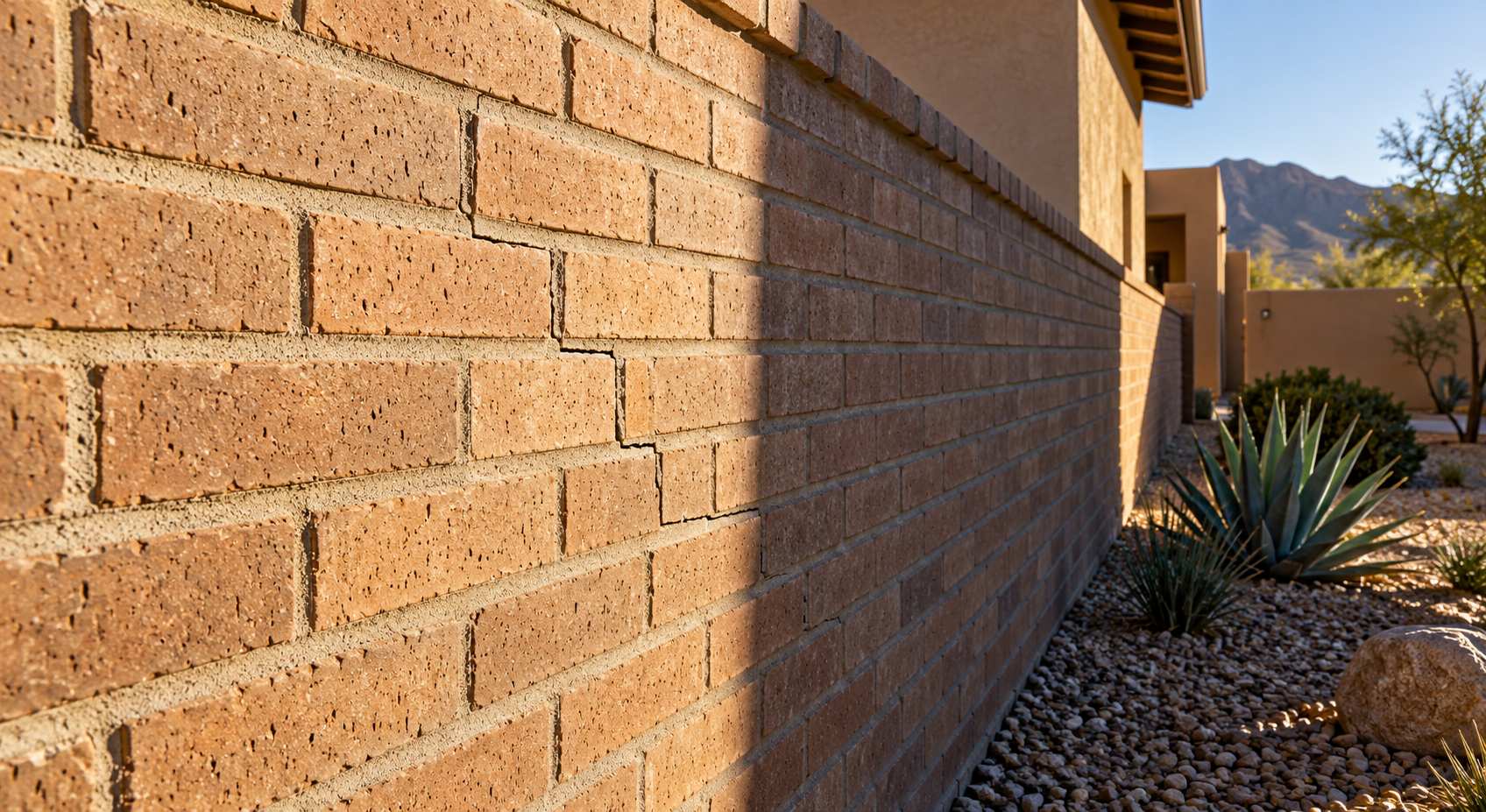
A sinking corner might look harmless, but once the subgrade erodes beneath it, the slab is no longer structurally sound. Injecting filler underneath is a temporary solution at best, because it does not address the real problem: unstable soil created by improper grading. When the issue returns, the repair becomes even more expensive.
Laser leveling and precise grading cost a fraction of what a replacement slab costs. Yet many homeowners do not realize this until they are already facing a repair bill that could have been avoided with proper preparation. The most cost-effective strategy for concrete in El Paso is not repairing damage later. It is preventing that damage from forming in the first place.
Concrete slabs can fail for many reasons, from soil settlement to improper reinforcement.
Learn about common slab problems and how to prevent them to keep your surfaces strong and durable.
Precision Grading Creates Safer and Longer-Lasting Structures
Durability is not the only reason precision grading matters. Safety plays an equally important role. Uneven surfaces create tripping hazards, especially on sidewalks or pool decks. A small dip that holds water may lead to algae buildup, making the surface slippery. Incorrect pitch toward a home can cause water intrusion that damages flooring, walls, and foundations.

Laser-leveling produces predictably even surfaces, whether the project is a patio, driveway, walkway, or slab for an outdoor structure. Consistent slope design creates safe, stable surfaces that withstand years of use without becoming liabilities.
The long-term strength of concrete is closely tied to how the site was graded and compacted. Proper compaction ensures the ground can bear the weight of vehicles, furniture, foot traffic, and structural loads without shifting. This is especially important in areas where the soil transitions from soft to hard in unpredictable layers.
Strong, resilient concrete isn’t accidental. Discover how El Paso concrete contractors enhance concrete durability to prevent premature cracking and wear.
Why Precision Techniques Matter More in El Paso Than Other Cities
Some regions can get away with looser grading standards because their soil remains stable throughout the year. El Paso does not offer that luxury. The desert climate produces intense heat cycles that stress concrete daily. The monsoon season delivers sudden, heavy rainfall that tests drainage systems. Strong winds redistribute soil and sand, sometimes undermining areas around the slab. Without precise preparation, these natural elements quickly expose weak grading work.
Precision grading and laser leveling are not simply best practices in El Paso. They are fundamental survival strategies for concrete structures. A slab poured on improperly graded soil is already on borrowed time the day it is installed.
Concrete Lasts When the Ground Supports It
The strongest concrete mix, the best finishing technique, and the nicest design will all fail if the foundation beneath them is not correctly prepared. Precision grading and laser leveling provide the structure, slope, and stability needed to keep concrete intact for decades rather than years. In a region known for soil movement and weather extremes, homeowners who prioritize proper preparation see far fewer issues and far longer lifespans from their concrete installations.
Concrete succeeds when the ground beneath it is carefully shaped, measured, compacted, and leveled with precision. Everything else depends on that first step.