Signs Your Concrete Driveway in El Paso Needs Repair or Replacement
Decision Snapshot: Concrete driveways in El Paso show clear warning signs like widening cracks, uneven slabs, pooling water, and surface deterioration when structural issues begin to develop. Recognizing these early indicators helps homeowners decide between repair or replacement before damage worsens and costs increase.
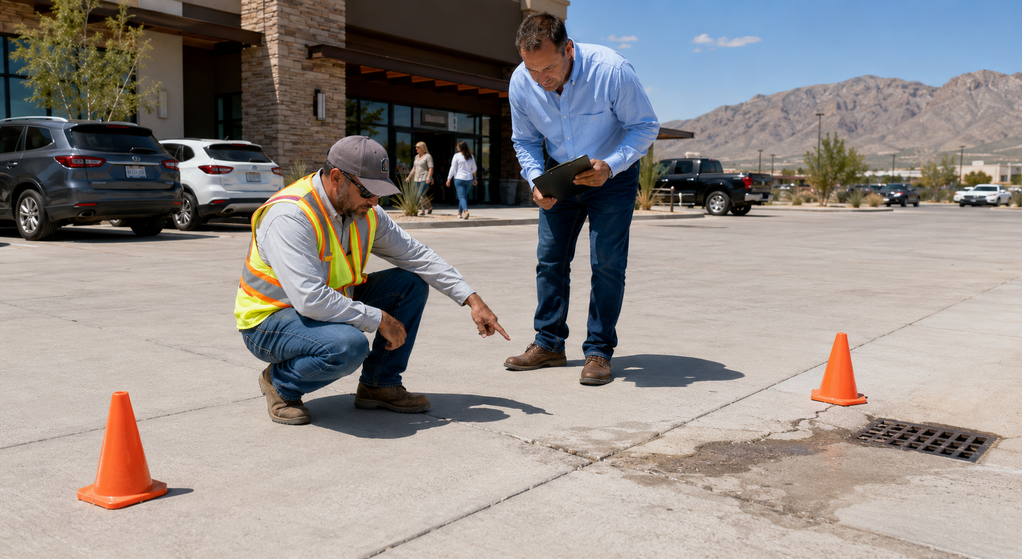
Have you been overlooking the warning signs in your driveway? In El Paso, concrete faces conditions very different from cooler or wetter regions, and many homeowners wait too long to act because early cracks and stains are often dismissed as merely cosmetic. In reality, those signs usually point to structural problems that only get more expensive if ignored. Understanding when a concrete driveway needs repair or full replacement is not about aesthetics alone. It is about safety, durability, drainage, and long-term property value. Below are the most reliable indicators that your driveway needs attention from
professional driveway services in El Paso.
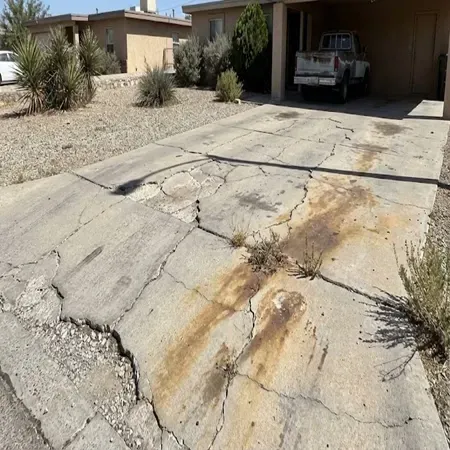
Widening Cracks and Pattern Cracking
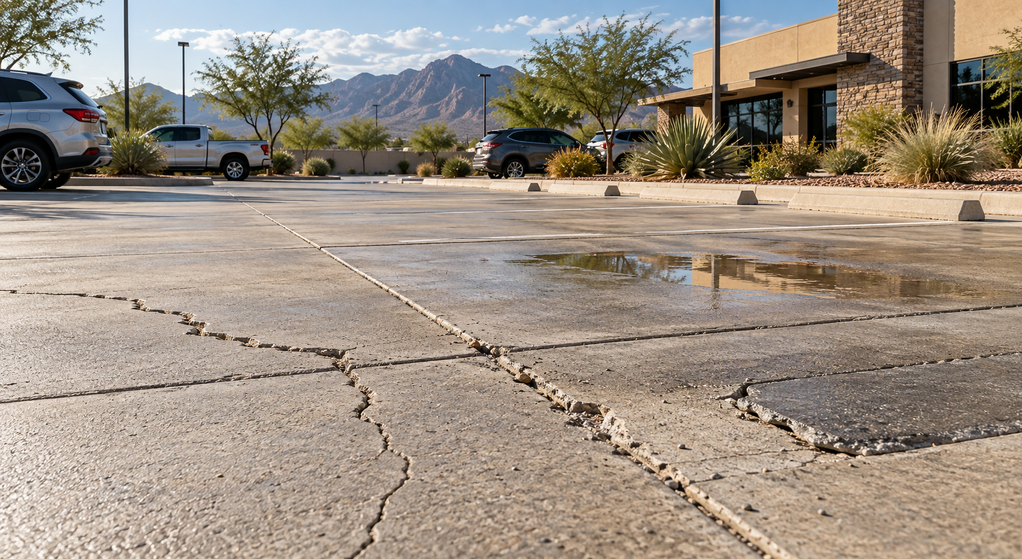
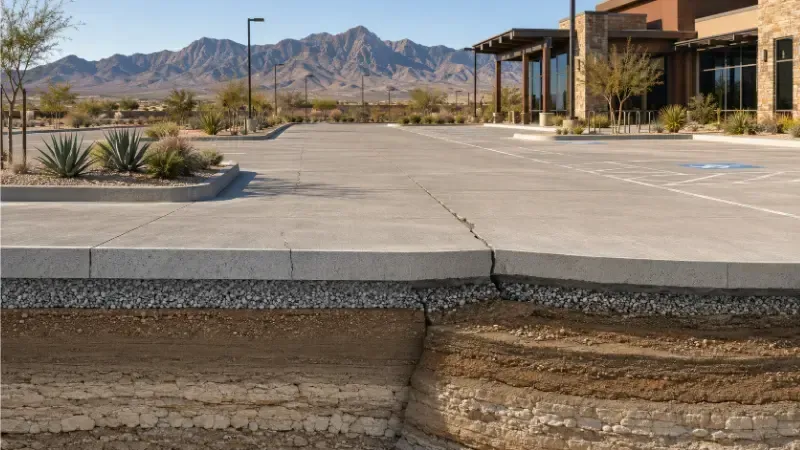
Small hairline cracks are common as concrete cures and ages, especially in a desert climate. However, cracks that widen over time or form connected patterns are a clear red flag. In El Paso, expansive clay soils expand during moisture exposure and contract during dry periods. This constant movement places stress on concrete slabs.
If cracks are wider than a quarter inch, branch outward, or form web-like patterns, the slab is no longer moving as a single unit. Repairs may be possible in early stages, but widespread cracking often indicates subgrade failure. At that point, surface patching does not address the underlying problem.
Uneven or Sunken Sections
According to our concrete driveway experts, driveways should drain water away from structures and remain level enough for safe vehicle and foot traffic. When sections of concrete sink or tilt, it usually means the soil underneath has shifted or eroded. In El Paso, this is commonly caused by poor compaction, water intrusion, or natural soil movement.
Uneven slabs are more than an inconvenience. They create trip hazards, increase vehicle wear, and disrupt proper drainage. If the height difference between slabs is noticeable or growing, replacement is often the most reliable solution.
Pooling Water After Rain
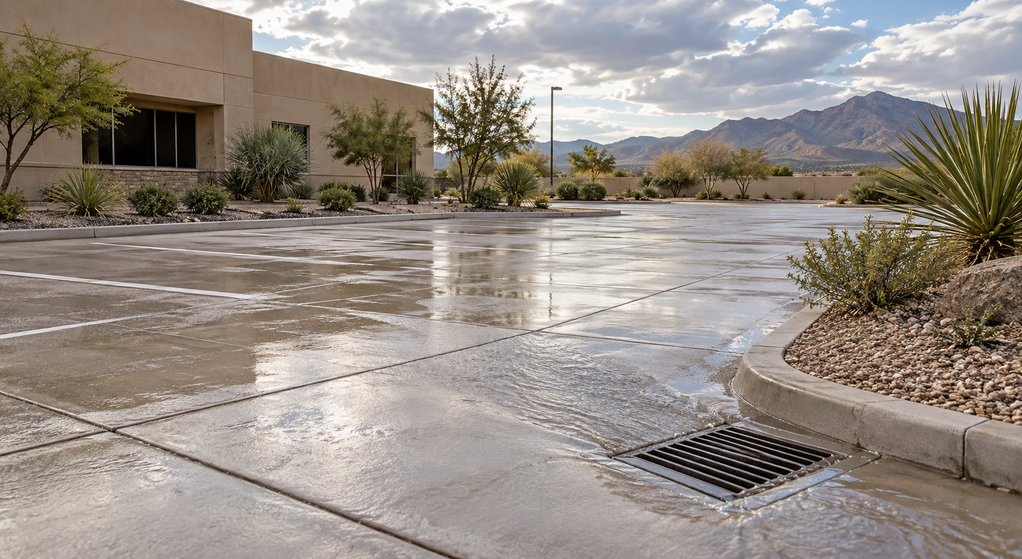
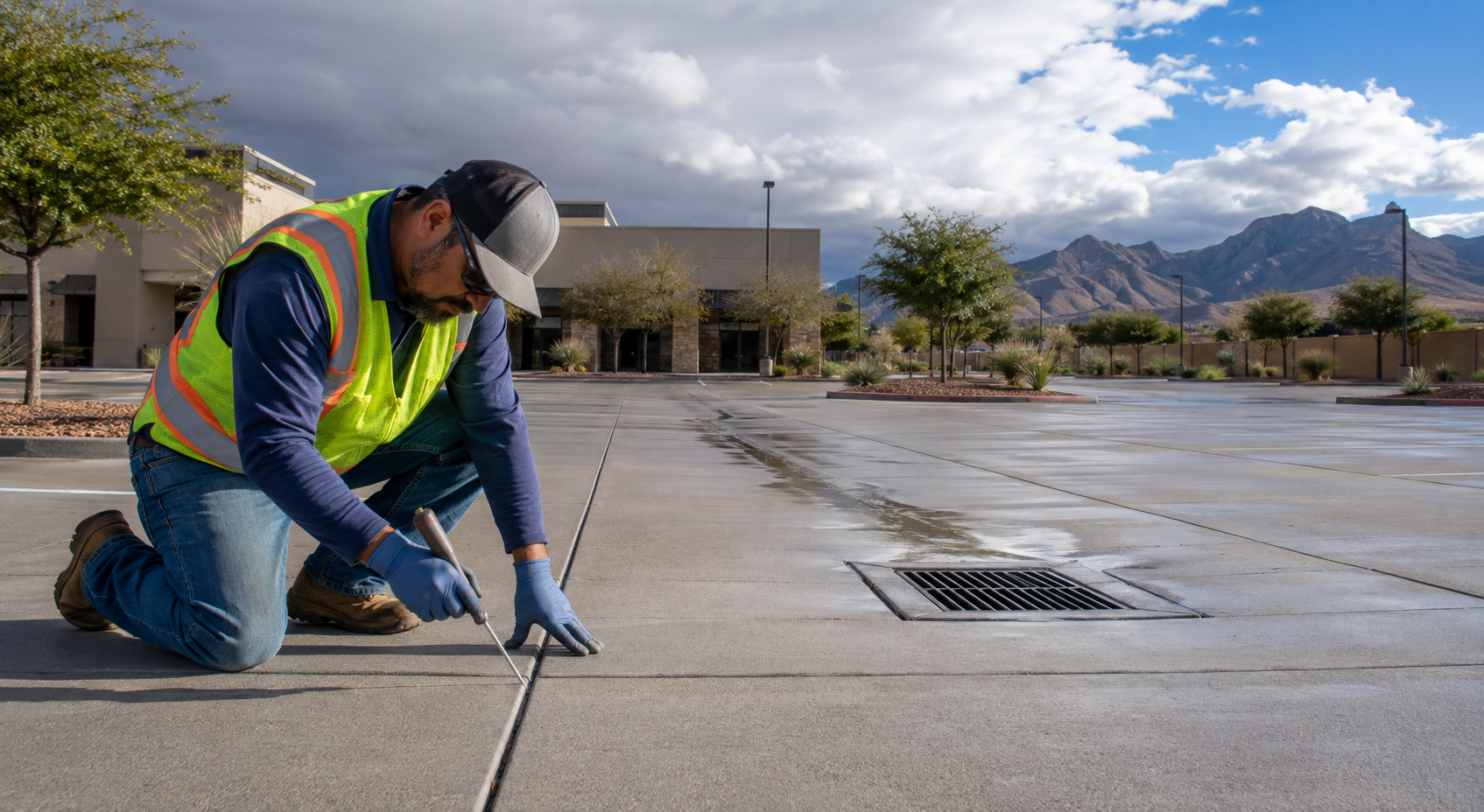
Standing water on a driveway is one of the most overlooked warning signs. Concrete should be poured with a precise slope to allow water to run off efficiently. When water pools, it penetrates cracks, weakens the subbase, and accelerates deterioration.
In desert environments like El Paso, infrequent but intense rainstorms can cause rapid damage if water has nowhere to go. Persistent pooling suggests the driveway has lost its original slope or was not properly graded to begin with. This is rarely solved by minor repairs alone.
Surface Scaling and Spalling
Scaling occurs when the top layer of concrete flakes or peels away. Spalling refers to deeper surface deterioration that exposes aggregate beneath. Both issues are common in driveways exposed to high heat, direct sunlight, and temperature swings.
These surface failures are often signs of improper concrete mix, finishing errors, or long-term exposure to moisture intrusion.
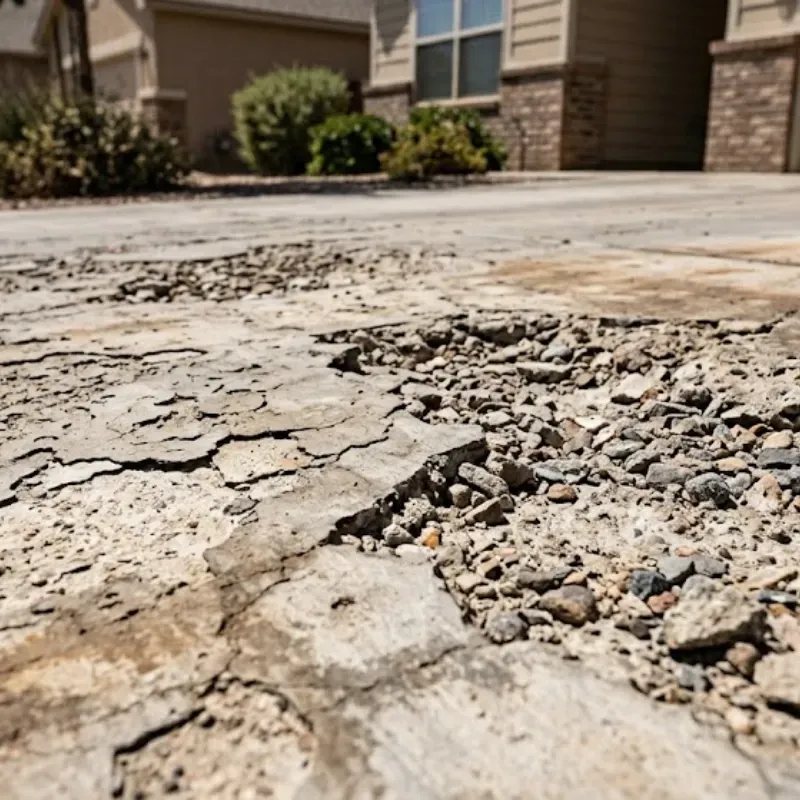
Once the surface integrity is compromised, the slab becomes more vulnerable to cracking and erosion. In my experience, widespread scaling usually points toward replacement rather than patching.
Visible Exposed Aggregate or Rebar
Concrete is designed to protect the materials within it. When aggregate becomes exposed, or worse, when rebar is visible, the driveway has reached a critical stage of deterioration. Exposed reinforcement allows moisture and air to accelerate corrosion, leading to internal expansion and further cracking.
At this stage, repairs are rarely durable. Replacement is typically the only option that restores structural integrity and prevents ongoing failure.
Repeated Repairs That Do Not Last
One of the clearest signs that replacement is needed is a history of frequent repairs. If cracks reappear after patching, or if new problem areas develop every year, the driveway has exceeded its practical lifespan.
Concrete repairs should extend usability, not create a cycle of temporary fixes. When repair costs begin to approach a significant percentage of replacement cost, replacement becomes the more sensible long-term decision.
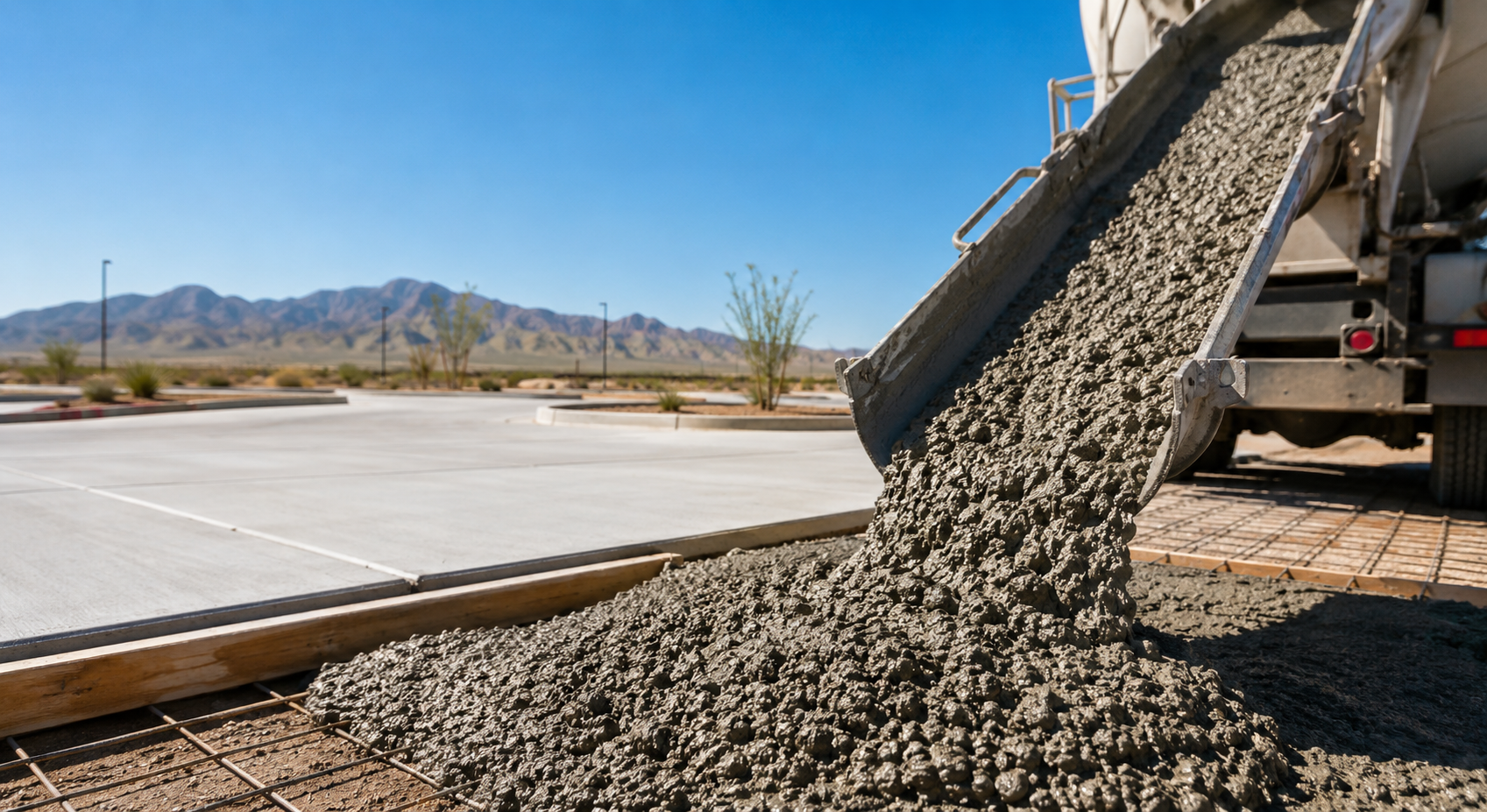
Strong, long-lasting concrete starts with the right mix and precise execution. Explore how 3000 PSI mixes and careful slope calibration ensure durable concrete in El Paso.

Driveway Age Exceeding Expected Lifespan
In El Paso conditions, a well-built concrete driveway can last 25 to 30 years. However, older driveways constructed with lower PSI mixes, minimal reinforcement, or outdated techniques often fail sooner.
If your driveway is approaching or past this age range and showing multiple signs of distress, replacement is typically more cost-effective than continued maintenance. Aging concrete does not improve with time, especially in harsh desert environments.
El Paso’s sun and heat can take a serious toll on concrete over time. Learn how exposure affects driveways and what steps help maintain strength and durability in the impact of sun exposure and heat on concrete driveways in El Paso.
Structural Cracks Near Garage or Street
Cracks that form near the garage slab or street connection deserve special attention. These areas experience higher load stress and are critical for proper drainage. Structural cracks here can allow water to flow toward foundations or undermine adjacent slabs.
In El Paso, where flash flooding can occur, compromised drainage near structures poses a real risk. Structural cracking in these zones often justifies replacement rather than localized repair.
Discoloration and Staining Paired With Damage
Discoloration alone is not a reason to replace concrete. However, when staining is accompanied by cracking, surface erosion, or moisture intrusion, it can indicate deeper problems. Oil stains, mineral deposits, or dark moisture patches may signal porosity issues or internal deterioration.
These symptoms often appear together in older driveways where surface sealing has failed or was never applied correctly.

Final Thoughts
Concrete driveways in El Paso endure extreme environmental stress that accelerates wear when construction or maintenance falls short. The biggest mistake homeowners make is treating structural warning signs as cosmetic flaws. Cracks, uneven slabs, pooling water, and surface deterioration all point to underlying issues that do not resolve on their own.