Retaining Rock Walls in El Paso: Structural Requirements and Soil Considerations
Core Insight: Retaining rock wall failures in El Paso are most often caused by poor soil preparation and inadequate drainage rather than visible construction flaws. Long-lasting walls depend on proper base compaction, engineered backfill, and water management designed around local soil behavior and storm conditions.
What actually causes a retaining rock wall to fail in El Paso? Bad construction, bad materials, or the ground itself? Most people assume a leaning or cracked wall must be the builder’s fault. Sometimes it is. But in many cases, the real culprit is less visible and far more powerful. A wall can be beautifully stacked and still be structurally vulnerable if it ignores what is happening underground.
According to professional rock wall installation services in El Paso, a retaining rock wall should be approached as a structural system first and a visual feature second. The environment demands it.
Why Retaining Walls Are a Big Deal in El Paso
El Paso’s desert climate creates a cycle of dry periods followed by sudden rain events. These swings affect how soil behaves. According to the USDA Natural Resources Conservation Service, soils in the El Paso region can vary widely in drainage capacity, cohesion, and stability. Some are sandy and free-draining. Others contain clays that react noticeably to moisture.
Soil is never static. It expands when wet, contracts when dry, and always responds to gravity. When water enters the soil behind a wall, the lateral pressure increases. A wall that does not account for this is under constant stress.
Based on the experience of
our rock wall specialists in this market, the longest-lasting walls are the ones designed around soil and drainage from day one.
The Hidden Structure Beneath a Good Wall
The visible stone is only part of the system. A reliable retaining rock wall begins with excavation to stable ground and a compacted aggregate base. This base spreads loads and reduces the risk of uneven settlement.
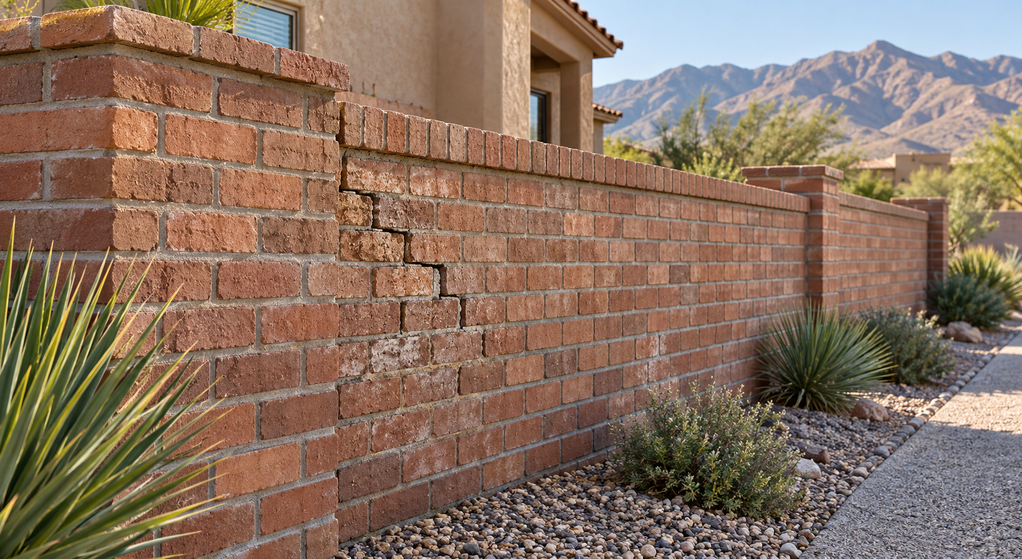
Settlement is a quiet but serious threat. If one portion of a wall settles more than another, the wall can rotate, lean, or crack. Many people blame the stonework when the real issue is the foundation beneath it.
Backfill plays a structural role too. Proper backfill uses free-draining material placed and compacted in layers. Loose soil tossed behind a wall may look acceptable at first, but it compresses over time and increases pressure on the wall.
Thorough base and backfill work requires more labor. Skipping it saves money upfront but increases long-term risk. From a structural standpoint, the careful approach is the smarter one.
Drainage Decides the Fate of Many Walls
Water is the single most common reason retaining walls fail. When water cannot escape, hydrostatic pressure builds behind the wall. This pressure can exceed what a gravity wall can resist.
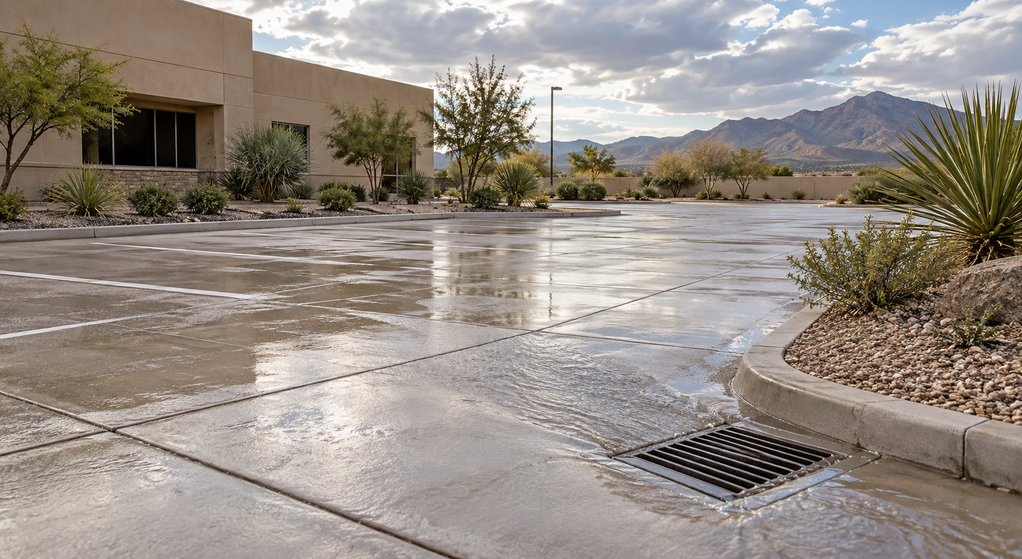
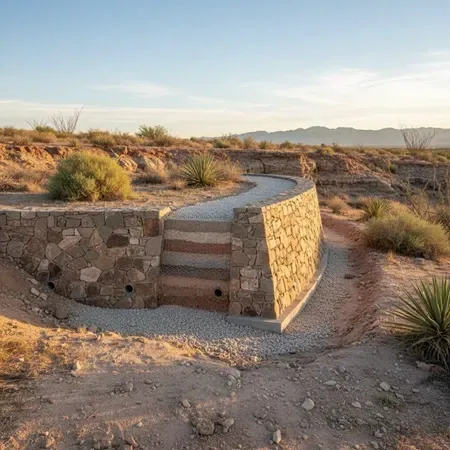
El Paso does not receive constant rainfall, but storms can be intense. A well-designed wall plans for these moments. Gravel backfill, perforated drain pipes, and weep holes allow water to move out instead of building up.
Many real-world failures are not caused by poor stone placement. They are caused by trapped water. That is why drainage is not an optional feature. It is a structural necessity.
Guidance from groups like the American Concrete Institute supports the broader principle that soil and water management are central to structural performance regardless of whether the wall is concrete or stone, a concept that is also reflected in official transportation engineering guidance that emphasizes accounting for soil conditions and water pressures in retaining wall design and stability.
Soil Behavior That Changes the Game
Not all El Paso soils behave the same way. Some areas include soils that can collapse when saturated or shift when moisture content changes.
This means a design that works in one neighborhood might not perform the same in another. Copying a neighbor’s wall without understanding local soil conditions is risky.

Compaction quality also matters. Properly compacted soil reduces future movement. Poor compaction invites it. This is slow, methodical work, but it is what keeps walls straight years later.
Material Choices and Practical Tradeoffs
Natural rock walls match the desert aesthetic and are visually appealing. However, irregular stones create variable contact points and load paths. Their performance depends heavily on construction skill and what lies beneath them.
Engineered segmental block systems offer more predictable behavior because they are designed to interlock and distribute forces consistently. Mortared stone walls are rigid but can crack if the soil shifts.
When structural reliability near a home or driveway is the priority, engineered systems usually provide more predictable outcomes. Natural rock can perform well, but it leaves less room for shortcuts.
Mistakes That Lead to Regret
Many retaining wall problems come from familiar decisions.
- Walls are built too tall without engineering input.
- Drainage is minimized.
- Backfill is treated casually.
- Visual stability is mistaken for structural stability.
- Hiring based only on price.
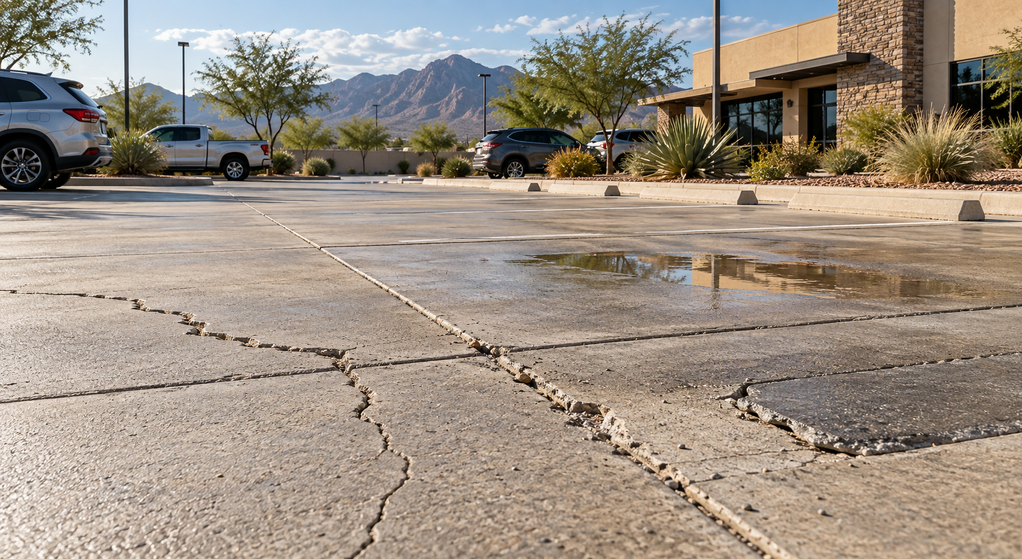
Retaining walls do not reveal their quality immediately. Time reveals it. If you are unsure about the condition of your concrete structure, such as concrete driveway, learn more about the Signs Your Concrete Driveway in El Paso Needs Repair or Replacement.
Asking detailed questions about base depth, compaction, and drainage usually leads to better decisions.

What a Property Owner Should Take Away
A practical next step is to observe how water flows across your property during storms and discuss soil preparation and drainage in detail before any construction begins. That knowledge alone leads to smarter choices.
A good retaining wall is not just attractive. It is stable, grounded in soil science, and built with long-term performance in mind. That is what makes it a real investment.
Hire a rock wall professional in El Paso to ensure that your investment is in the right hands.