Common Rock Wall Failures in El Paso and How to Prevent Them
What Most Buyers Miss: Rock wall failures in El Paso are usually caused by poor soil preparation, inadequate drainage, improper grading, and lack of structural reinforcement rather than the stone itself. Preventing leaning, cracking, and collapse requires designing walls around local soil conditions, water flow, and temperature stress from the start.
Why do so many rock walls in El Paso begin leaning, cracking, or shifting long before they should? The stone itself is rarely the problem. Rock wall services in El Paso note that the real issue is almost always hidden beneath the surface. In El Paso, rock walls are exposed to desert heat, caliche-heavy soils, steep terrain, and sudden monsoon downpours. When those environmental realities are ignored during construction, failure becomes predictable.
Whether the wall is decorative or structural, long-term performance depends on soil preparation, drainage design, reinforcement, and proper grading. El Paso conditions demand structural awareness, not cosmetic thinking. Below are the most common rock wall failures in El Paso and the practical steps that prevent them.
Leaning Walls Caused by Unstable Soil Preparation
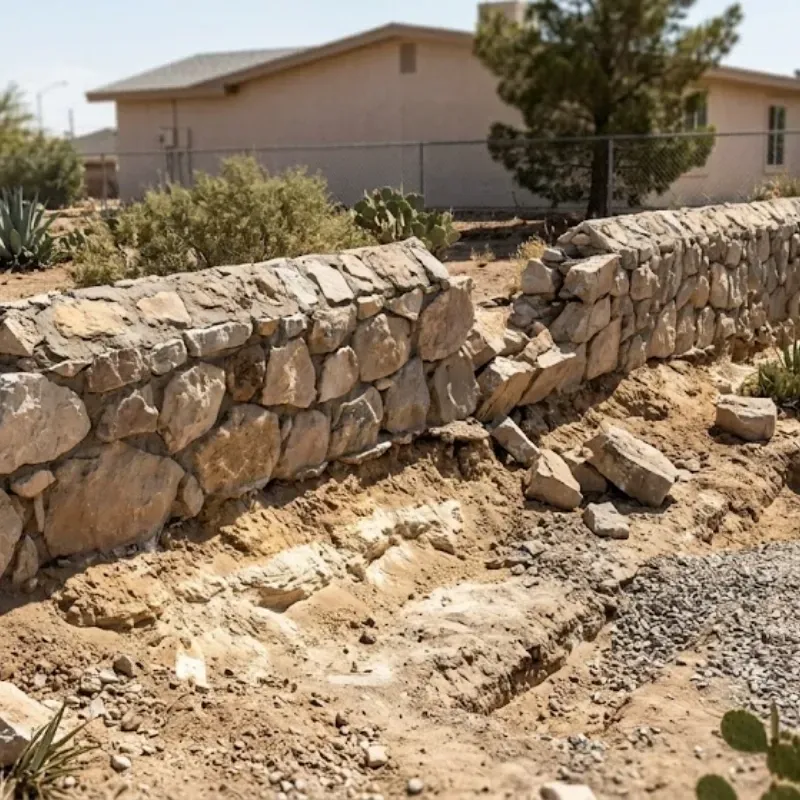
One of the most frequent rock wall failures our rock wall experts in El Paso notice is lateral leaning or bowing. This typically appears within a few years of construction.
El Paso County soils vary significantly and often include caliche layers and sandy deposits. According to the USDA Natural Resources Conservation Service soil survey, many local soils are not uniformly load-bearing and can shift when exposed to moisture changes.
When base preparation is rushed or improperly compacted, the wall begins to settle unevenly. In our work across El Paso, we have seen walls lean because the aggregate base was not compacted in controlled lifts or because footings were poured directly on unstable subgrade.
Prevention begins below ground. Excavation must extend beyond loose soils. The aggregate base should be compacted methodically. Structural walls require reinforced concrete footings. Precision grading using laser or optical leveling tools ensures the base is not only level but properly supported.
A rock wall cannot outperform the soil beneath it. Here are the
structural requirements and soil considerations for retaining rock walls in El Paso.
Retaining Wall Collapse from Poor Drainage Design
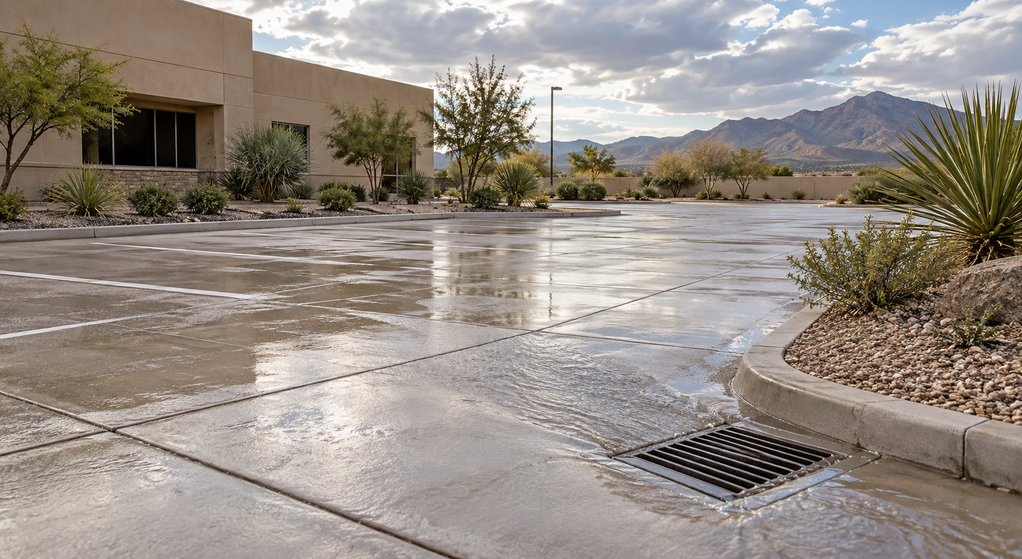
Although El Paso receives lower annual rainfall compared to many regions, the risk lies in short, intense monsoon storms. The National Weather Service documents heavy rainfall bursts during late summer that can overwhelm poorly designed drainage systems.
Water buildup behind a retaining wall creates hydrostatic pressure. That pressure pushes outward, eventually cracking or overturning the wall. The American Society of Civil Engineers emphasizes the importance of proper retaining wall design, including managing lateral earth pressures and related subsurface conditions, in guidance for earth retaining structures.
We have seen retaining walls fail not because of structural weakness in the stone, but because no gravel backfill or perforated drain pipe was installed behind them. Even small walls can experience significant pressure if water has nowhere to go.
Effective prevention includes installing washed gravel backfill, incorporating perforated drainage pipe, using filter fabric to prevent clogging, and grading soil to direct water away from the wall face. Attempting to conceal drainage features for aesthetic reasons often compromises structural integrity.
In desert regions, water management still determines stability.
Cracking from Extreme Temperature Swings
El Paso’s desert climate produces dramatic temperature swings between day and night. Concrete footings and mortar joints expand and contract under thermal stress.
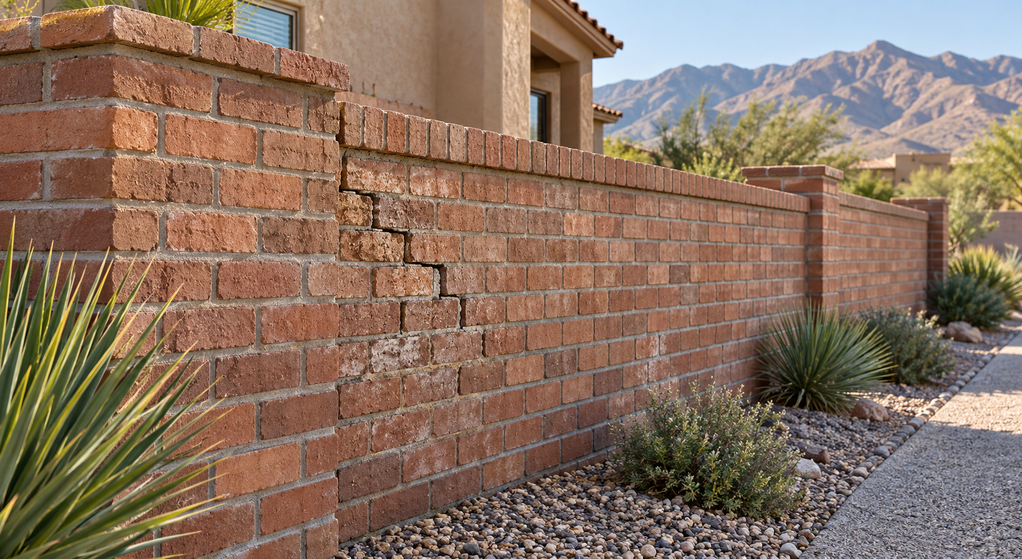
Without control joints or proper reinforcement, long wall spans accumulate internal stress. Over time, cracks develop along mortar lines or at structural transitions. These cracks allow moisture intrusion, which further weakens the system.
In real-world applications, we have observed rock walls with flawless stonework deteriorate because expansion joints were never included. Controlled movement is a structural necessity.
Preventative measures include installing control joints at calculated intervals, reinforcing concrete cores when required, and selecting mortar mixes appropriate for local climate conditions. Walls must be designed to move slightly without failing.
Settlement and Erosion from Improper Grading
Grading plays a direct role in rock wall longevity, especially in West El Paso and hillside areas near the Franklin Mountains.
When water flows toward a wall footing instead of away from it, erosion begins beneath the surface. Voids form under the footing. Settlement follows.

Improper grading is one of the most overlooked contributors to wall failure. In our experience working across varied terrain in El Paso, walls constructed on improperly prepared slopes often show signs of uneven settlement within a few storm cycles.
A preventative strategy requires directing surface water away from footings, compacting subgrade before installation, and avoiding construction on loose fill soil. On sloped lots, stepped footings distribute load evenly and prevent differential settlement.
Terrain must dictate engineering decisions.
Using Decorative Methods for Structural Applications
Not every rock wall is designed to retain soil. Decorative boundary walls and structural retaining walls serve entirely different purposes.
Failures often occur when decorative stacked stone techniques are applied to walls that must resist soil pressure. Retaining walls experience lateral loads, surcharge loads from nearby driveways, and in some cases vehicle loads.
In El Paso, walls exceeding certain height thresholds may require engineering review. Reinforced concrete cores, properly sized footings, and structural backfill become essential in these cases.
Treating a retaining wall as decorative masonry invites structural compromise. If you are looking for a material for your rock wall, here’s a comparison between natural stone and manufactured rock.
Inadequate Footing Depth on Sloped Properties
El Paso’s mountain terrain introduces additional complexity. Flat footings on uneven ground distribute weight inconsistently. Downhill sections experience greater stress and often settle first.
We have seen hillside walls fail because excavation depth was minimized to reduce labor. On sloped properties, stepped footings that follow the grade provide consistent load transfer and long-term stability.
Excavation depth must respond to terrain. Structural corners and transitions require additional reinforcement. Simplifying footing design on slopes nearly always leads to premature failure.
Why Rock Walls Fail More Often Than Expected in El Paso
The desert climate creates a false sense of security. Because annual rainfall totals are lower than in coastal regions, some assume drainage and soil movement are minimal concerns.
That assumption is incorrect.
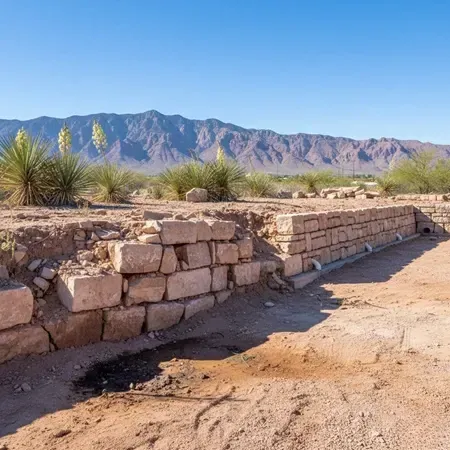
Caliche layers, temperature swings, monsoon storms, and mountainous grading combine to create structural challenges unique to El Paso. Rock walls built without adapting to these conditions often fail within a few years.
Longevity depends on engineering awareness, not aesthetic preference.
Final Takeaway for El Paso Property Owners
If you are planning a rock wall in El Paso, focus first on structural integrity and environmental adaptation.
Stable soil preparation, reinforced footings, proper drainage design, climate-aware mortar selection, and grading that directs water away from the structure are what prevent the most common failures.
The smartest next step is to evaluate your site conditions carefully and ensure the wall design addresses soil type, terrain slope, and drainage flow before construction begins.