Expert Tips for Maintaining Your Concrete Driveway in Dry, Hot Conditions
Quick Rundown: Concrete driveways in hot, dry climates deteriorate faster due to heat, UV exposure, and moisture imbalance, but proper maintenance can significantly extend their lifespan. Consistent cleaning, sealing, crack repair, and smart water management help prevent damage and keep concrete durable even under extreme conditions.
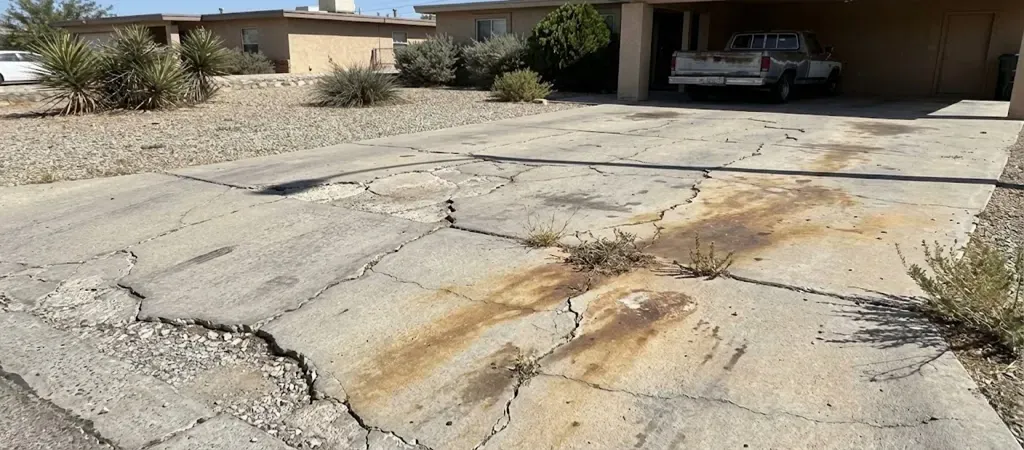
Extreme heat, intense sunlight, and long dry spells all work together to shorten the lifespan of concrete if it is not properly maintained. Many people think concrete is nearly indestructible, but in hot conditions, neglect shows quickly. Concrete driveway services in El Paso note that cracking, surface scaling, fading, and dusting are not inevitable problems. They are usually the result of poor maintenance decisions or none at all. Maintaining a concrete driveway in dry, hot conditions is less about constant repairs and more about understanding how heat affects concrete over time.
Understand How Heat Impacts Concrete
Concrete is strong, but it is not immune to temperature stress. In hot climates, concrete expands during the day and contracts at night. This daily movement creates internal stress, especially when temperatures swing dramatically between daytime and evening.
Prolonged exposure to UV rays also breaks down surface moisture and weakens the cement paste over time.
Without proper care, this leads to surface cracking, color fading, and gradual loss of strength. Recognizing that heat is the primary enemy allows homeowners to focus on preventative maintenance rather than reactive fixes.
Keep the Surface Clean and Free of Debris
According to our concrete driveway experts, dust, dirt, sand, and organic debris might seem harmless, but in hot climates they accelerate surface wear. Fine particles grind against the concrete when driven over, slowly eroding the top layer. Organic debris can trap moisture unevenly, leading to discoloration and surface breakdown.
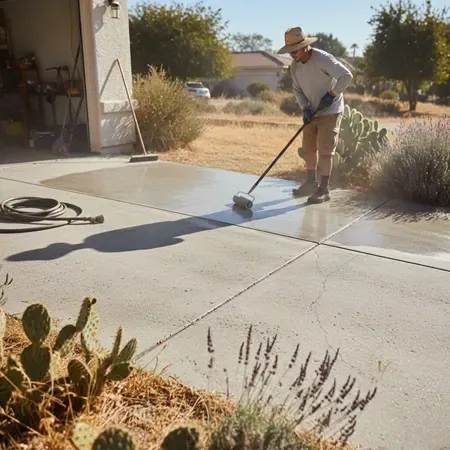
A simple routine of sweeping and occasional rinsing goes a long way. Avoid harsh pressure washing too frequently, as excessive force can damage the surface. The goal is consistent cleanliness, not aggressive cleaning.
Seal the Driveway on a Proper Schedule
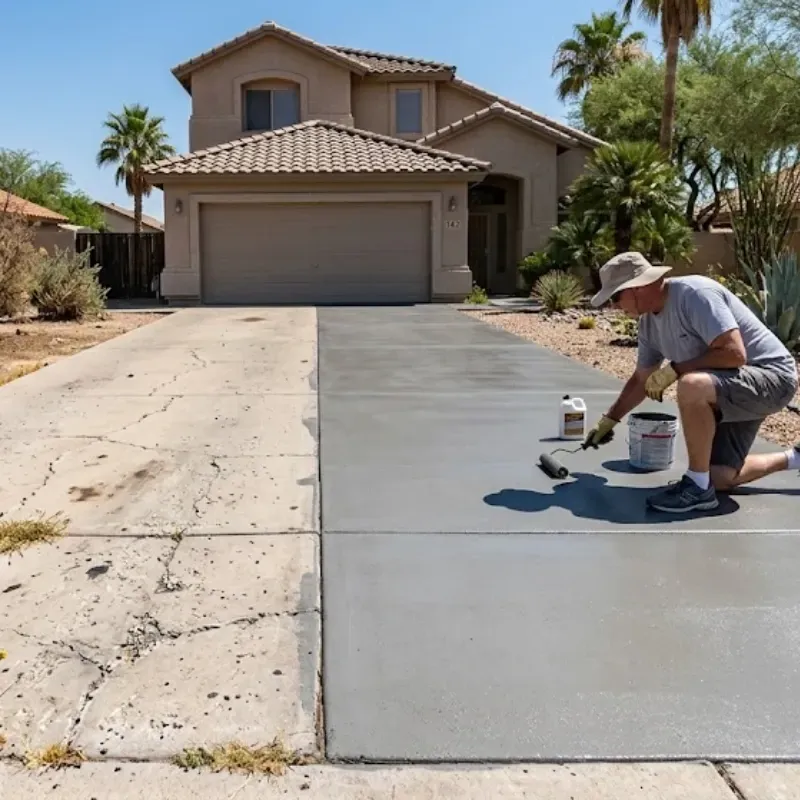
Sealing is not optional in dry, hot conditions. It is one of the most effective ways to protect concrete from heat damage, moisture loss, and UV exposure. A quality concrete sealer reduces surface evaporation and slows down the aging process.
Most driveways in hot climates benefit from sealing every two to three years. Waiting until cracks appear is already too late. A sealed surface stays cooler, resists staining, and maintains its structural integrity longer than unsealed concrete.
Choosing the right sealer matters. Penetrating sealers are often preferred in hot environments because they protect without trapping heat or creating a slippery surface.
Proper driveway maintenance extends its life and keeps it looking its best. Learn how often you should seal your driveway and follow expert guidance for timing, weather, and signs it’s time to reseal.
Control Water Exposure Strategically
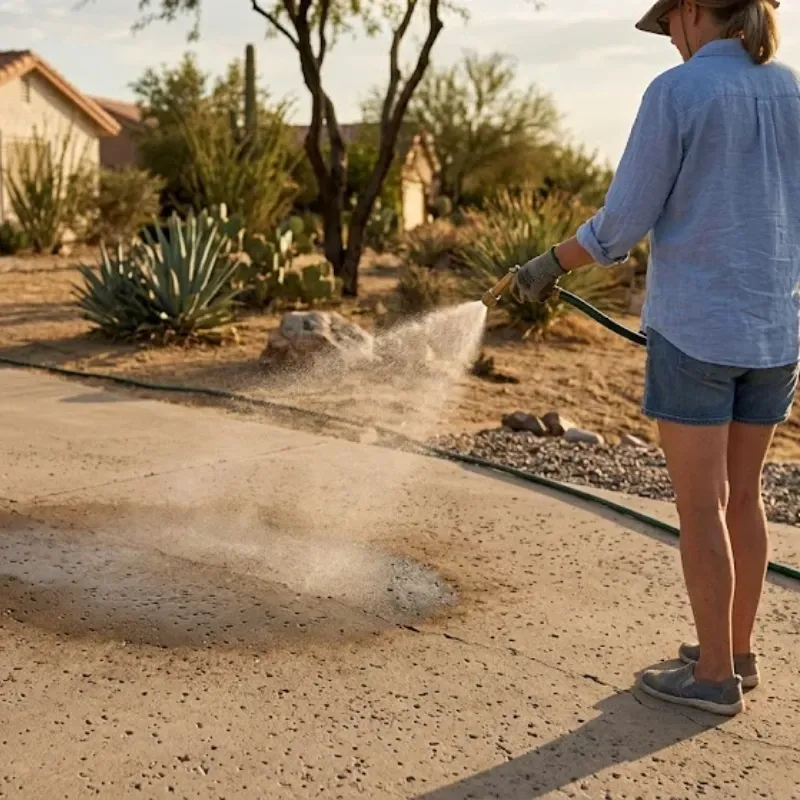
Water management may sound counterintuitive in a dry climate, but it is critical. Concrete needs moisture balance, not extremes. Sudden heavy watering on overheated concrete can cause thermal shock, which leads to cracking.
Avoid spraying cold water on a hot driveway during peak temperatures. If cleaning or rinsing is necessary, do it early in the morning or later in the evening.
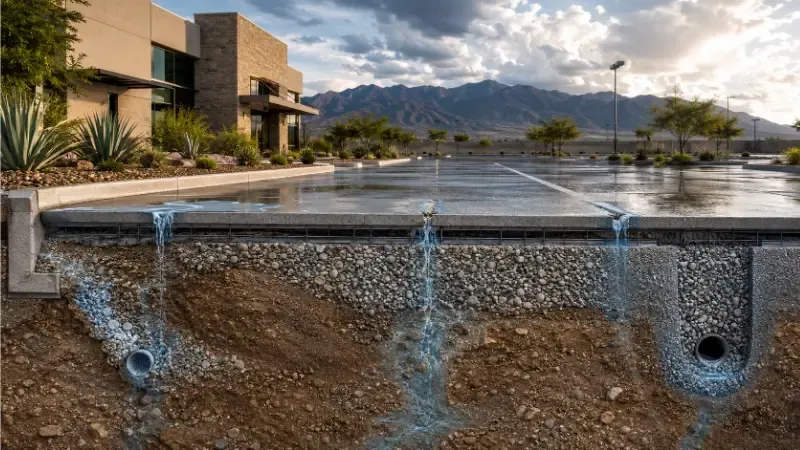
Consistent drainage is also essential. Standing water may be rare, but when it occurs, it can penetrate cracks and weaken the slab over time.
Address Small Cracks Immediately
Small cracks are normal, especially in hot climates. Ignoring them is not. Heat causes cracks to expand, allowing debris and moisture to enter. Over time, what started as a hairline fracture becomes a structural problem.
Filling small cracks early prevents expansion and limits future repair costs. Use repair materials designed for high-temperature environments. Generic fillers often fail in extreme heat, leading to repeated repairs and frustration.
Concrete driveways often show warning signs long before major failure occurs.
Learn the signs your concrete driveway in El Paso needs repair or replacement to address issues early and avoid costly damage.
Avoid Heavy Loads During Peak Heat
Concrete is strongest when temperatures are moderate. In extreme heat, the surface becomes more vulnerable to pressure damage. Parking heavy vehicles on a driveway during the hottest part of the day increases the risk of surface deformation and cracking.
Whenever possible, avoid placing heavy loads on the driveway during peak afternoon temperatures. This is especially important for newer concrete, which continues curing long after installation.
Durable concrete in El Paso depends on more than appearance, requiring the right mix strength and precise slope to handle heat and drainage. Learn the science behind durable concrete in El Paso, TX: 3000 PSI mixes and precision slope calibration to understand what makes long-lasting performance possible.
Protect Against Chemical Damage
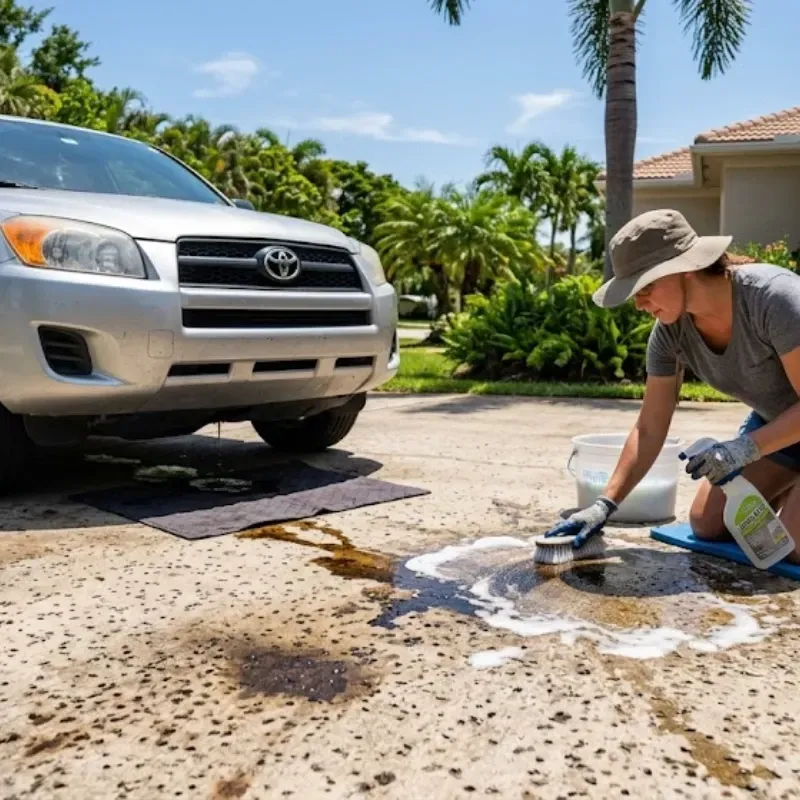
Hot climates often mean more vehicle fluids baking into the concrete surface. Oil, fuel, and coolant spills penetrate faster when concrete is warm. These chemicals weaken the surface and cause staining that becomes difficult to remove.
Clean spills promptly using mild, concrete-safe cleaners. Avoid harsh chemicals that can react with the cement. Preventative mats in high-risk parking areas can also reduce long-term damage.
Shade Is a Long-Term Advantage
Direct sunlight accelerates surface deterioration. While shade may not always be practical, it is worth considering when planning landscaping or driveway layout. Partial shade reduces surface temperature and slows UV damage.
Trees, pergolas, or shade structures positioned strategically can significantly reduce heat exposure without compromising access. Even limited shade coverage makes a measurable difference over time.
Monitor Expansion Joints and Edges
Expansion joints exist for a reason. In hot conditions, they absorb movement that would otherwise crack the slab. Keeping joints clean and properly filled ensures they function as intended.
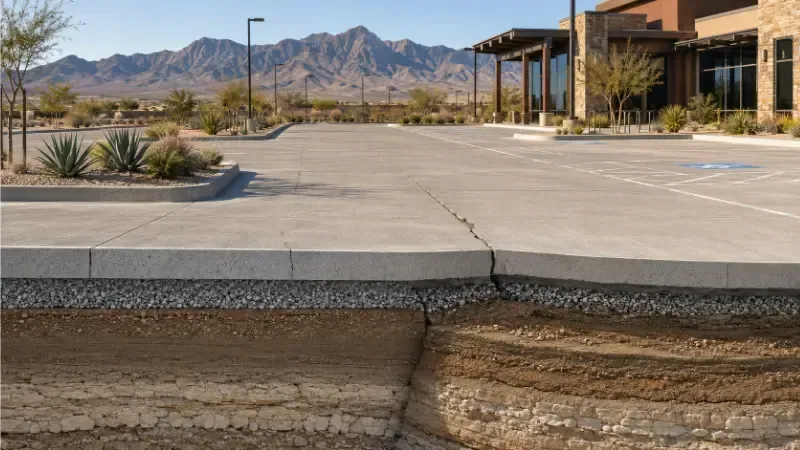
Edges are another vulnerable area. Heat causes soil movement and erosion, which can undermine slab support. Inspect driveway edges regularly and address soil loss before it leads to cracking or settling.
Consistency Beats Occasional Overcorrection
The most reliable way to maintain a concrete driveway in dry, hot conditions is consistency. Occasional major interventions rarely compensate for years of neglect. Regular inspection, light cleaning, timely sealing, and early crack repair extend the life of concrete far more effectively than reactive repairs.
Concrete does not fail suddenly. It deteriorates slowly when ignored. Homeowners who understand this reality maintain driveways that last decades, even in harsh climates.
Final Thoughts
Concrete driveways in hot, dry environments demand informed care. Heat, sunlight, and dryness place unique stresses on concrete that cannot be ignored. Maintenance is not complicated, but it must be intentional.
When homeowners respect how concrete behaves in extreme conditions and respond accordingly, driveways remain strong, functional, and visually intact for years.