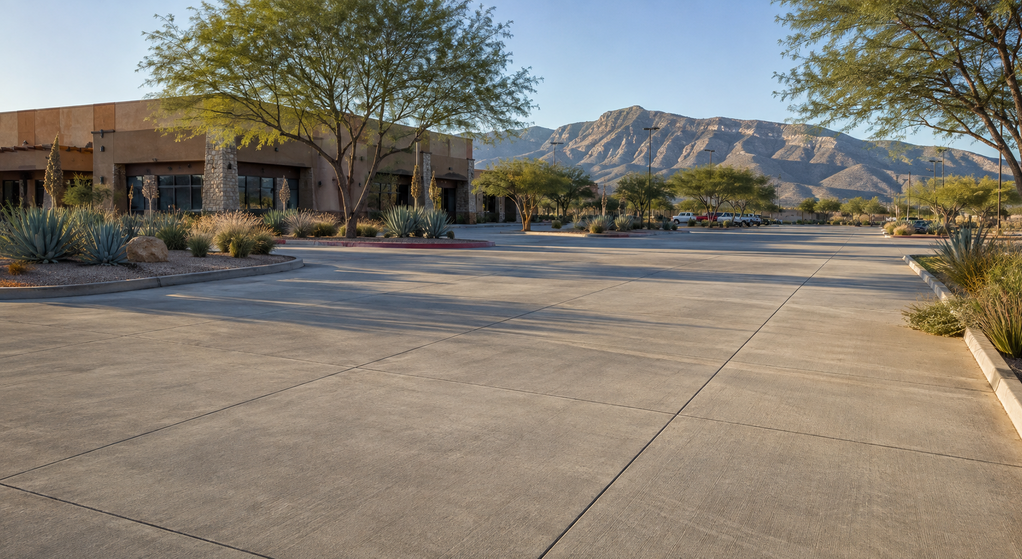
Concrete Block Walls for El Paso Homes: Benefits and Considerations
Summary
Concrete block walls can provide durable privacy and a defined yard boundary, but the value depends on the complete design. El Paso homeowners should decide whether the wall is simply an enclosure or also retains soil, then compare footing, reinforcement, drainage, gate support, finish, access, and maintenance before selecting a proposal.
A concrete block wall changes more than the view from a patio. It establishes a permanent boundary, affects access, can redirect water, and may become part of a retaining condition if ground levels differ. Before choosing block color or wall height, decide what the wall actually needs to accomplish.
Block masonry installation and repair services in El Paso involve decisions below and inside the visible blockwork. El Paso Concrete Contractors provides local masonry services, but homeowners should compare complete wall systems rather than only the finished face.
Decision 1: What Should the Wall Do for the Property?
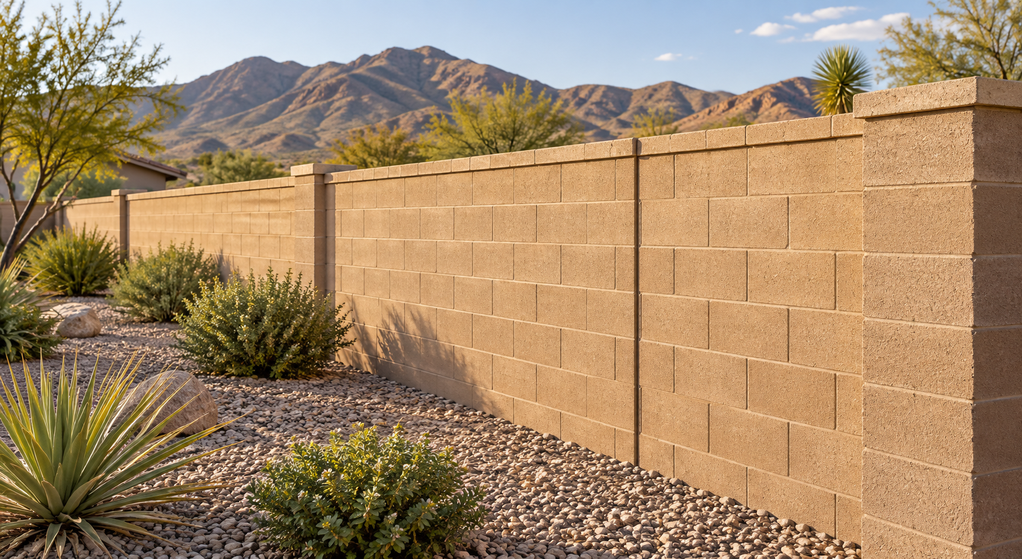
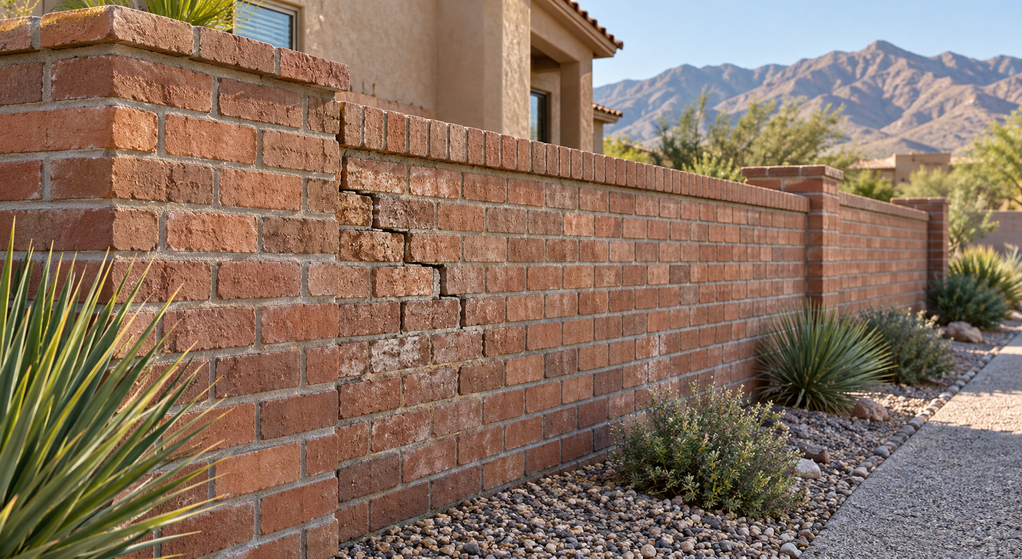
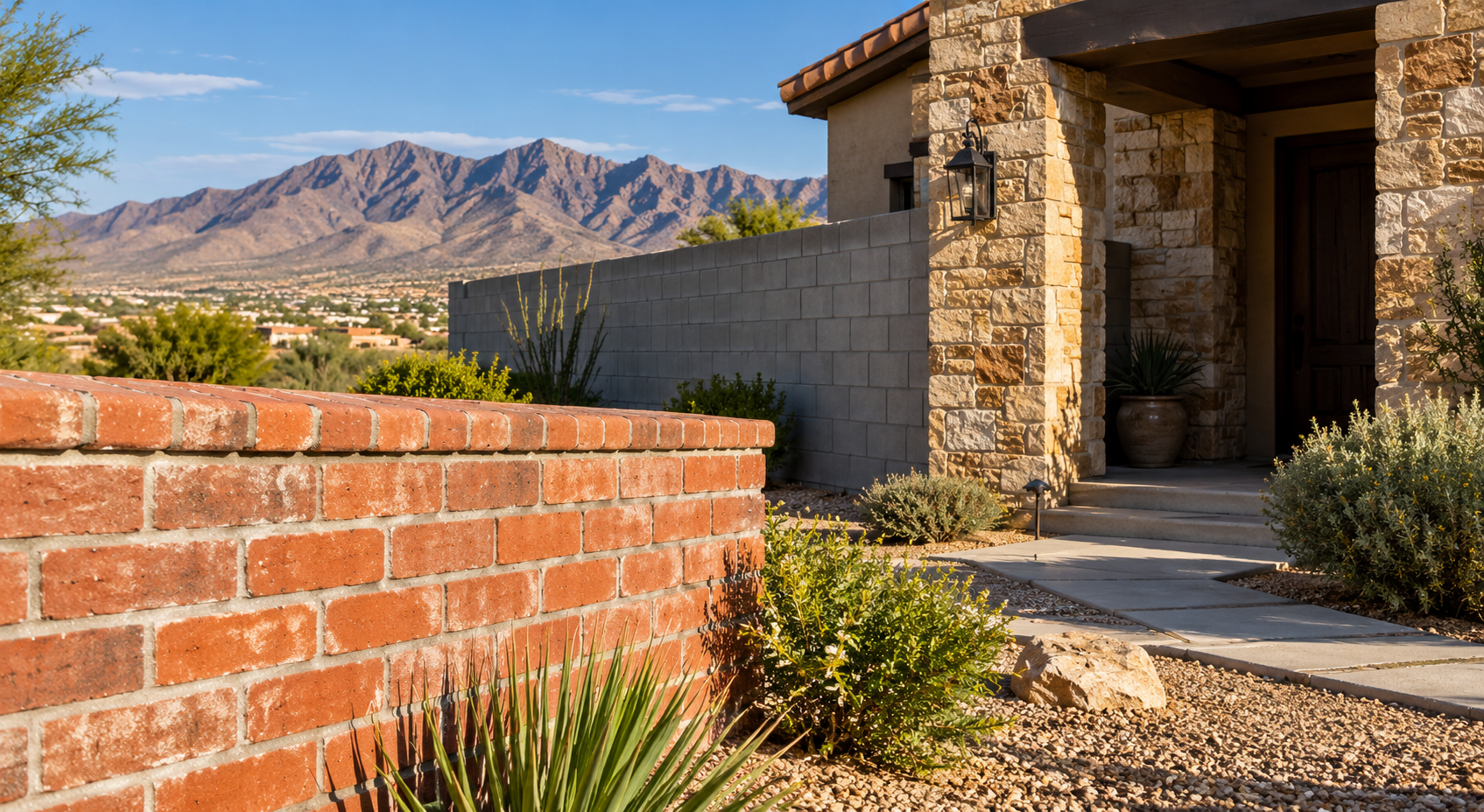
Concrete masonry units can create a solid privacy screen, define a yard boundary, support gates, and provide a durable alternative to wood fencing. Exposed block offers a modular look, textured units add surface variation, and stucco or other compatible finishes can change the appearance.
The tradeoff is permanence. A solid wall can block views and breezes, consume usable space, and require demolition to relocate. Mark the proposed wall and gate positions before construction, then check sightlines from windows, seating areas, driveways, and entrances.
The Concrete Masonry & Hardscapes Association’s guidance on concrete masonry fence design describes masonry fences as systems used for privacy, screening, security, ornamentation, sound insulation, shade, and wind protection, with structural design and quality workmanship central to performance.
Decision 2: Is This Only a Boundary Wall, or Will It Retain Soil?
A privacy wall and a retaining wall perform different jobs. A boundary wall mainly separates spaces. A retaining wall must resist soil pressure from a higher grade. Sloping properties and raised planting beds can turn what looks like a simple enclosure into a retaining condition.
Record the planned finished ground elevation on both sides. If soil will be retained, the wall needs structural and drainage design for that condition. Do not assume ordinary mortared block and interlocking landscape retaining blocks are interchangeable systems.
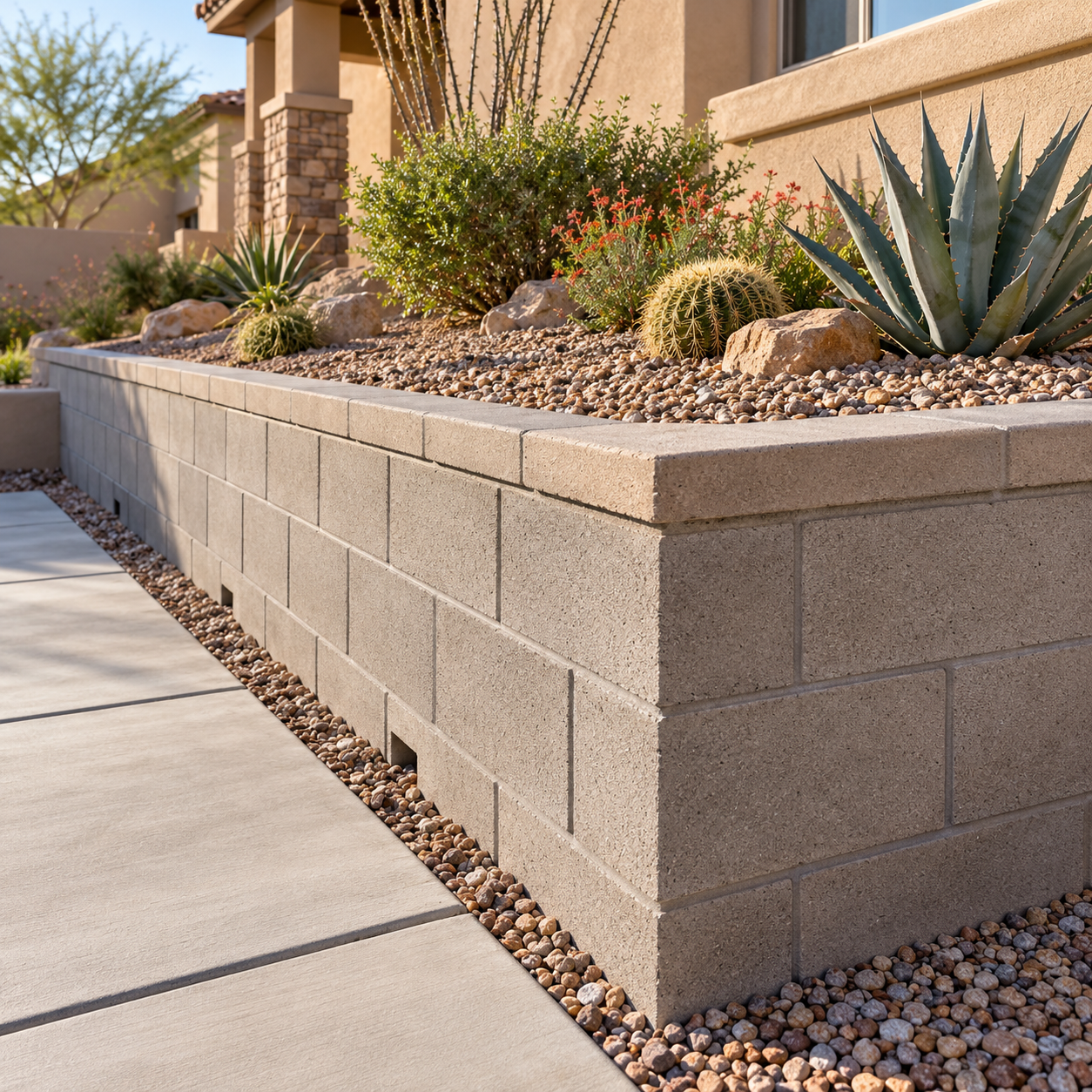
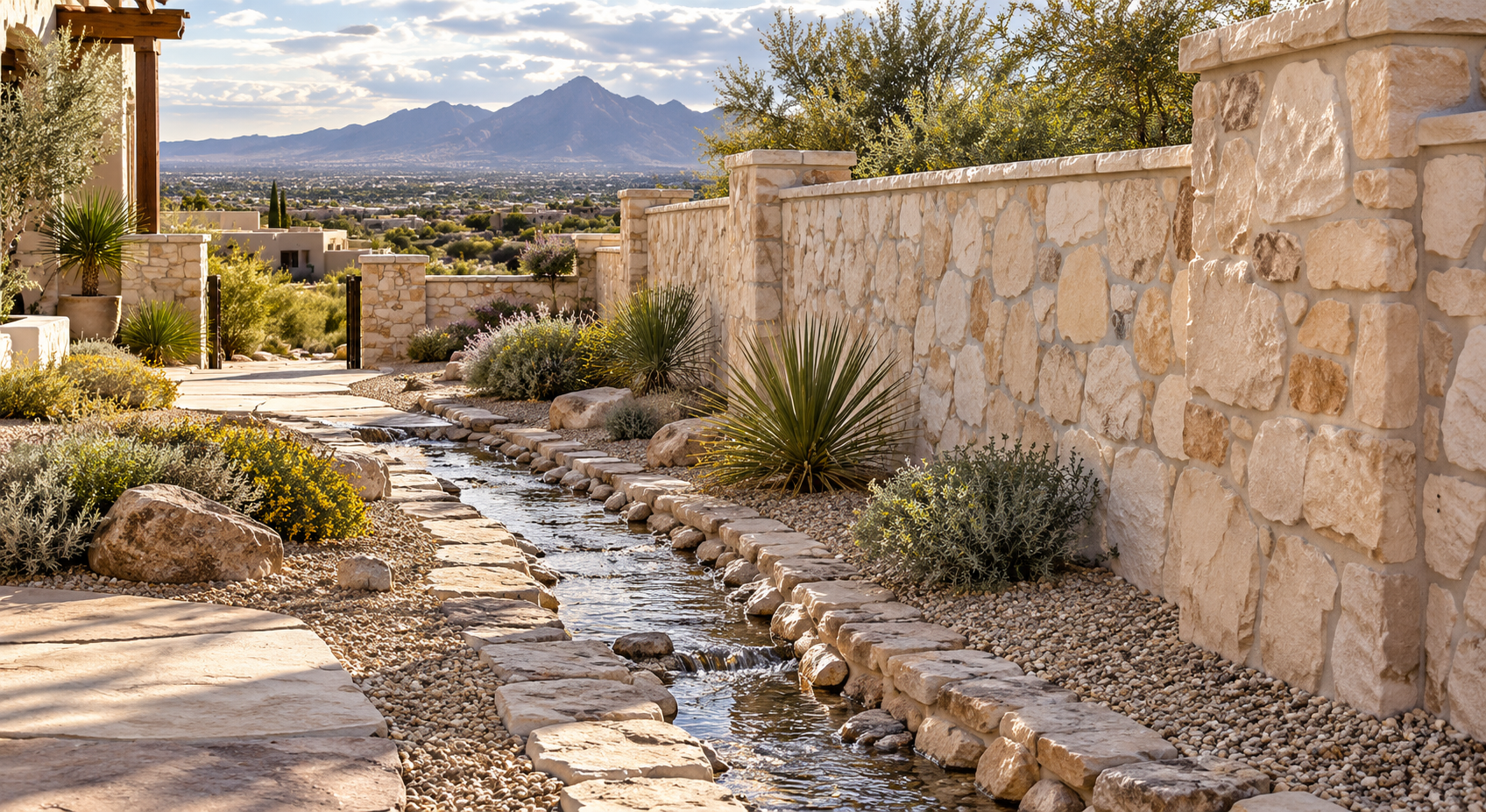
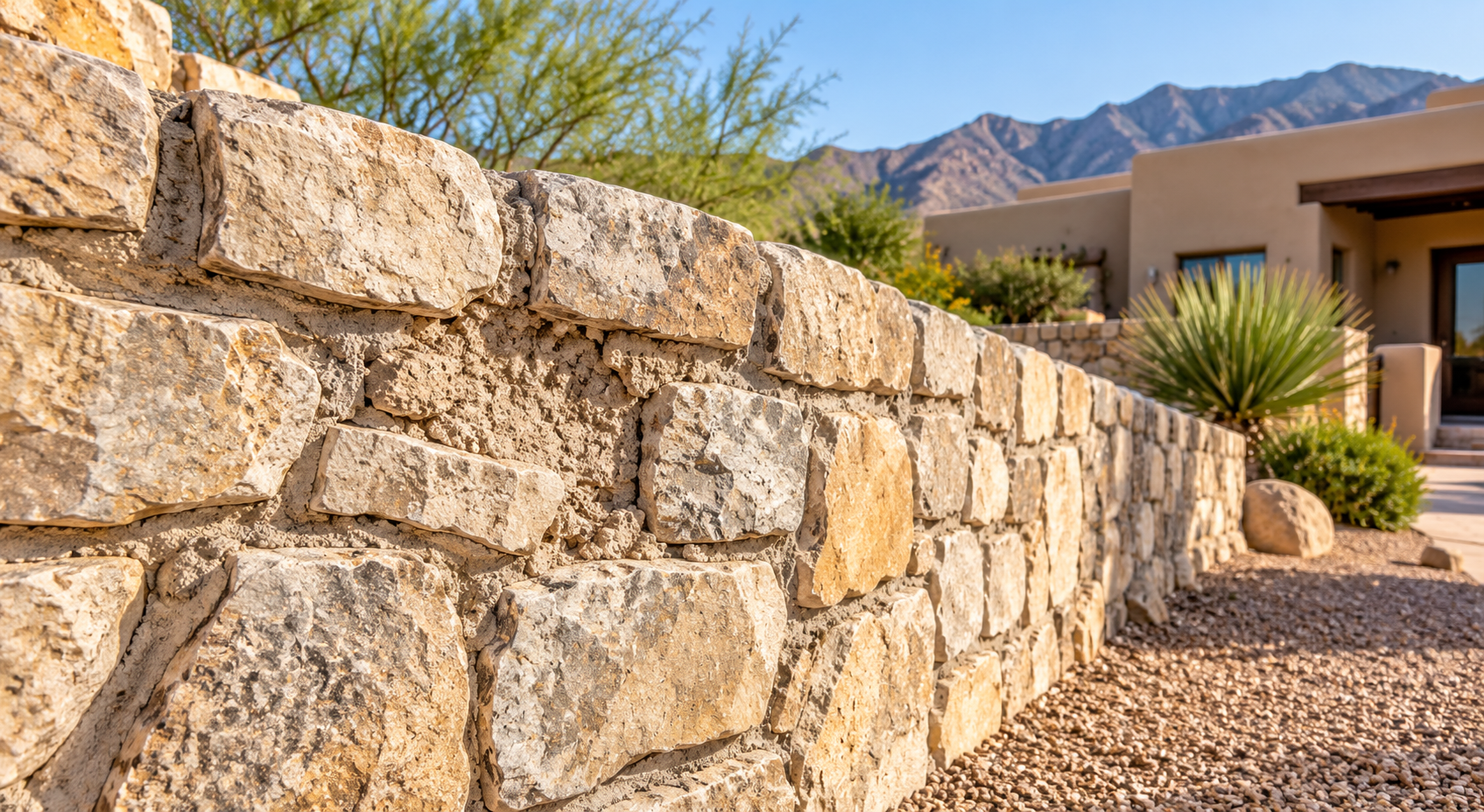
Retaining Rock Walls in El Paso: Structural Requirements and Soil Considerations provides related context on soil support and drainage, although a concrete block wall still requires its own design.
Decision 3: Does the Quote Define the Hidden Structural Scope?
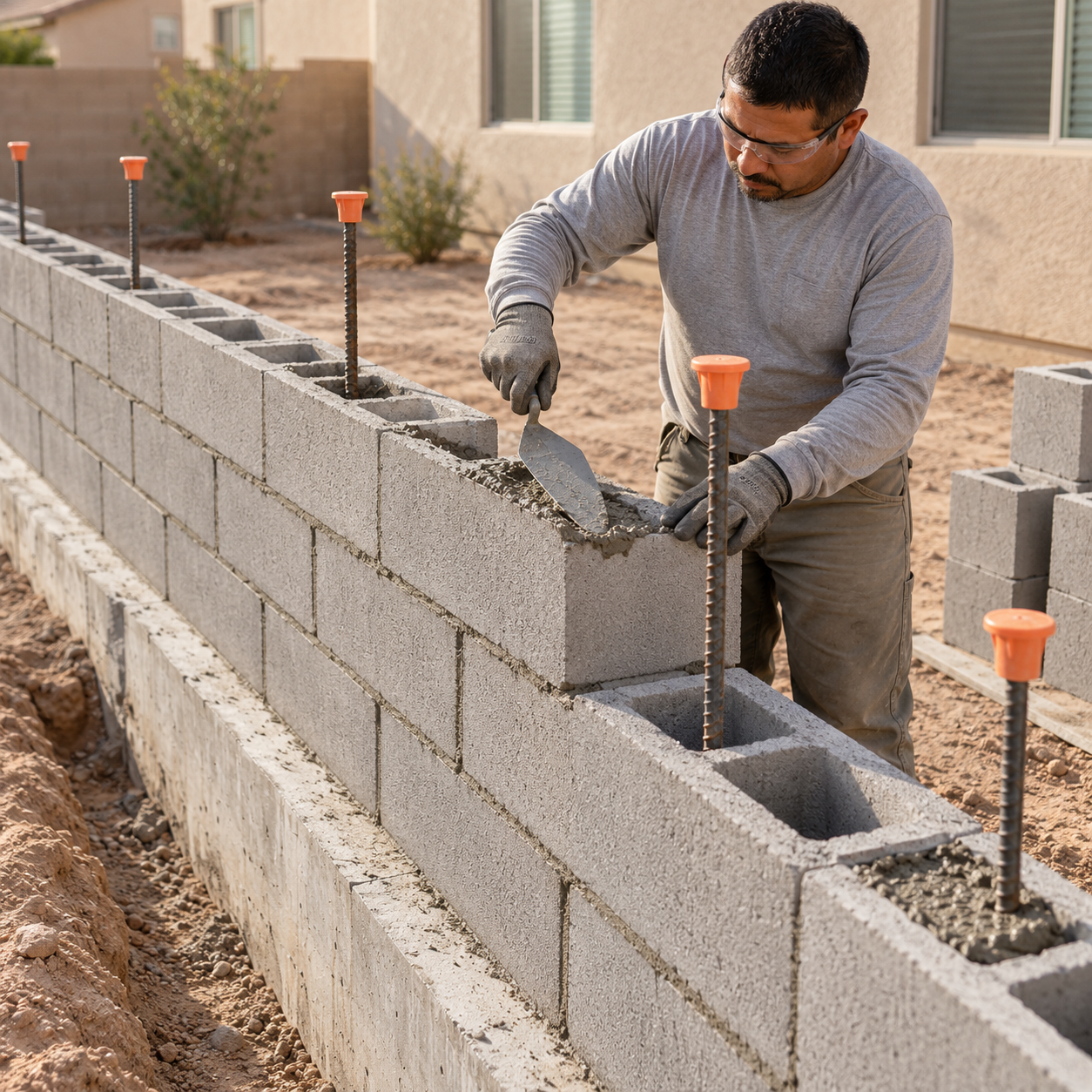
Block size alone does not establish wall strength. Footings, reinforcement, grout, wall height, supports, openings, and connections work together. A neighbor’s wall is not a ready-made specification for another property.
Ask who will establish the structural details, what site information is needed, and whether excavation, footing work, reinforcement, grout, and cleanup are included. A quote that describes only visible blockwork leaves the most important hidden scope undefined.
Decision 4: How Will Water, Gates, and Access Interact With the Wall?
A continuous wall can interrupt an existing runoff route. Identify low points, roof discharge, irrigation, and how water currently leaves the yard. For retaining conditions, drainage behind the wall is part of the design; for privacy walls, the priority may be preserving surface flow around or through the enclosure without sending water toward the house or neighbor.
Gate openings also need early planning. Confirm gate width, weight, hinge locations, posts or reinforced supports, swing clearance, and vehicle/pedestrian access before masonry begins. A heavy future gate should not be treated as a minor accessory that can attach anywhere.
Decision 5: Which Finish and Maintenance Tradeoff Fits the Yard?
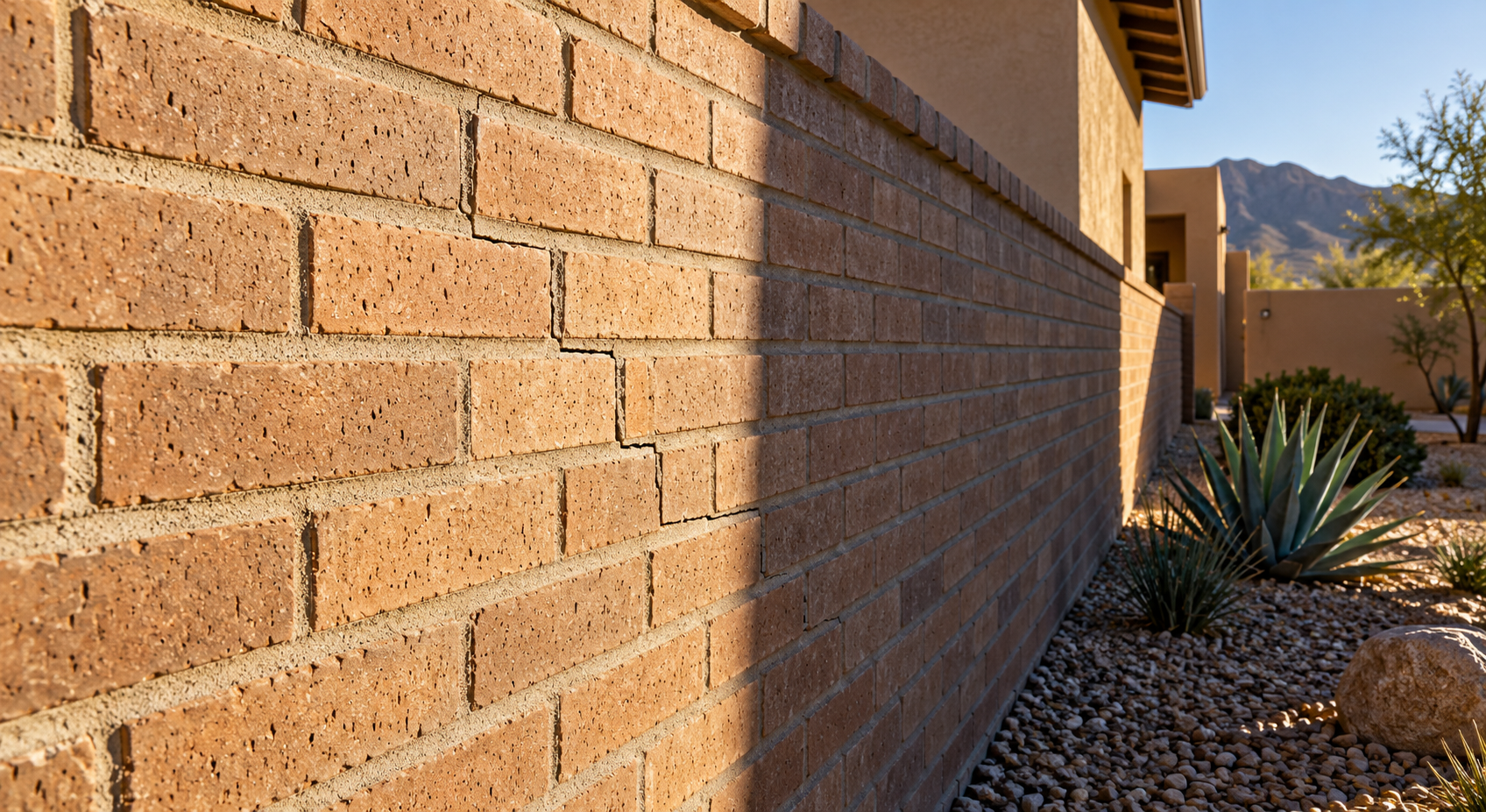
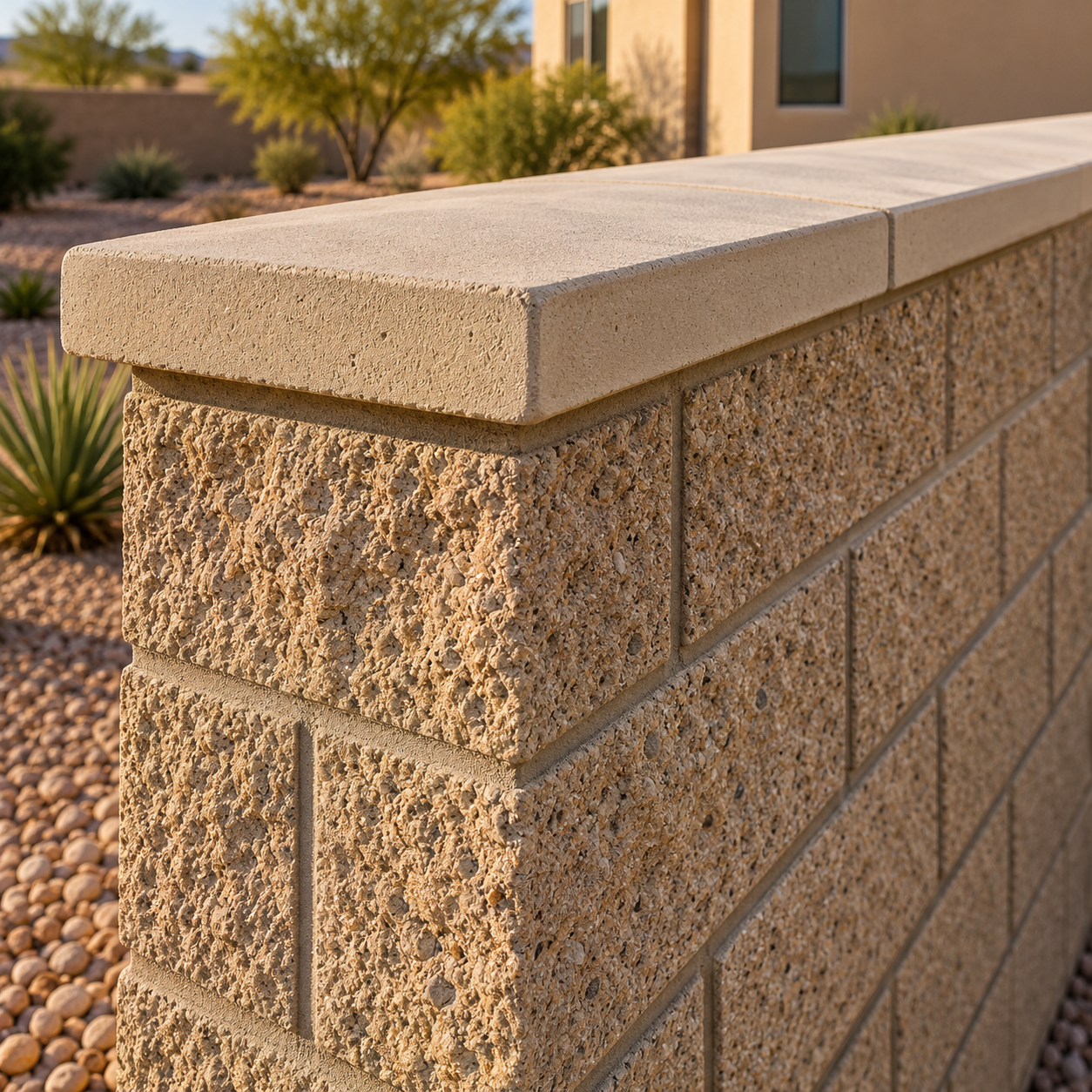
Exposed block leaves mortar joints and surface staining visible. Stucco or painted finishes introduce future coating maintenance. Wall caps, joints, and sprinklers also influence how the wall ages. Ask to see a sample that includes the block, mortar, cap, and finish rather than approving color from one unit alone.
Periodically check alignment, loose caps, joint deterioration, and new cracks. Common Masonry Problems in El Paso Homes can help distinguish routine maintenance from changes that deserve closer evaluation.
Compare Complete Proposals Before Choosing
Ask bidders to price the same wall length, finished heights, block type, finish, gates, excavation, spoil removal, footing and reinforcement scope, drainage work, and landscape restoration. Confirm property boundaries and responsibility for checking applicable approvals before work is scheduled.
Concrete block can be a practical choice when permanent privacy and a solid enclosure fit the property. The strongest decision comes from comparing the entire wall system — what it supports, what supports it, how water moves around it, how people pass through it, and what maintenance the chosen finish will require.

Written By:
Kurt Manalastas
Home & Property Research Journalist
Kurt is a Home & Property Research Journalist who creates educational content on home services, property improvement, and residential decision-making. He translates contractor experience, industry standards, and verified research into clear, practical guidance that helps homeowners understand their options and make informed decisions.