The Role of Backfill and Compaction in Retaining Rock Walls for El Paso Yards
Structural Insight:
The long-term stability of retaining rock walls in El Paso depends on free-draining backfill, thin lift compaction, and drainage systems that work together to control lateral pressure. When these hidden structural layers are handled correctly, walls remain aligned and resist movement through desert heat, runoff, and soil shifts.
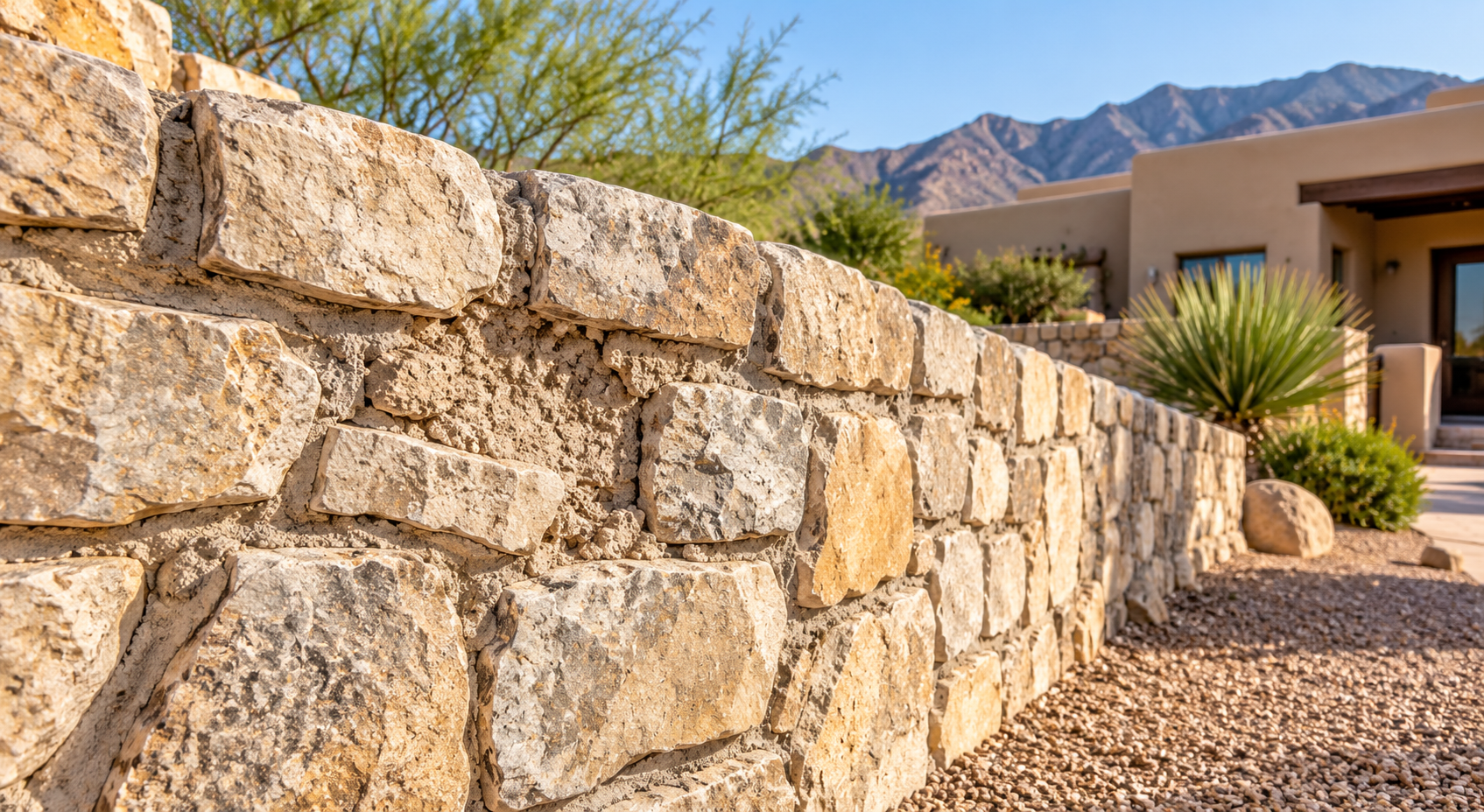
A retaining rock wall usually gives no warning before it starts to fail. The stone face may stand still and look dependable, while behind it the soil is slowly breathing with every desert rain, heat cycle, and rushed layer of fill, expanding, settling, and pressing forward until the wall finally begins to lean. In El Paso yards, where slopes and runoff work quietly against hardscape structures, the long-term strength of rock wall services in El Paso comes from proper backfill layering, drainage support, and controlled compaction.
Why Proper Compaction
Determines Whether the Wall Holds
This is where our rock wall installers focus most of their technical attention because compaction directly affects the lateral forces the wall must resist.
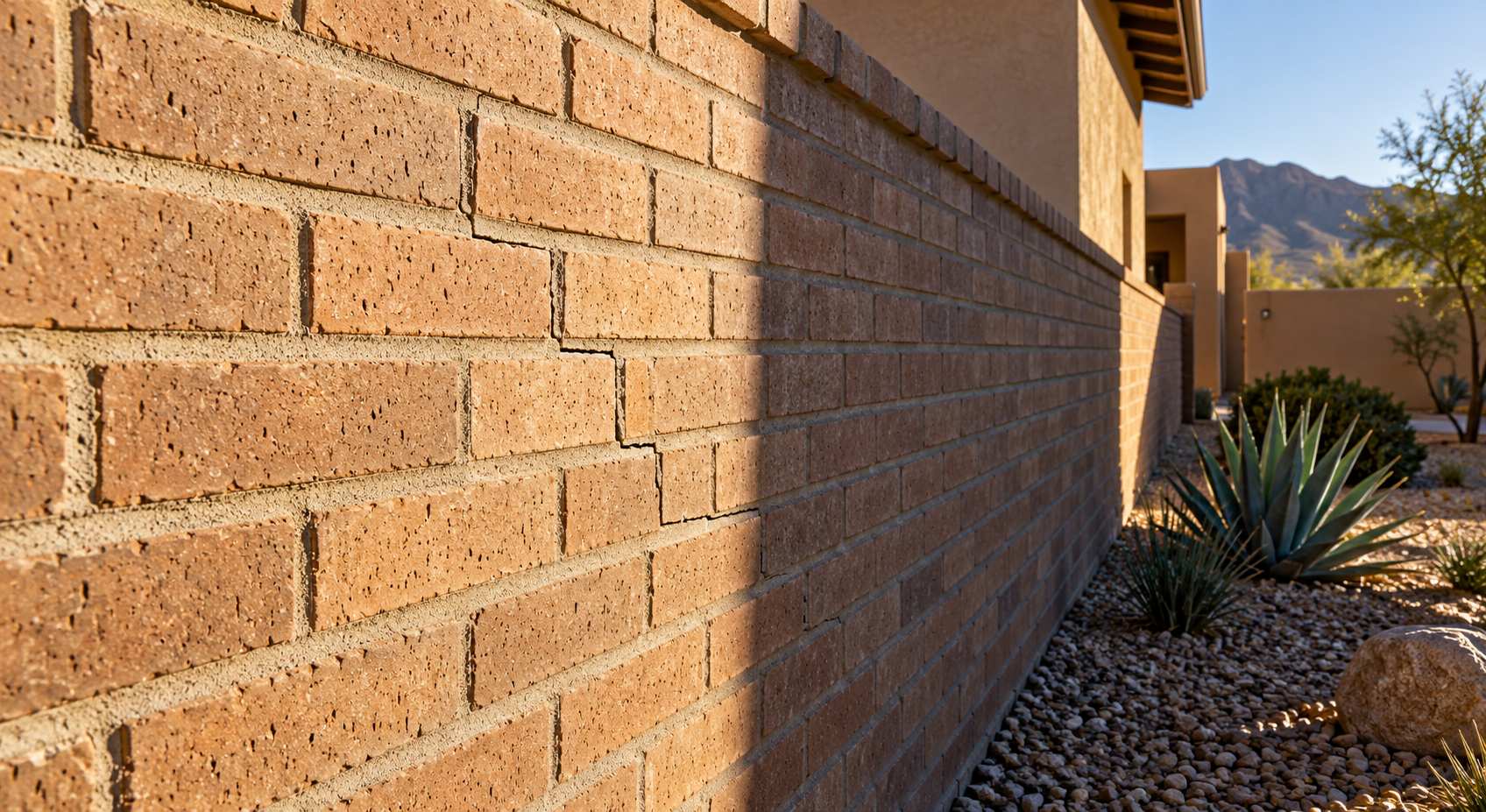
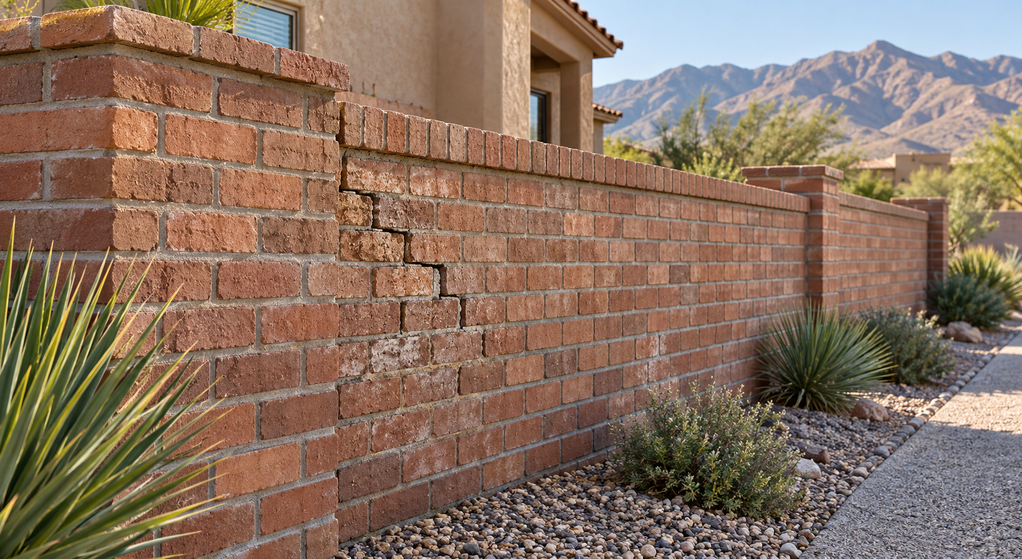
In our work on El Paso yards near hillside neighborhoods and elevated desert lots, we have seen otherwise well-built rock walls begin to bow simply because backfill was dumped in thick lifts and left loosely settled. Soil continues to move after installation if voids remain, and that movement transfers force directly into the wall face.
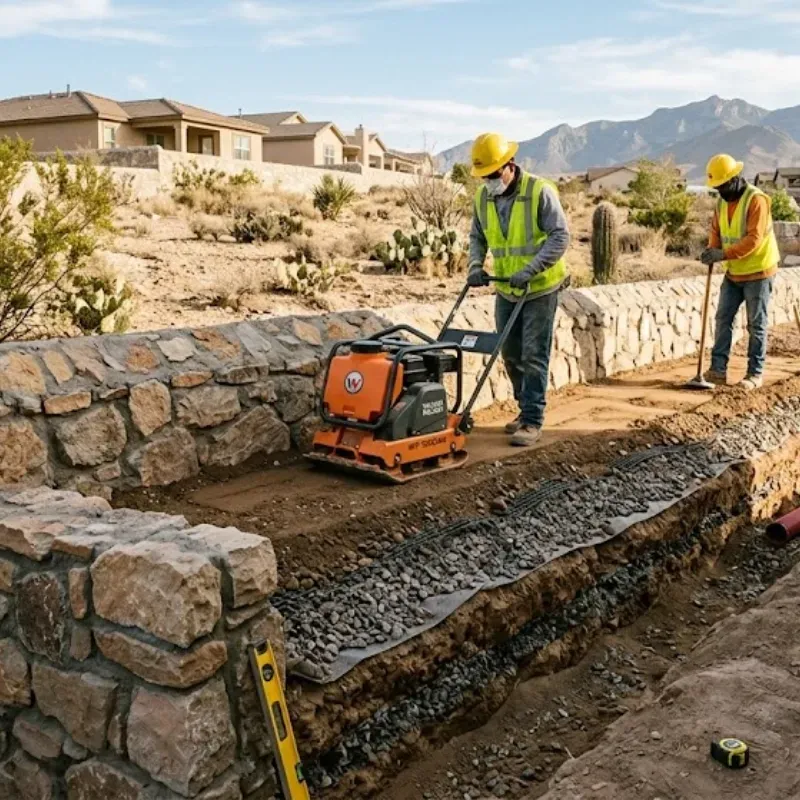
The correct process is to place backfill in controlled lifts, typically 4 to 8 inches depending on material type, then compact each layer before the next is added. Federal Highway Administration retaining wall guidance emphasizes the use of thin lifts and controlled compaction because poor density directly affects wall alignment and long-term stability.
This matters more in El Paso because many residential yards combine decomposed granite, silty desert soils, and imported fill. These materials behave differently under moisture and heat cycling, so uniform compaction becomes essential.
Backfill Material Is Just as Important as the Compaction Process
Not all backfill performs equally behind retaining rock walls. Angular crushed stone or well-graded gravel is typically the strongest choice because it drains efficiently and locks together under compaction. Rounded pea gravel may seem attractive because it is easy to place, but it shifts more easily under surcharge and vibration.
A common mistake in El Paso yards is reusing excavated native soil as backfill simply to reduce hauling costs. The short-term savings often create long-term movement issues, especially after monsoon-style rain events push moisture into fine desert soils.
The tradeoff here is cost versus structural reliability. Reusing on-site soil may reduce initial labor and material expenses, but it increases the chance of hydrostatic pressure, settlement pockets, and wall displacement. For most retaining rock walls, imported free-draining aggregate is the smarter decision.
Material selection is a significant factor in your rock wall. Review natural stone vs. manufactured rock walls to better understand how the options compare.
Drainage and Compaction Must Work Together
Compaction without drainage creates a false sense of security.
Even a well-compacted wall backfill can become unstable if water has nowhere to escape. FHWA guidance consistently notes that drainage fill and proper water pathways are required to keep lateral pressure from increasing behind the wall.
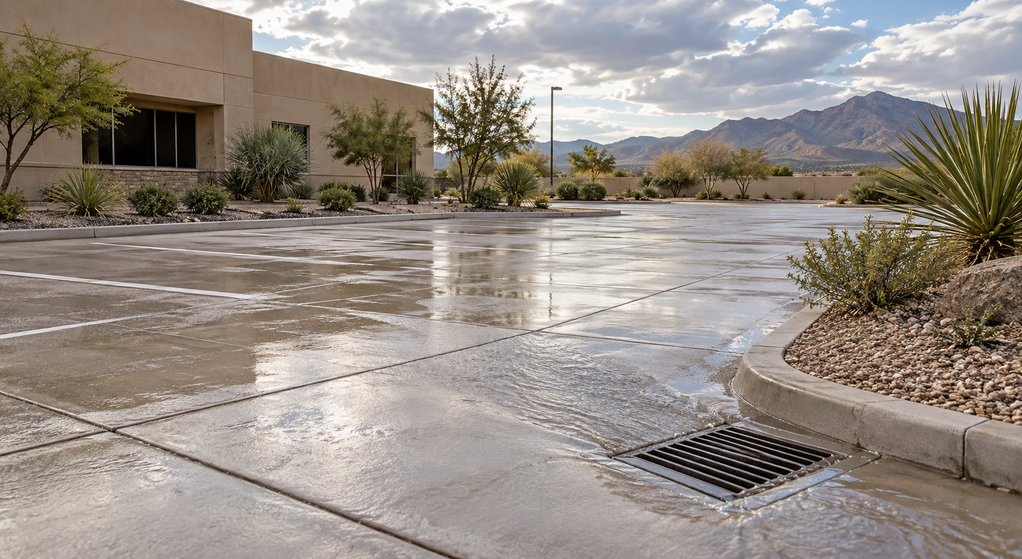
In El Paso, many homeowners underestimate runoff because of the dry climate. But when desert storms hit, water moves fast, especially on mountain-adjacent properties and sloped backyard terraces.
We have seen walls remain structurally sound for years in dry weather, then begin showing forward movement after just one season of concentrated runoff because the backfill zone trapped water.
That is why perforated drain lines, filter fabric, and a dedicated gravel drainage zone should be treated as part of the compaction system rather than separate accessories.
Common Backfill Mistakes
That Cause Early Failure
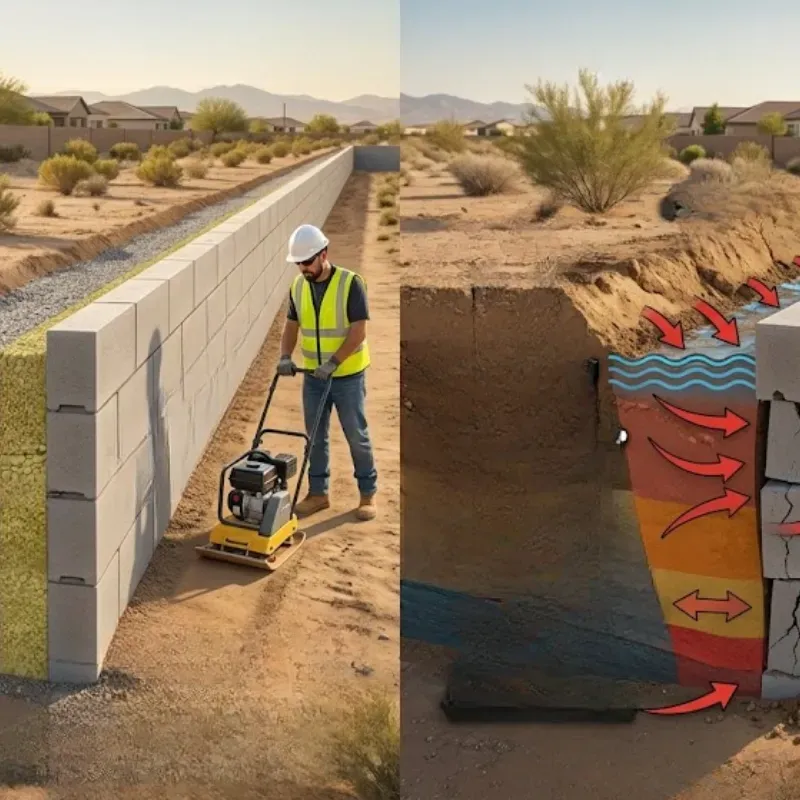
The most common retaining wall failures in residential El Paso projects usually trace back to three preventable issues:
- backfill lifts that are too thick
- native fine soil used without drainage separation
- compaction performed too aggressively near the wall face
Each of these creates different forms of movement, from gradual settlement to rotational bulging.
Based on experience, the most expensive mistake is assuming heavy compaction equipment automatically means better density.Over-compaction near the wall face can disturb alignment, while under-compaction deeper in the fill creates delayed settlement.
The better approach is balanced density control with lighter edge compaction and stronger mid-zone consolidation. To avoid costly mistakes, review the common rock wall failures and learn how to prevent them.
El Paso Soil Conditions Change the Installation Strategy
Retaining wall advice should always change by region, and El Paso is a perfect example.
The Franklin Mountain foothills, compacted subdivision pads, and older yards with mixed fill all create different compaction challenges. Desert soils can appear dense at the surface while remaining loose deeper below, especially where older landscaping layers were buried over time.
This is why compaction should be verified by lift thickness, moisture condition, and equipment choice rather than relying on appearance alone.
Small plate compactors work well close to the wall face because oversized equipment can push the rock wall outward during installation. FHWA construction guidance specifically supports lighter compaction equipment near the face to preserve wall alignment.
The smarter decision is to adjust compaction methods to the wall type, slope angle, and retained soil profile rather than using a one-size-fits-all process.
The Smarter Long-Term Wall Decision
A retaining rock wall in El Paso succeeds or fails behind the stone, where backfill quality, lift control, and drainage determine whether the wall remains straight through heat cycles, runoff, and soil movement.
Prioritize free-draining aggregate, compact in thin controlled lifts, and match the compaction method to El Paso’s desert soil conditions.
The next smart step is to evaluate whether the wall design plan clearly explains the hidden structural layers behind the wall. If the backfill and compaction strategy feels vague, the wall’s long-term reliability is already at risk.