Common Concrete Parking Lot Problems for El Paso Properties
What You Need to Know:
Concrete parking lots in El Paso, TX face a specific set of challenges driven by the desert climate — intense heat, extreme UV exposure, and the occasional heavy monsoon rain. Understanding the most common problems and their causes helps property owners catch issues early, make smarter repair decisions, and extend the usable life of their parking lot investment.
If you own or manage a commercial property in El Paso, your parking lot carries constant daily stress. Vehicles drive across it, the sun beats down on it for hours, summer monsoon rains hit it hard, and the temperature swings between seasons put continuous stress on the concrete. It is no surprise that parking lots develop problems over time. What often surprises property owners is how quickly those problems progress when they are not caught early.
El Paso’s climate is particularly demanding on outdoor concrete. The combination of heat, UV exposure, dry conditions, and periodic intense rainfall creates a set of stresses that are not fully covered by general parking lot maintenance guides written for more moderate climates. Here is a practical look at the most common concrete parking lot problems in El Paso, what causes them, and what property owners should know before deciding how to respond.
Cracking: The Most Visible Problem
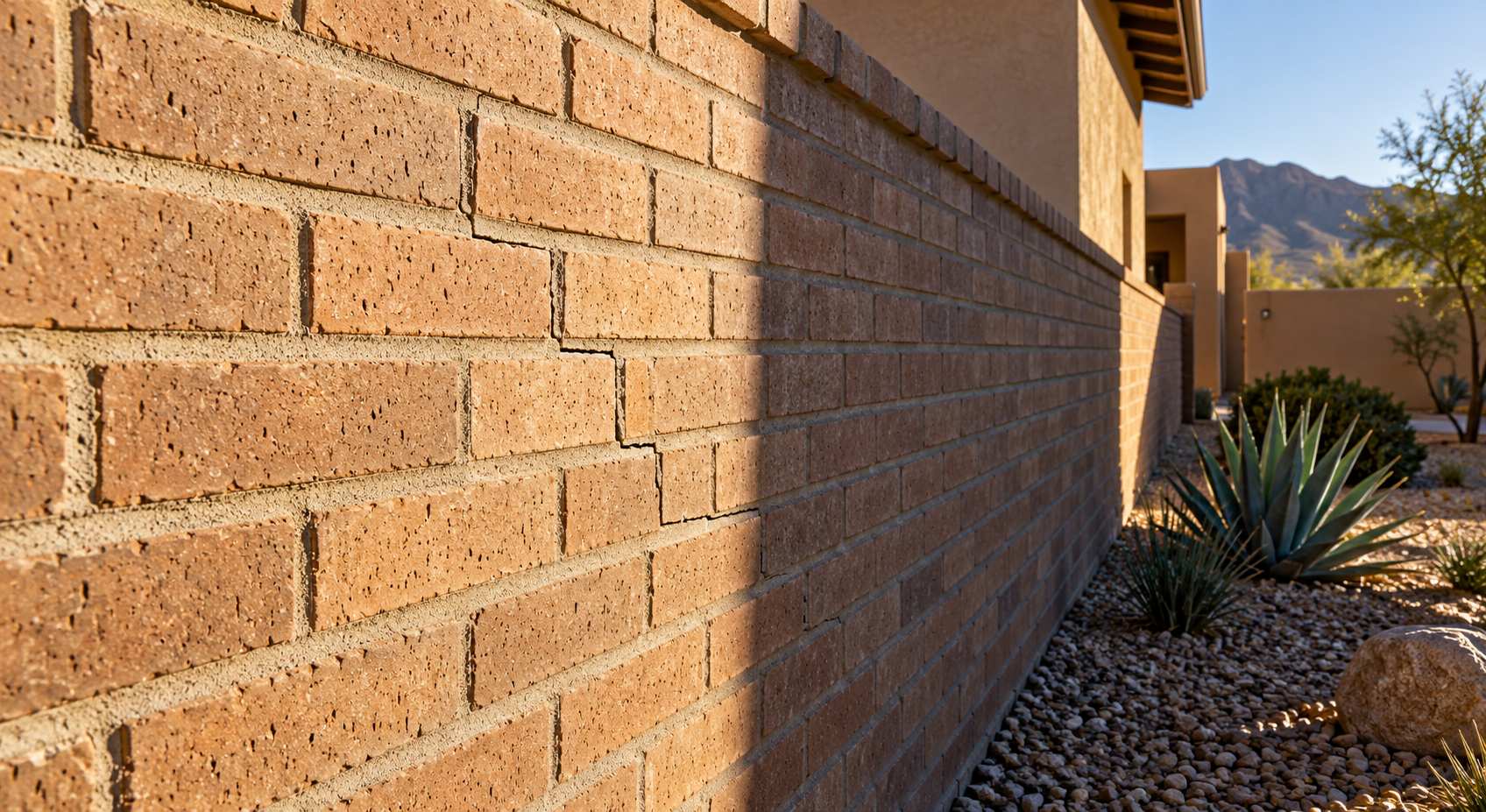
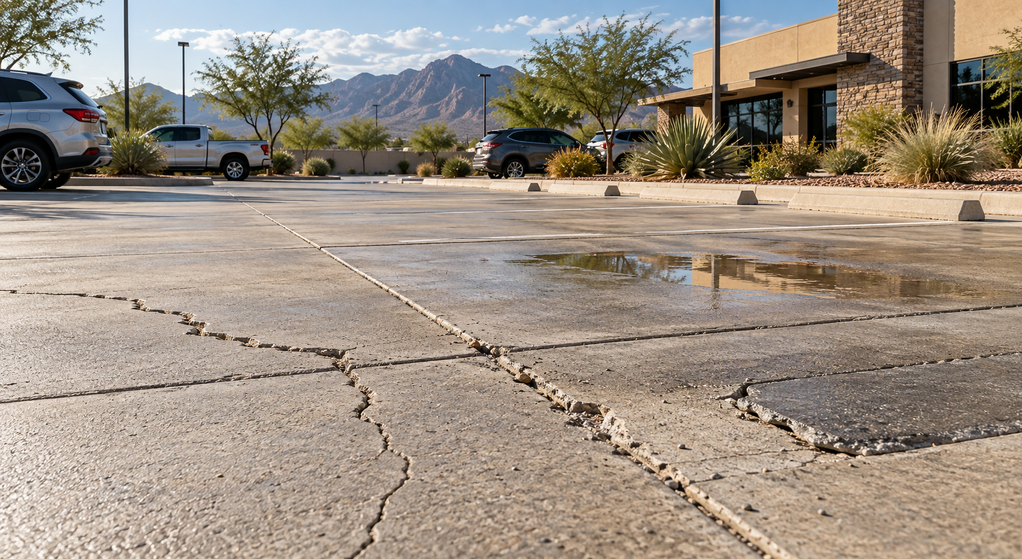
Cracking is the most common complaint from El Paso property owners about their concrete parking lots, and it comes in several forms that have different causes and different implications for repair. Hairline cracks that appear relatively soon after installation are often shrinkage cracks from the curing process — concrete shrinks as it sets, and if control joints were not spaced correctly or cut to adequate depth, the shrinkage stress produces cracking in unplanned locations rather than at the joints where it was supposed to occur. In El Paso’s heat, concrete can lose surface moisture more rapidly than ideal during placement, which makes proper curing practices particularly important. Professional concrete parking lot services in El Paso address this from the start by specifying control joints at appropriate spacing and ensuring curing measures are in place during and immediately after the pour — steps that prevent a significant share of the cracking that shows up prematurely in parking lots that were not installed with enough attention to these details.
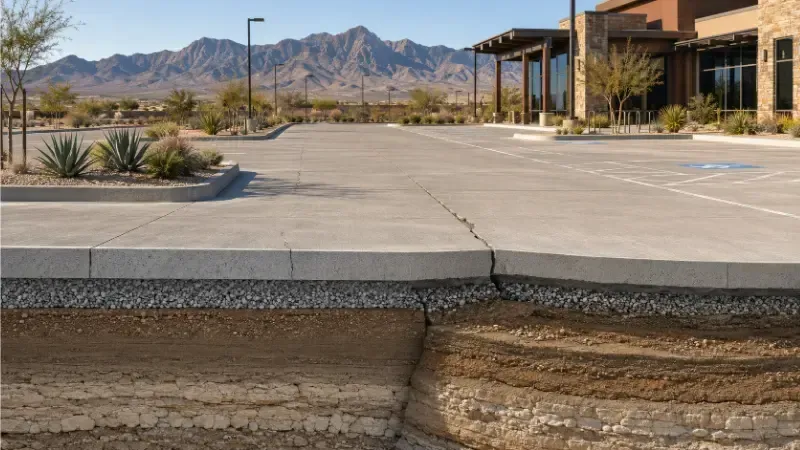
Wider cracks that develop over time, particularly those showing displacement where one side is higher than the other, indicate something more significant happening beneath the surface. Differential settlement — where sections of the subgrade beneath the slab compact or shift at different rates — produces this type of cracking. El Paso’s soil includes caliche layers at varying depths, and the variability in how those layers interact with the concrete above can contribute to uneven settling. These cracks need to be assessed for their structural implications before deciding between crack sealing, partial slab replacement, or more comprehensive remediation.
Surface Scaling and Spalling
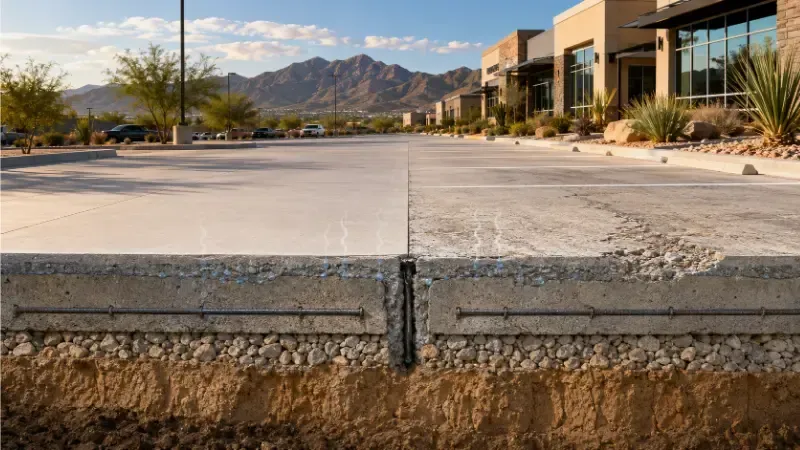
Scaling is the progressive flaking and breaking away of the concrete surface layer, leaving a rough, pitted appearance. In El Paso, the primary driver of surface scaling is the extreme UV exposure and heat cycling that the concrete experiences over years. The surface layer of concrete that was properly finished and cured is dense and protective, but extended UV exposure breaks down that surface over time, leaving a more porous and weaker layer that is susceptible to scaling under ongoing thermal stress.
Spalling — where larger chunks of the concrete surface break away — is a more advanced form of the same process, and in parking lots it often develops at areas where surface moisture has repeatedly entered through cracks or joints and worked on the concrete from below. El Paso’s monsoon season, which brings brief but intense rainfall events, can introduce moisture into existing cracks quickly, and the subsequent rapid drying in the heat concentrates that moisture cycling in a way that accelerates surface deterioration.
The repair response to scaling and spalling depends on how far it has progressed. Early-stage scaling can often be addressed with surface treatments and sealing that slow further degradation. Spalling that has reached significant depth, or that is associated with underlying structural compromise, typically requires removal of the affected section and replacement with new concrete bonded to the existing slab.
Joint Failure and Water Infiltration
Expansion and control joints give concrete room to move with temperature changes and help direct shrinkage cracking into planned locations. When those joints fail, the problems compound quickly. Joint sealant that has cracked, shrunk away from the edges, or simply deteriorated over time leaves an open pathway for water to enter the subgrade beneath the slab, weakening the support that the slab depends on and accelerating the cracking and settlement that follow from a compromised subgrade.
In El Paso’s climate, joint sealant deteriorates faster than in milder environments because the UV exposure and heat cycling break down the sealant material more aggressively. A sealant application that might last several years in a cooler, cloudier market may need attention sooner in El Paso’s conditions. Joint resealing is one of the lower-cost maintenance tasks available for a concrete parking lot, and it is one of the most cost-effective ones because it prevents the more expensive problems that open joints allow to develop. At
El Paso Concrete Contractors, we treat joint inspection as part of every parking lot assessment because failed joints are one of the most reliable early warning signs that a parking lot is starting down a deterioration path that will cost significantly more to address if it continues unchecked.
Surface Drainage Problems
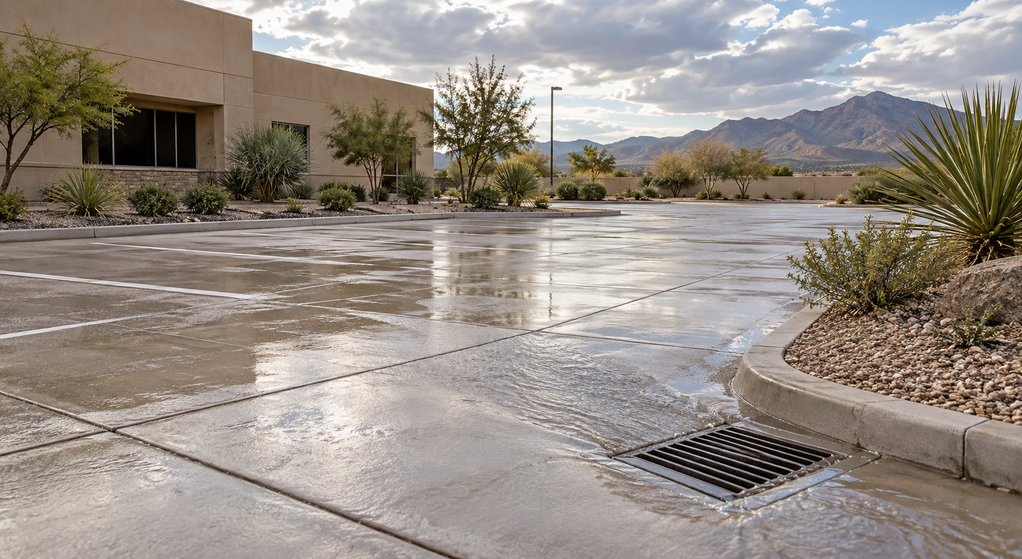
A parking lot that does not drain properly is not just inconvenient for the drivers using it — it is actively accelerating the deterioration of the concrete beneath the standing water. When water ponds on a parking lot surface after rain, it finds its way into any crack or joint it can, saturates the subgrade over time, and in El Paso’s heat, evaporates in ways that can draw dissolved minerals to the surface and leave deposits that contribute to surface scaling.
Drainage problems in El Paso parking lots often originate from the original grade design — insufficient slope to move water to drains or off the lot surface — or from settlement that has created low spots where water collects that did not exist when the lot was first installed. Identifying whether a drainage problem comes from the original design or from subsequent settlement informs whether grading correction, additional drainage infrastructure, or subgrade stabilization is the appropriate response.
For property owners who want to understand why slope, runoff control, drainage layout, and soil movement should be planned before concrete is poured, our article on
why civil engineering expertise matters in every El Paso concrete project
explains how proper engineering decisions help prevent pooling water, erosion, settlement, and long-term concrete damage.
Surface Oxidation and UV Degradation
El Paso averages over 295 sunny days per year, and that UV exposure takes a real toll on concrete surfaces over time. The concrete surface gradually oxidizes and carbonates, losing the density and low permeability of the original finish and becoming more porous and more vulnerable to the moisture and thermal cycling that drive further deterioration. Property owners often notice this first as a change in the surface appearance — a faded, chalky, or rough texture where the concrete used to look more uniform and consistent.
Surface sealing is the most practical maintenance response to UV degradation, and applying a quality sealer before the surface has deteriorated significantly is far more effective than applying it after degradation has already progressed. A sealer applied to a parking lot surface in good condition restores some of the surface density and creates a barrier that slows continued UV degradation. A sealer applied to a surface that has already oxidized significantly has less to bond to and provides limited protection for the porous concrete beneath.
Heavy Load Damage
Commercial parking lots in El Paso see a wide variety of vehicle types, and a parking lot designed for standard passenger vehicles may not be adequate for regular use by heavier commercial trucks, delivery vehicles, or equipment. Load damage from heavy vehicles tends to show up as cracking concentrated along wheel paths, edge spalling where heavy vehicles routinely cross curbs or edges, and accelerated joint deterioration from the dynamic load of heavy vehicles crossing joints at speed.
For parking lots that serve mixed traffic including commercial vehicles, specifying additional slab thickness and reinforcement from the start is significantly less expensive than dealing with the premature damage that a standard-weight specification produces under heavy load use. For lots that are already experiencing load-related damage, the repair approach needs to account for the ongoing load demands — a patch that meets the same specification as the original slab will experience the same damage unless the use pattern changes or the replacement is built to a higher standard.
Understanding what drives concrete deterioration in El Paso’s hot, dry climate — including the role that concrete mix and curing practices play in preventing many of the problems covered in this article — is useful context for any property owner managing a parking lot or planning a new one. Our article on
how El Paso pros prevent concrete shrinkage covers the mix design and placement decisions that experienced local contractors use to reduce the cracking and surface problems that show up most frequently in El Paso’s demanding environment.

Written By:
Domenique Bomediano
Home Improvement Research Specialist
Domenique Jose Bomediano develops research-based educational content on home renovation, construction, concrete services, and property improvement. He breaks down technical concepts, contractor insights, and industry standards into practical, easy-to-understand information that helps homeowners evaluate projects, estimate costs, and make informed long-term property decisions.